


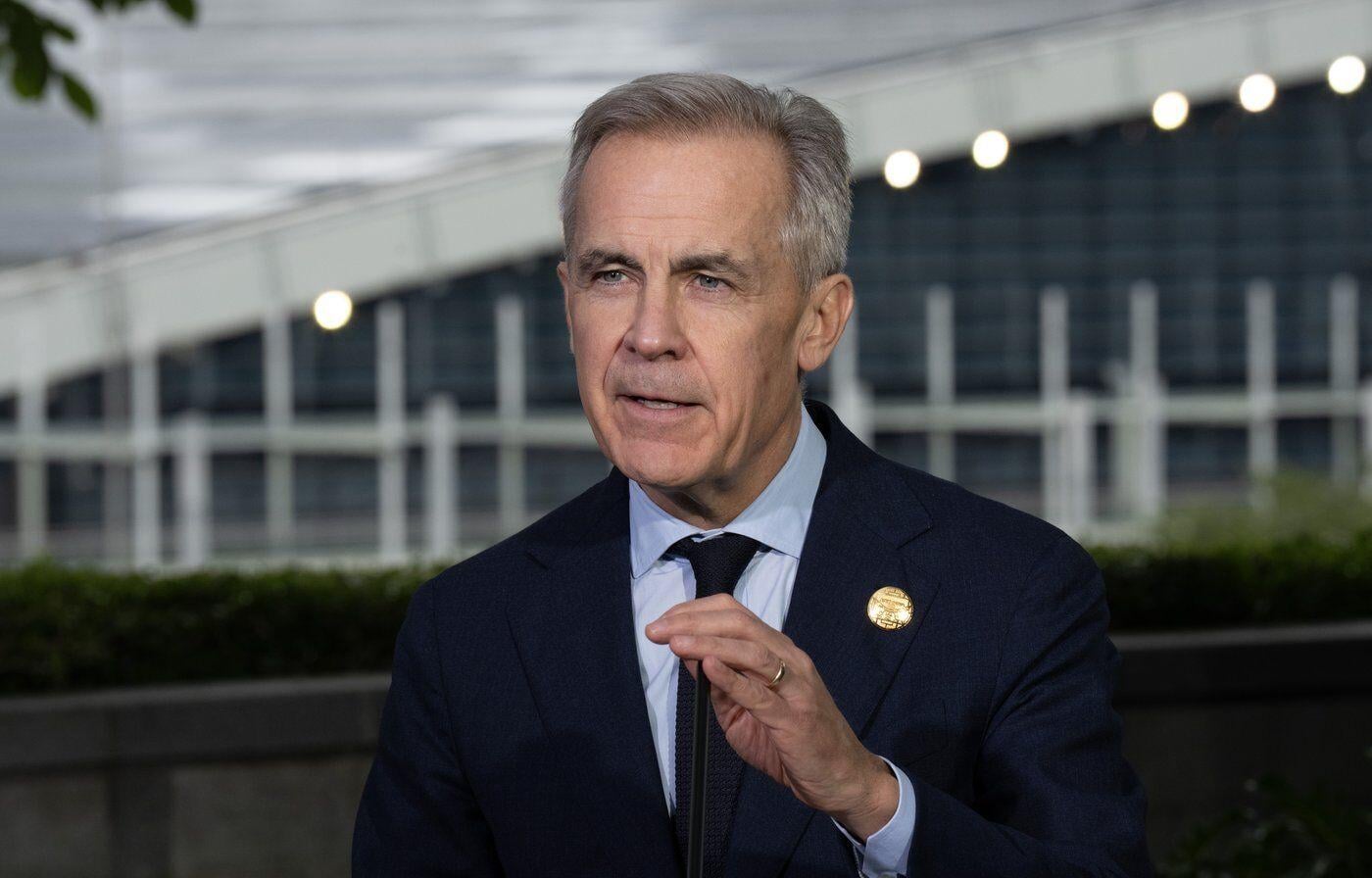
SHENZHEN – Prime Minister Mark Carney and U.S. President Donald Trump held talks of just under 20 minutes on Wednesday on the sidelines of the Asia-Pacific Economic Cooperation summit in Shenzhen, China, Carney’s office said.
A readout from the prime minister’s office said the leaders discussed the work underway toward a trade agreement that would create good jobs, boost affordability and “fully respect Canada’s languages, culture and sovereignty.” It said they agreed to continue the work and stay in close contact.
The meeting took place at dinnertime in Shenzhen, early morning in Canada. Carney’s office said U.S. Trade Representative Jamieson Greer and Commerce Secretary Howard Lutnick took part, along with Trump’s chief of staff Stephen Miller and Secretary of State Marco Rubio. Carney was joined by his chief of staff Marc-André Blanchard and Foreign Affairs Minister Anita Anand.
The talks followed a news conference at which Carney said he does not believe Trump is uncomfortable with Canada deepening trade ties with China. He said Trump has sought to understand where Canada is headed on that front.
Carney said it has been easier to reach new arrangements with Beijing because trade relations with Washington are “much more complex.” He said the United States has fundamentally changed its trade objectives and Canada is focused on getting the right deal for Canadians. He added that Canada is aiming to export commodities such as iron and oil to China, not sensitive technologies such as superconductors.
Canada and China agreed this week to drop trade restrictions on goods including Canadian pork and Chinese steel, The Canadian Press reported. Canada plans to send a trade mission to China in 2027, and Carney reached a deal with Chinese President Xi Jinping in January allowing a limited number of Chinese electric vehicles into the Canadian market.
Relations with Washington have been strained since Ottawa walked away from formal trade talks in August, with each side accusing the other of pushing late changes. Carney has said the U.S. side wanted to limit Canada’s ability to make deals with other countries, put Canada’s language and culture protections at risk and keep high tariffs on some autos. Washington then imposed tariffs on billions of dollars of Canadian goods, and Ottawa responded with retaliatory tariffs.
Carney has said the talks with the U.S. will shape how Canada approaches Chinese investment, and that Canada could turn to Chinese automakers if they fail, as we reported in Carney open to Chinese automakers if U.S. trade talks fail. Trump’s trip to Asia was covered in Trump leaves for Asia ahead of Xi, Putin nuclear talks, and on Tuesday Carney and Mexican President Claudia Sheinbaum recommitted to renewing CUSMA.
Democrats have signalled that ending the trade war with Canada will be a top priority once they take the majority in Congress in January.
Via The Canadian Press, which first published its report Nov. 18, 2026, with files from The Associated Press: Carney meets Trump in China.
If you find reporting like this useful, consider supporting Canada News Media, an independently owned Canadian newsroom.
Follow Canada News Media
Get the day's top Canadian stories and our two daily 60-second news videos wherever you scroll.
X Threads Facebook Instagram LinkedIn TikTok YouTube Pinterest Reddit Substack Flipboard Newsletter RSS