


Health Canada is warning Canadians that some electronic radon detectors sold online give inaccurate readings, and is urging anyone testing their home this winter to use only devices that have passed Canada’s national certification testing. The public advisory, issued Monday, Nov. 16, during Radon Action Month, says faulty readings “can give a false sense of security or unnecessary worry.”
The bigger risk, the department said, is that a detector reading too low could leave people breathing high levels of radon at home without knowing they need to fix it. Health Canada calls long-term exposure to elevated radon “the second leading cause of lung cancer in Canada after smoking.”
The advisory, identification number RA-82955 on the federal recalls and safety alerts site, does not name a new product. Instead, it points back to Health Canada’s earlier warnings and recalls of detectors that testing found gave inaccurate measurements. Here is the full list from the advisory, with the date of each original warning:
InkBird WiFi Radon Detector, model RD-2 (May 30, 2025); various Life Basis radon detectors (May 30, 2025); Hanchen Home Radon Detector (May 15, 2025); various radon gas detectors sold on Amazon.ca (May 7, 2025); Spolehli Radon Detector (May 1, 2025); Air Steward Portable Radon Monitor (Sept. 13, 2022); and Elifecity Portable Radon Meter (Sept. 7, 2022).
Anyone who owns one of the recalled detectors should stop using it and dispose of it under their municipality’s electronic waste rules, the department said. Product problems can be reported through Health Canada’s consumer product incident report form.
The warning was widely reported on Monday, including by CTV News and BNN Bloomberg, and “radon” was among the most searched terms in Canada on Google over the past day, with more than 20,000 searches and related searches for Health Canada radon detectors.
Why it matters is the scale of the exposure. According to Health Canada’s radon fact page, an estimated 16 per cent of lung cancers in Canada are caused by radon, which works out to more than 3,000 lung cancer deaths a year, and one in five homes in Canada has high radon levels. The Canadian guideline is 200 becquerels per cubic metre, the level above which the department advises homeowners to take action. People who smoke and are also exposed to radon face an even higher risk, Health Canada says.
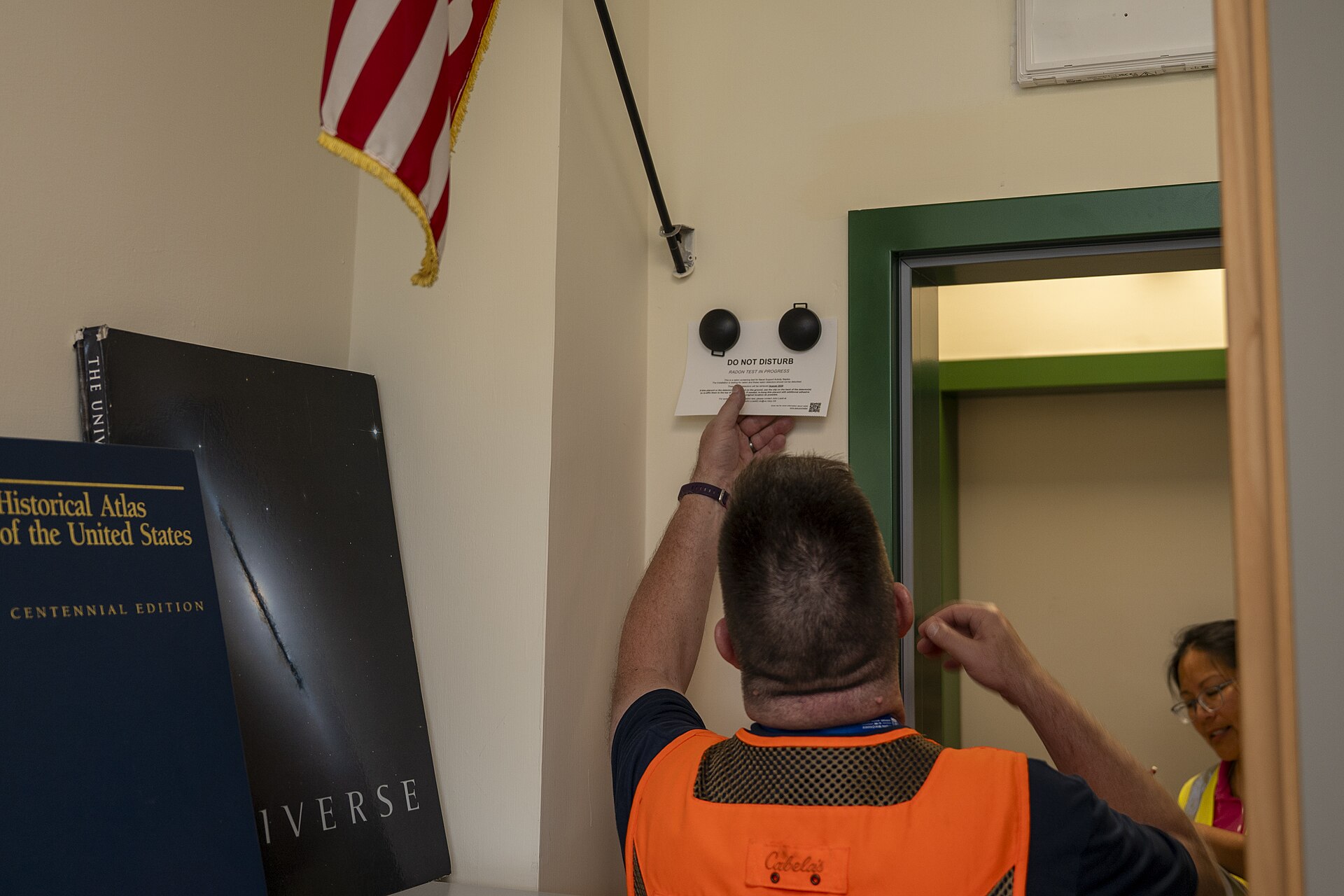
Radon is a radioactive gas that forms naturally when uranium in soil and rock breaks down. It has no colour, smell or taste, and it can seep into homes through cracks in foundations, gaps around pipes and floor drains. Levels vary widely, even between neighbouring houses, so the only way to know a home’s level is to test it.
Health Canada’s advice for testing is specific. Test in winter, when windows stay closed and radon levels are often higher. Use a long-term test that runs for at least three months, which gives the best estimate of a home’s average level. And if you buy an electronic monitor, choose one on the list of devices that passed performance testing by the Canadian National Radon Proficiency Program, or C-NRPP, the certification program Health Canada recognizes.
If a test comes back high, the fix is usually affordable. Health Canada says radon levels can be cut by more than 80 per cent for about the same cost as other common home repairs, typically with a system that vents soil gas from under the foundation to the outside. Certified mitigation professionals are listed by C-NRPP.
Health Canada said it will keep monitoring radon detection products on the Canadian market and will take compliance and enforcement action when a product poses a danger.
For a step-by-step guide, read our explainer on how to test your home for radon this winter and our homeowner’s guide to radon testing. Since radon is the leading cause of lung cancer in people who do not smoke, our guide to who qualifies for lung cancer screening in each province may also help.
Sources: Health Canada public advisory RA-82955, Health Canada, Radon: what you need to know, CTV News, BNN Bloomberg.
If you find reporting like this useful, consider supporting Canada News Media, an independently owned Canadian newsroom.
Follow Canada News Media
Get the day's top Canadian stories and our two daily 60-second news videos wherever you scroll.
X Threads Facebook Instagram LinkedIn TikTok YouTube Pinterest Reddit Substack Flipboard Newsletter RSS