


Albertans who appeal a police chief’s decision on their complaint almost never win. The province’s Law Enforcement Review Board, the civilian tribunal that hears appeals of how municipal police services in Edmonton, Calgary, Lethbridge, Medicine Hat and smaller cities handle misconduct complaints, allowed three of the 147 appeals it closed from January 2021 to March 2025, according to a Canada News Media count of the board’s own annual reports. In 2020 it allowed six of 24.
Appeals are also taking far longer. The board’s reports show the average appeal took 295 days from filing to decision in 2020, 298 days in 2021, 390 days in 2022, 441 days in the 15-month 2023 reporting period and 660 days in the year that ended March 31, 2025. That is more than double the 2020 figure. The wait for a hearing alone rose from 219 days to 498, and the wait for a written decision after the hearing rose from 76 days to 162.
The board is the only appeal route for most people who complain about a city police officer in Alberta. Under the Police Act process the board describes, the police chief investigates and decides each complaint. If the chief finds no reasonable prospect of proving misconduct and dismisses it, the complainant can appeal to the board within 30 days. Officers can also appeal findings of misconduct and penalties against them. The board cannot hear complaints about the RCMP, which polices most of rural Alberta, and it cannot hear appeals when a chief decides the conduct may be provable but is “not of a serious nature,” because the Act makes that decision final.
The year-by-year tables tell the story. In the 2022 annual report, the board lists six appeals allowed in whole or in part in 2020, including four sent back for a hearing or a new investigation. It allowed one in 2021 and none in 2022. The 2024 annual report, published in October 2025, lists one appeal allowed in the 2023 period, where a penalty was varied, and one in 2024-25, where the board found a Calgary complainant had been denied procedural fairness and ordered a rehearing.
The appeals that failed did not all fail on their merits. Of the 45 appeals the board closed as dismissed in 2024-25, 11 were dismissed after a hearing, 12 were dismissed at the first review as frivolous, vexatious or made in bad faith, 17 were dismissed because the board had no jurisdiction, and five were withdrawn or abandoned. The board’s footnote says lack of jurisdiction includes cases where it lost jurisdiction because the officer resigned or retired during the appeal. In 2022, 10 of 30 dismissed appeals ended for lack of jurisdiction and 10 after a hearing.
Requests to review a police commission’s decision to throw out a complaint as frivolous, which is the route for complaints against a police chief and for complaints a commission dismisses at the chief’s recommendation, fared a little better. The board sent two of seven back to the commission or service in 2024-25, both involving the Calgary Police Commission, after none in the two previous years.
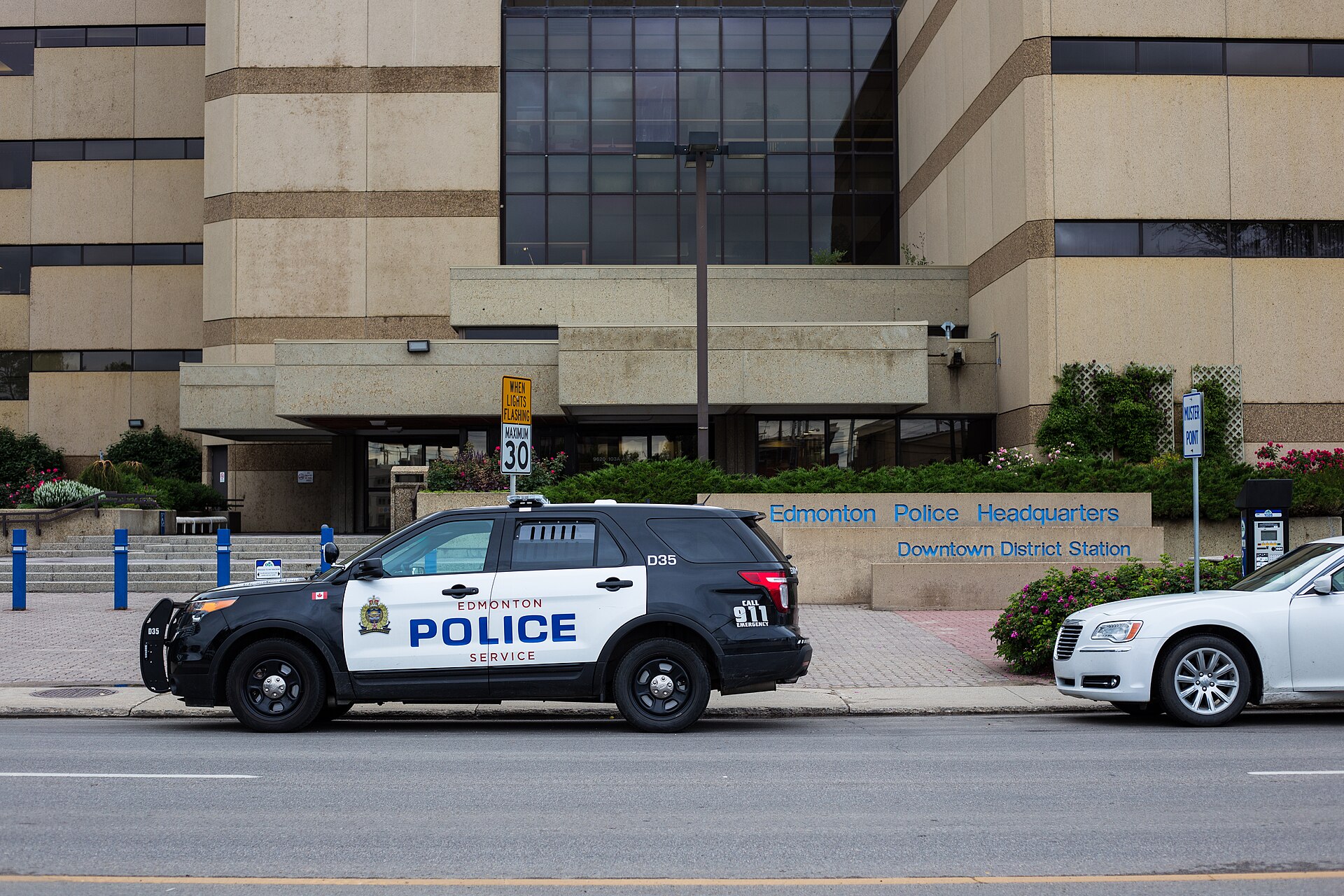
Edmonton produces most of the work. Of the 26 matters filed in 2024-25, 13 came from Edmonton and nine from Calgary, a city with more people. In the 15-month 2023 period, Edmonton accounted for 42 of 61. Of the 197 board decisions posted on CanLII, the national legal database, from 2019 to Oct. 15, 2026, 116 name the Edmonton Police Service as the respondent and 23 name the Calgary Police Service. The records do not explain the gap. It could reflect how each service writes disposition letters, how often each tells complainants about their appeal rights, how each classifies complaints as “not serious,” or simply how many people choose to appeal.
Filings have also swung. The board received 32 matters in 2020, 34 in 2021, 40 in 2022 and 61 in the longer 2023 period, then 26 in 2024-25. The chair, Kevin Kelly, wrote in the 2024 report that the board had 22 appeals that year, down from 47 and 34 in the two previous periods. He also wrote that three members had said they would not seek reappointment and that, at the fiscal year end, potential new members had not yet been interviewed. The board spent $510,120 of a $690,000 budget in 2024-25 and held 12 virtual hearings plus one inquiry hearing.
Two inquiries have been open for years. The board started an inquiry on its own motion on May 3, 2018, into whether the Calgary Police Service’s handling of Godfred Addai-Nyamekye’s complaint about his December 2013 arrest complied with the Police Act and its own policies. The hearings ran from November 2024 to March 2025 and heard 16 witnesses over 11 days, and the report says the panel was drafting its findings. A second inquiry, ordered by the justice minister on May 13, 2021, into the Lethbridge Police Service’s access to and use of its databases, had a hearing scheduled for Sept. 15 to 19, 2025. A search of the board’s CanLII decisions and the government’s publications site found no final report for either inquiry.
The board itself explains part of the low success rate. Its reports say it must review police decisions on a “reasonableness” standard, which it describes as “a deferential standard,” because chiefs and presiding officers have expertise in policing. It can step in without that deference only when an investigation was “tainted, flawed or grossly inadequate.” A low rate of successful appeals can therefore mean chiefs’ decisions were sound, or that the test is hard to meet, or both. The annual reports do not separate those explanations, and they do not report how many complaints the police services received or dismissed in the first place, so the share of all complaints that ever reach the board cannot be worked out from these records.
Change is coming. In the 2024 report, the chair wrote that the review of the Police Act was “expected to culminate in important changes to the legislation and police discipline process, including the upcoming implementation of the Police Review Commission.” The board’s newest annual report on the government’s site covers the year to March 31, 2025, and the board was still deciding appeals in October 2026, according to CanLII.
For Albertans with a complaint, the reports set out what the process can and cannot do. A complainant has 30 days from the chief’s disposition letter to appeal. The board cannot order criminal charges or award damages. If a chief calls the conduct minor and closes the file, the only remaining route is a judicial review in the Court of King’s Bench. RCMP complaints go to the federal Civilian Review and Complaints Commission.
How we checked: We read the Law Enforcement Review Board’s annual reports for 2022 (tables for 2020 to 2022) and 2024 (tables for 2022 to March 2025), both on the province’s open government site. We counted closed appeals as the board’s “total appeals allowed in whole or in part” plus “total appeals dismissed,” which includes withdrawn, abandoned and no-jurisdiction cases; reviews of commission decisions are counted separately. The 2023 figures cover 15 months (January 2023 to March 2024) because the board moved to a fiscal-year report, and the 2024 figures cover April 2024 to March 2025. Processing times are the board’s averages. The CanLII count comes from the CanLII listing of all 197 published board decisions from 2019 to Oct. 15, 2026, grouped by the police service named in each case title; CanLII holds published decisions, not every appeal filed. We did not assess whether any individual decision was right.
Follow Canada News Media
Get the day's top Canadian stories and our two daily 60-second news videos wherever you scroll.
X Threads Facebook Instagram LinkedIn TikTok YouTube Pinterest Reddit Substack Flipboard Newsletter RSS