


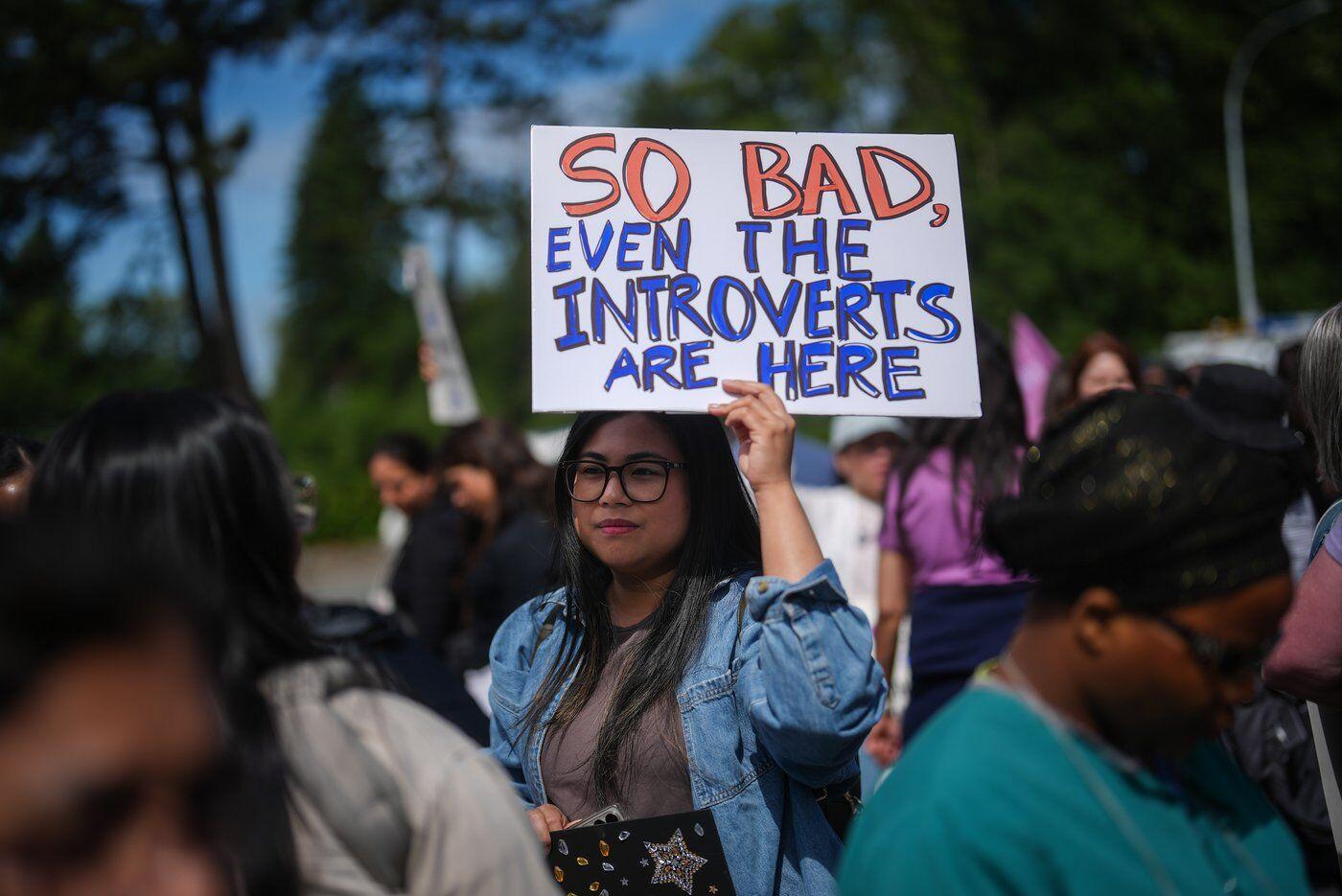
Arbitrators have imposed annual wage increases of three per cent through to 2029 for British Columbia’s more than 60,000 nurses, a decision the union president says has left nurses “gravely disappointed” after they asked for eight per cent a year.
The binding decision, issued Wednesday by special mediators Vince Ready and Amanda Rogers, ends a dispute between the provincial government and the BC Nurses’ Union that included job action this summer, when nurses briefly refused non-essential overtime. It covered only compensation, because contract language on violence in the workplace, nursing duties and nursing shortages was settled earlier through mediation, The Canadian Press reported.
Union president Adriane Gear said Friday the outcome “falls incredibly short” of what members wanted. She said the three per cent figure matches the offer in a tentative agreement that 67 per cent of voting members rejected in May 2026, and that a provincial mandate capping public sector raises at three per cent constrained bargaining. Gear said the government told the union arbitration was the only route to having compensation considered outside that mandate and the “me-too” agreements signed with other unions.
The increases are retroactive to 2025. Starting in April 2027, nurses will reach the top of the pay scale in seven years instead of 10. Nurses with 10 years of experience will get an extra 50 cents an hour from the first pay period after April 1, 2028. Gear called the 50-cent increase “kind of just insulting.”
The arbitrators’ 45-page written decision said the shorter grid brings nurses to the top rate three years sooner while keeping a progression through the middle years of a nursing career. It said the province will need about 10,500 additional nurses to meet the first phase of its nurse-to-patient ratio promises, and that evidence suggests nurses under 35 are the most likely to leave the profession.
Gear said the new grid gives B.C. one of the highest starting wages in the country, but that little changes after year four. She said the deal does not do enough to keep experienced nurses, with up to 6,000 vacancies at one time.
The two sides spent about seven months bargaining before the May tentative agreement was rejected. Nurses then took job action for several days in early July, stopping non-essential overtime and non-nursing tasks such as answering phones or processing doctors’ orders.
The ruling lands as a new government settles in. Lorne Doerkson was sworn in as B.C. premier with a smaller cabinet on Nov. 20, after the Conservatives won a majority in the Oct. 24 election. Other provinces are also working on nursing costs and staffing: Manitoba says it cut nursing agency spending by $46.6 million in a year, and Yukon added $8.3 million for hospitals, including more nurses.
If you find reporting like this useful, consider supporting Canada News Media, an independently owned Canadian newsroom.
Follow Canada News Media
Get the day's top Canadian stories and our two daily 60-second news videos wherever you scroll.
X Threads Facebook Instagram LinkedIn TikTok YouTube Pinterest Reddit Substack Flipboard Newsletter RSS