
Updated 11:35 p.m. MT, Oct. 24, with the latest Elections BC seat counts, popular vote and turnout, and Eby’s riding result.
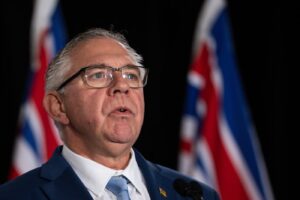
The B.C. Conservatives under interim leader Lorne Doerkson won a majority government in Saturday’s provincial election, The Canadian Press reported, ending nine years of NDP rule and prompting Premier David Eby to announce he is resigning as party leader. CTV News, CBC News and Global News projected the Conservative majority.
As of 11:25 p.m. MT, the Conservatives were leading or elected in 62 of the legislature’s 93 ridings, the NDP in 29 and the Greens in two, according to preliminary results on the Elections BC results site. A majority takes 47 seats. The Conservatives had 47.9 per cent of the popular vote, the NDP 37.5 per cent and the Greens 11 per cent, with about 89 per cent of ballot boxes reported. Preliminary turnout was 42.6 per cent of the 3,738,182 registered voters, a figure that will rise as remaining ballots are counted.
CTV News described Doerkson as premier-designate. All outlets cautioned that the results were preliminary and that some ridings had not yet been declared.
Eby, who called the vote two years early, conceded on election night. “It breaks my heart, and I accept full responsibility for that outcome,” he said, according to CTV News. He said some of the NDP’s hardest-working MLAs “were not elected tonight.” The NDP will form the Official Opposition, which he called “not the result that any of us wanted,” The Canadian Press reported.
Eby said he was resigning as NDP leader with a “heavy heart” and thanked his family for the cost of his work, adding that he wants to spend more time with his wife and children. He wished Doerkson well and said he meant it “sincerely.” In a post on X, Eby called serving the province “the honour of a lifetime.”
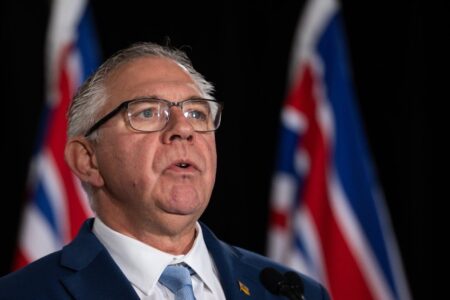
Doerkson won re-election in his Cariboo-Chilcotin riding, which CTV described as a safe Conservative seat. In his victory speech he declared “B.C. is definitely blue” and promised to “supercharge” the province, The Canadian Press reported. Prime Minister Mark Carney congratulated him and said he looks forward to working with him on housing and energy, CTV reported.
Eby kept his own seat. With all ballot boxes reported in Vancouver-Point Grey, he had 7,785 votes to 7,247 for Conservative candidate Alex McMillan, a gap of 538, according to Elections BC’s preliminary count, and The Canadian Press reported he won the riding.
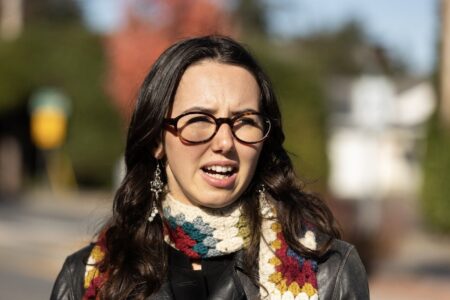
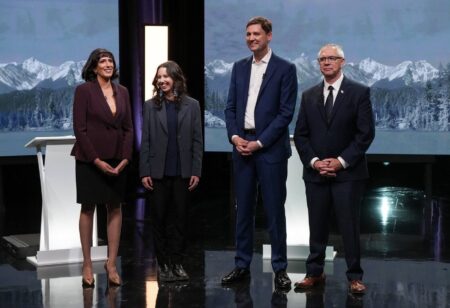
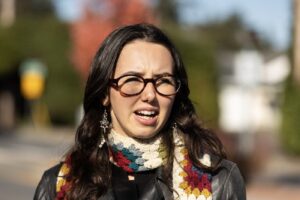
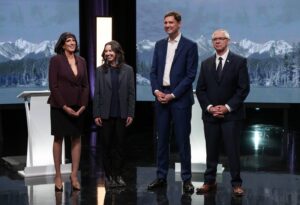
Green Leader Emily Lowan won Saanich North and the Islands, CTV and The Canadian Press reported. OneBC leader Dallas Brodie lost in Vancouver-Quilchena, where Conservative Carson Binda was declared the winner, and CentreBC Leader Elenore Sturko lost Surrey South to Conservative Megan Knight, CTV and Global News projected. Conservatives led all 10 Surrey ridings, as our riding-by-riding roundup shows.
The result is a sharp reversal from 2024, when the NDP won 47 seats, the Conservatives 44 and the Greens two, according to CTV. The NDP held a one-seat majority at the time Eby triggered the snap election, a situation he said had left the legislature stalled. He has also said the vote was needed to respond to the threat posed by U.S. President Donald Trump.
The campaign was shaped by a Conservative party in transition. Doerkson became interim leader on Sept. 20, two days before Eby called the vote. The party has said it will do what it takes to keep him as leader if he becomes premier, though it has not explained how it would get around a party constitution that bars an interim leader from running for the permanent job. Changing it requires a two-thirds vote of members, The Canadian Press reported. Eby called Doerkson a “Trojan horse” in the final days of the campaign, and Doerkson called that description “absurd,” as our election-day report noted.
Doerkson campaigned on no new taxes, an income tax cut of about $1,000 for most workers, doubling LNG production and repealing the Declaration on the Rights of Indigenous Peoples Act. Our explainer covers what the Conservatives promised, and we also look at how the Greens held two seats.
Advance voting was about 100,000 votes lower than in the previous election, CTV reported, a trend we covered before the vote. Opinion polls had shown a close race between the two parties, as we reported in our look at the final polls. In Greater Victoria, 100,242 advance ballots were cast.
Elections BC has not yet issued final results. Election-day ballots were counted by hand and advance ballots electronically, while vote-by-mail, telephone-assisted and some absentee ballots will be counted about two weeks after election day, Elections BC says. Seat totals and close ridings, including Kelowna Centre, where the Conservative lead was 42 votes, could change as those ballots are added.
Next steps include the NDP choosing how to select an interim or permanent leader and Doerkson’s transition to government, including his swearing-in and the naming of a cabinet. No dates had been announced as of 11:35 p.m. MT. Canada News Media will update this story as the count is finalized.
If you find reporting like this useful, consider supporting Canada News Media, an independent Canadian newsroom with no corporate parent.
Sources: Elections BC preliminary results, The Canadian Press, CTV News, CBC News, Global News.
Follow Canada News Media
Get the day's top Canadian stories and our two daily 60-second news videos wherever you scroll.
X Threads Facebook Instagram LinkedIn TikTok YouTube Pinterest Reddit Substack Flipboard Newsletter RSS