


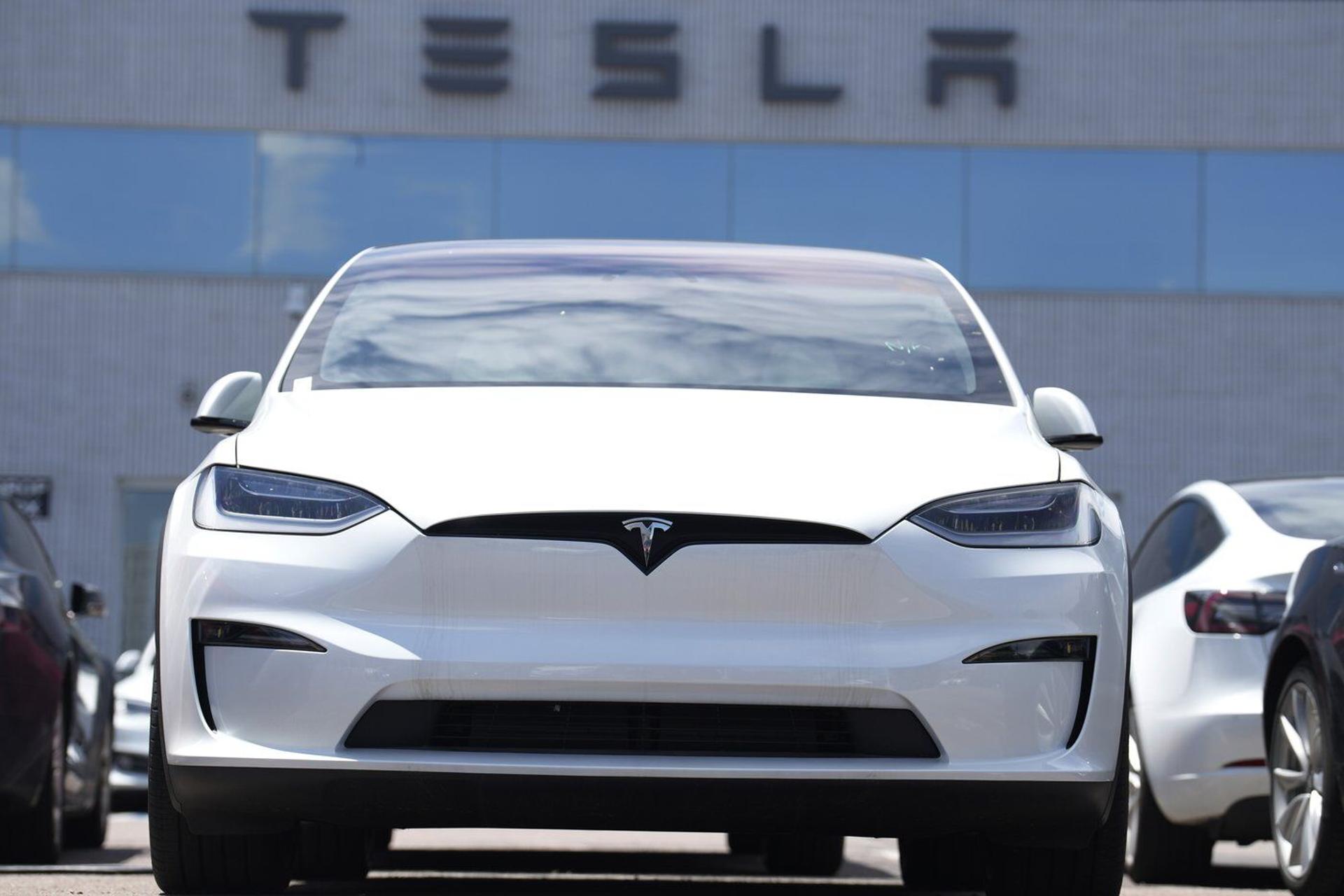
Fully electric and hydrogen-powered vehicles priced up to $150,000 would no longer pay Canada’s luxury tax under a change Finance Minister François-Philippe Champagne announced Thursday, raising the threshold from $100,000 for zero-emission models only.
The measure takes effect Friday, Nov. 13, subject to approval by Parliament, the Department of Finance said in a news release. All other vehicles, including gasoline models and conventional hybrids, would remain subject to the $100,000 threshold.
The luxury tax applies to sales, imports, leases and some improvements of passenger vehicles above the threshold. The amount owed is the lesser of 10 per cent of the vehicle’s full value and 20 per cent of the value above the threshold, according to the department.
That formula shows what the change is worth to buyers in the newly exempt range. Under the $100,000 threshold, an electric vehicle priced at $140,000 owed the lesser of $14,000 (10 per cent of the full price) and $8,000 (20 per cent of the $40,000 above the threshold), so $8,000. Under the proposed $150,000 threshold, the same vehicle would owe no luxury tax. At $120,000, the tax drops from $4,000 to zero.
The department said the change “recognizes the higher upfront cost of zero-emission vehicles” and supports the shift to electric vehicles. “By updating this measure to reflect today’s vehicle market, we are supporting the transition to a cleaner, more competitive economy,” Champagne said in the release. Finance Canada published draft legislative proposals to amend the Select Luxury Items Tax Act alongside the announcement.
The tax on vehicles has been a steady earner for Ottawa. The luxury tax on cars, planes and boats raised $913.4 million between autumn 2022 and March 2025, with most of it coming from vehicle sales, according to Canada Revenue Agency figures obtained by The Canadian Press. Last year’s federal budget ended the tax on aircraft and boats, while the tax on vehicles remained.
The announcement also restated Budget 2026 commitments on charging: $587 million over five years, starting in 2027-28, to install more than 55,000 electric vehicle chargers through a renewed Zero Emission Vehicle Infrastructure Program, and $45 million over five years for charging research. For more on the spending plan, see our Budget 2026 guide.
Buyers considering a high-priced electric vehicle should note that the change is a proposal that still needs parliamentary approval, and that the threshold is based on the vehicle’s taxable value as set out in the legislation, not necessarily the sticker price after options and fees.
If you find reporting like this useful, consider supporting Canada News Media, an independently owned Canadian newsroom.
Follow Canada News Media
Get the day's top Canadian stories and our two daily 60-second news videos wherever you scroll.
X Threads Facebook Instagram LinkedIn TikTok YouTube Pinterest Reddit Substack Flipboard Newsletter RSS