

Updated Nov. 16, 2026. Prices and incentives checked on Nov. 16, 2026.
The best electric vehicle to buy in Canada for 2027 is the Tesla Model Y, which starts at $49,990 before fees, qualifies for the federal $5,000 incentive and is rated at 463 km by Natural Resources Canada. The cheapest EV is the 2027 Nissan Leaf S at $34,998, and the best three-row family EV is the Hyundai Ioniq 9.
Key facts
The federal Electric Vehicle Affordability Program pays up to $5,000 on an eligible battery-electric vehicle bought or leased in 2026, falling to $4,000 on Jan. 1, 2027, according to Transport Canada. The final transaction value must be $50,000 or less unless the vehicle is made in Canada.
The cheapest new EV in this guide is the 2027 Nissan Leaf S at $34,998 plus $2,200 destination, according to Nissan Canada, or $30,998 before fees after the 2027 federal incentive.
The longest official range among these picks is the Lucid Air Grand Touring at 824 km, from Natural Resources Canada’s fuel consumption ratings.
In a winter test by the Canadian Automobile Association, 14 EVs drove 14 to 39 per cent less than their official range in sub-zero weather.
Quebec still pays up to $2,000 on a new EV in 2026; British Columbia’s Go Electric program no longer lists a passenger-vehicle rebate.
This guide covers battery-electric cars, SUVs and pickups that are on sale in Canada now as 2026 or 2027 models. Where an automaker has not published 2027 Canadian pricing, the latest published Canadian price is given with its model year. Prices are manufacturer starting prices; freight, pre-delivery inspection (PDI), dealer fees and sales tax are extra unless we say a figure includes them. Range, energy use and Level 2 recharge time come from Natural Resources Canada (NRCan), whose ratings for 2027 models are still being added through its fuel consumption ratings search. Safety awards are from the U.S. Insurance Institute for Highway Safety (IIHS).
Canada News Media did not test drive these vehicles. The picks weigh price after incentives, official range and efficiency, independent cold-weather results, charging speed and plug type, safety awards and Canadian awards from the Automobile Journalists Association of Canada (AJAC). For gas and hybrid models, see our sister guides to the best cars in Canada for 2027 and the best SUVs in Canada for 2027.
Best electric vehicles in Canada for 2027 compared by price
| EV | Best for | Starting price (model year) | NRCan range | Energy use | Plug | AWD | Federal incentive |
|---|---|---|---|---|---|---|---|
| Nissan Leaf | Cheapest EV | $34,998 + $2,200 destination (2027) | Up to 488 km (2026 S+); S est. 341 km by Nissan | 17.3 kWh/100 km (S+) | NACS | No | Yes (S, S+, SV+) |
| Chevrolet Bolt | Best value | $39,999 (2027) | 422 km | 17.5 kWh/100 km | NACS | No | Yes |
| Fiat 500e | City driving | $39,995 (2026) | 227 km | 19.0 kWh/100 km | CCS (adapter for Tesla) | No | Yes |
| Tesla Model Y | Best overall | $49,990 + $2,500 freight and PDI (2026-27) | 463 km RWD; 542 km AWD | 15.4 kWh/100 km RWD | NACS | Optional | Yes (RWD only) |
| Chevrolet Equinox EV | Electric SUV | $50,043 incl. freight and fees (2027) | 513 km FWD; 494 km AWD | 19.3 kWh/100 km | NACS | Optional | Yes (LT trims) |
| Hyundai Ioniq 5 | AWD crossover | $57,499 (2027) | 463 km | 20.1 kWh/100 km | NACS | Standard | No |
| Kia EV9 | Winter | $59,995 + $2,185 destination (2026) | 370 to 491 km | 23.6 kWh/100 km | NACS | On Land and GT | No |
| Hyundai Ioniq 9 | Three rows | $64,999 (2027) | 515 km AWD (2026 rating) | 23.8 kWh/100 km | NACS | Standard | No |
| Chevrolet Silverado EV | Pickup | $68,643 incl. freight and fees (2026) | 460 to 793 km | 30.7 kWh/100 km (Max Range) | CCS (2026); NACS (2027) | Standard 4WD | No |
| BMW iX3 | Luxury | $75,900 (2027) | Up to 698 km (BMW, NRCan-certified) | Not yet published | NACS | Standard | No |
| Hyundai Ioniq 5 N | Performance | $78,199 (2027) | 356 km | 26.7 kWh/100 km | NACS (CCS adapter for fast DC) | Standard | No |
| Lucid Air | Long range | $99,900 incl. destination and fees (2027) | 676 to 824 km (2025 ratings) | 14.4 kWh/100 km (Pure) | Not stated by Lucid Canada | Upper trims | No |
Best overall: Tesla Model Y
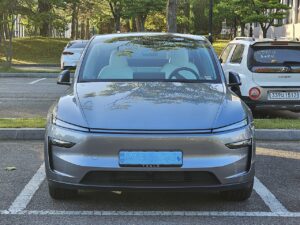
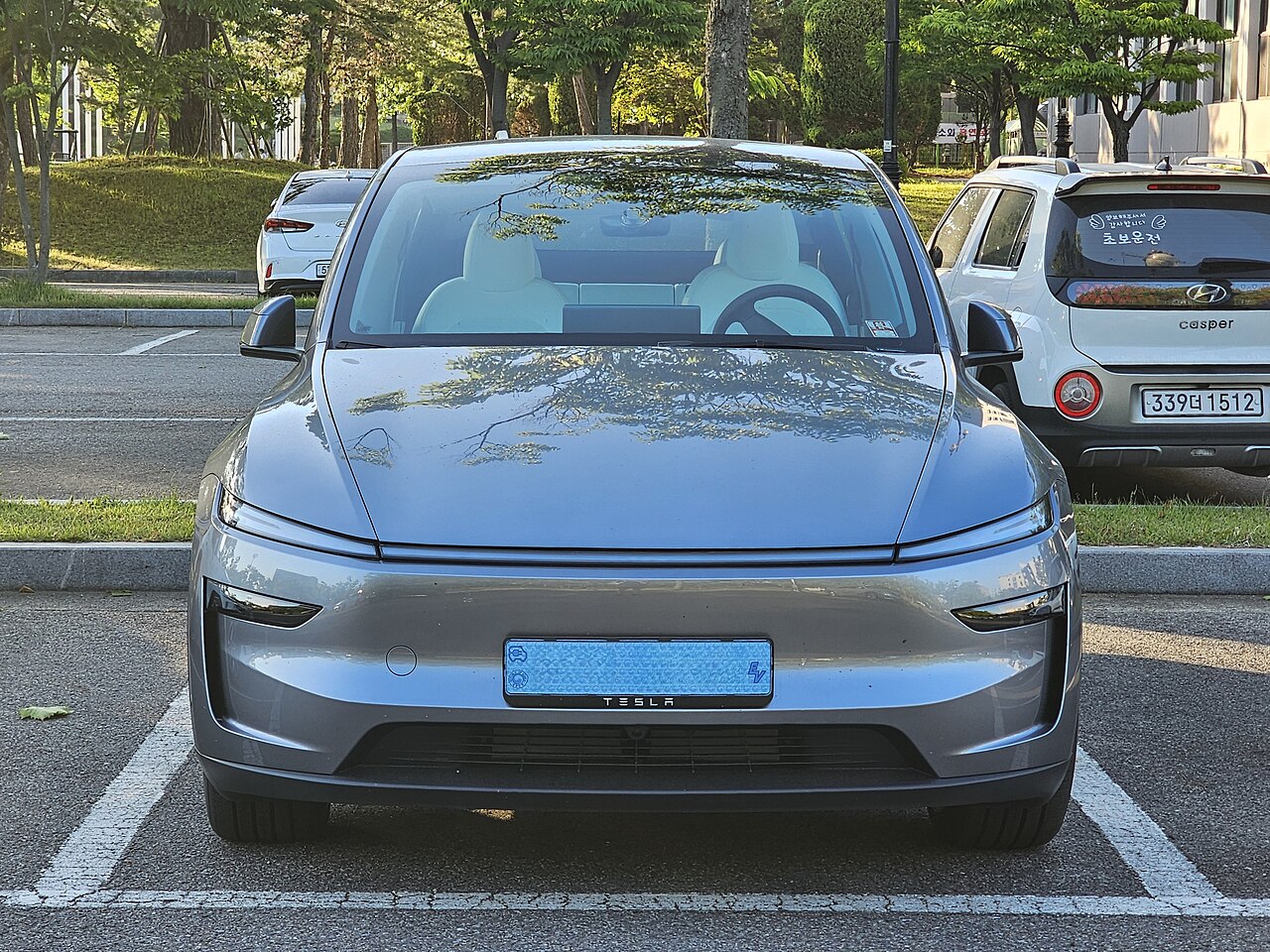
The Tesla Model Y is the best electric vehicle for most Canadians in 2027 because its rear-wheel-drive version combines a sub-$50,000 price, the federal incentive, the lowest energy use of any crossover in this guide and an IIHS Top Safety Pick+ award.
Price: the Model Y RWD starts at $49,990, plus a $2,500 freight and PDI fee, a $100 air-conditioning excise tax and a $24 tire fee, according to Tesla Canada’s configurator, which shows $44,990 after the $5,000 federal incentive in 2026. The Premium AWD is $64,990 and the Performance $74,990. Range and charging: NRCan rates the 2026 RWD at 463 km and 15.4 kWh/100 km, with an eight-hour Level 2 recharge; the Premium AWD is rated 542 km. Tesla lists peak fast charging of 175 kW for the RWD and 250 kW for the AWD versions, with built-in access to the Supercharger network, which had 2,892 fast-charging ports at 274 Canadian stations in NRCan data cited by Electric Autonomy in April.
Safety: the 2026-27 Model Y is an IIHS Top Safety Pick+. What’s new: Transport Canada’s list shows both 2026 and 2027 Model Y RWD versions eligible for the incentive, and Canadian cars now come from Tesla’s Berlin factory, Drive Tesla Canada reported. Winter: the Model Y was not in CAA’s Canadian winter test. Drawback: the RWD sits only $10 under the incentive’s $50,000 cap, so paid paint or options can push it over, and the cheapest version has no all-wheel drive.
Cheapest EV in Canada: Nissan Leaf
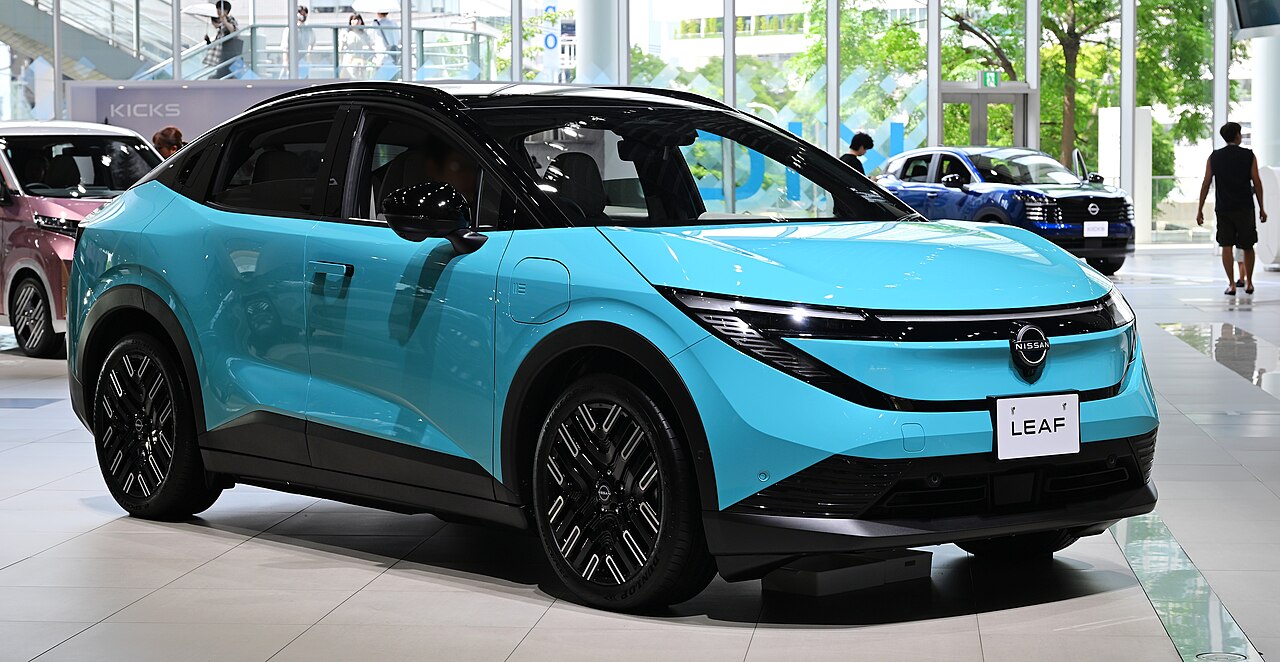
The 2027 Nissan Leaf S is the cheapest new electric vehicle in Canada at $34,998, or $30,998 before fees once the $4,000 federal incentive for 2027 is applied.
Price: Nissan Canada lists the 2027 Leaf S at $34,998, the S+ at $45,198, the SV+ at $48,198 and the Platinum+ at $52,998, plus $2,200 destination, on nissan.ca. The S, S+ and SV+ are on Transport Canada’s eligible vehicle list. Range: NRCan rates the 2026 Leaf S+ at 488 km and 17.3 kWh/100 km; the new S with a 53 kWh battery has no NRCan rating yet, and Nissan estimates 341 km, Drive Tesla Canada reported. Charging: the 75 kWh versions fast-charge at up to 150 kW and the S at up to 105 kW, through a built-in NACS port that Nissan says works at Tesla Superchargers without an adapter, according to Nissan’s specifications.
What’s new for 2027: the lower-priced S trim. The third-generation Leaf is now a crossover, which Nissan builds in Japan and the U.K., Nissan said. AWD: not available. Safety: no 2026 IIHS award, after an Acceptable score in the updated moderate overlap test. Drawback: the cheapest S has the smallest battery and slowest charging, so long-distance drivers should budget for the S+.
Best value: Chevrolet Bolt
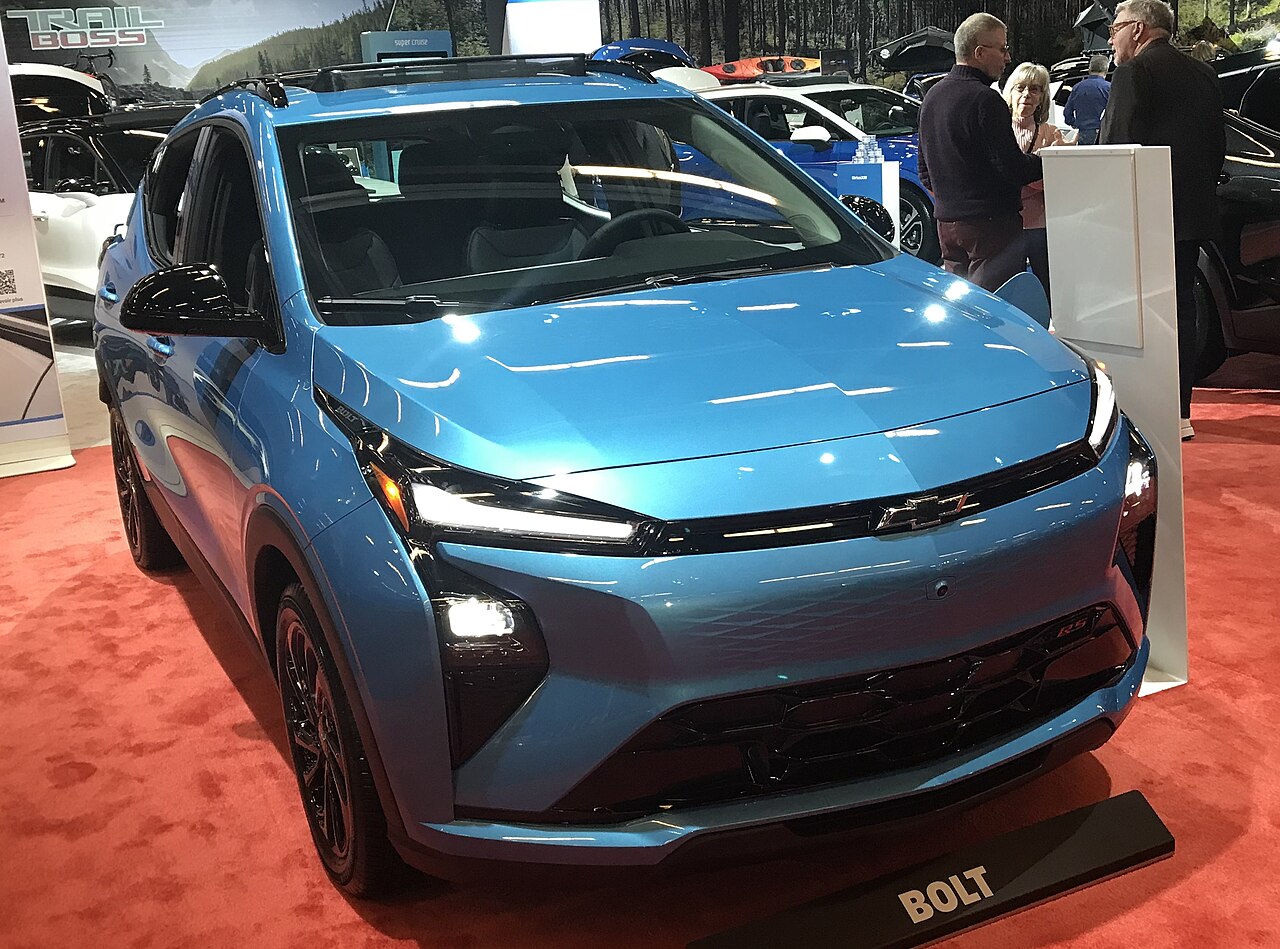
The 2027 Chevrolet Bolt is the best-value EV in Canada because it pairs a $39,999 price with 422 km of official range and a built-in Tesla-style charging port.
Price: the 2027 Bolt LT has an MSRP of $39,999, or $43,470 with freight, the air-conditioning charge and dealer fees, according to GM Canada; chevrolet.ca shows the LT from $43,443 and the RS from $46,443 with those fees included. Both are on the federal incentive list. Range and charging: NRCan rates the 2027 Bolt at 422 km and 17.5 kWh/100 km, with a Level 2 recharge of 6.8 hours. GM says the native NACS port fast-charges at up to 150 kW, from 10 to 80 per cent in about 25 minutes.
What’s new for 2027: it is an all-new car with a lithium iron phosphate battery, the first RS trim and available Super Cruise hands-free driving, built in Kansas, GM said. Safety: not yet rated by the IIHS. Drawback: front-wheel drive only, and its range is about 90 km shorter than the Equinox EV’s.
Best for city driving: Fiat 500e
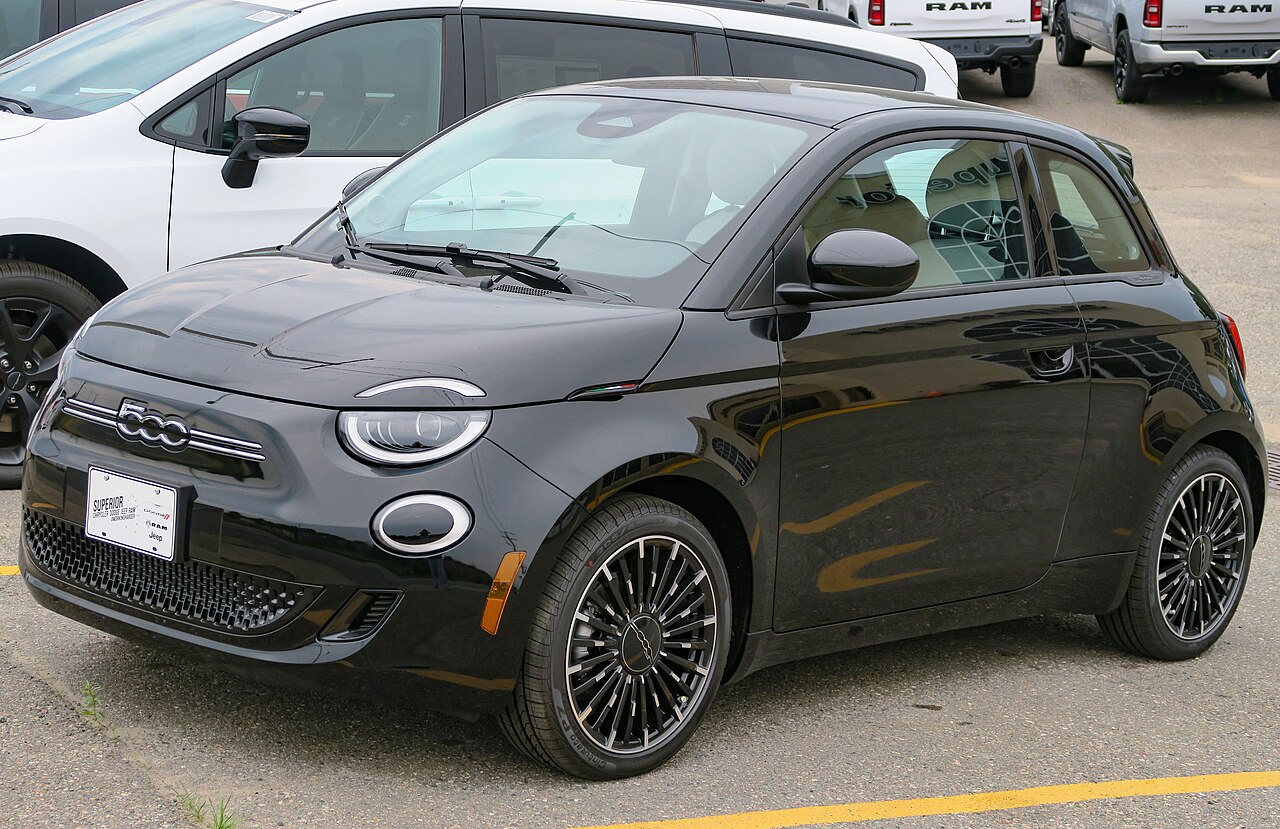
The Fiat 500e is the best EV for city commuting, a small Italian-built hatchback that starts at $39,995 and qualifies for the federal incentive, but its 227 km range suits short daily trips.
Price: the 2026 500e Pop starts at $39,995 and the Icona at $42,995, according to Stellantis pricing reported by Auto123; freight was not published. Range and charging: NRCan rates it at 227 km and 19.0 kWh/100 km, with a 6.2-hour Level 2 recharge. Fiat Canada says it charges from 20 to 80 per cent in about 35 minutes through a CCS port and needs an adapter at Tesla Superchargers. What’s new for 2026: new paint and added blind-spot monitoring on the Icona, Auto123 reported. AWD: no. Safety: not rated by the IIHS. Drawback: the shortest range in this guide, which shrinks further in cold weather.
Best electric SUV: Chevrolet Equinox EV
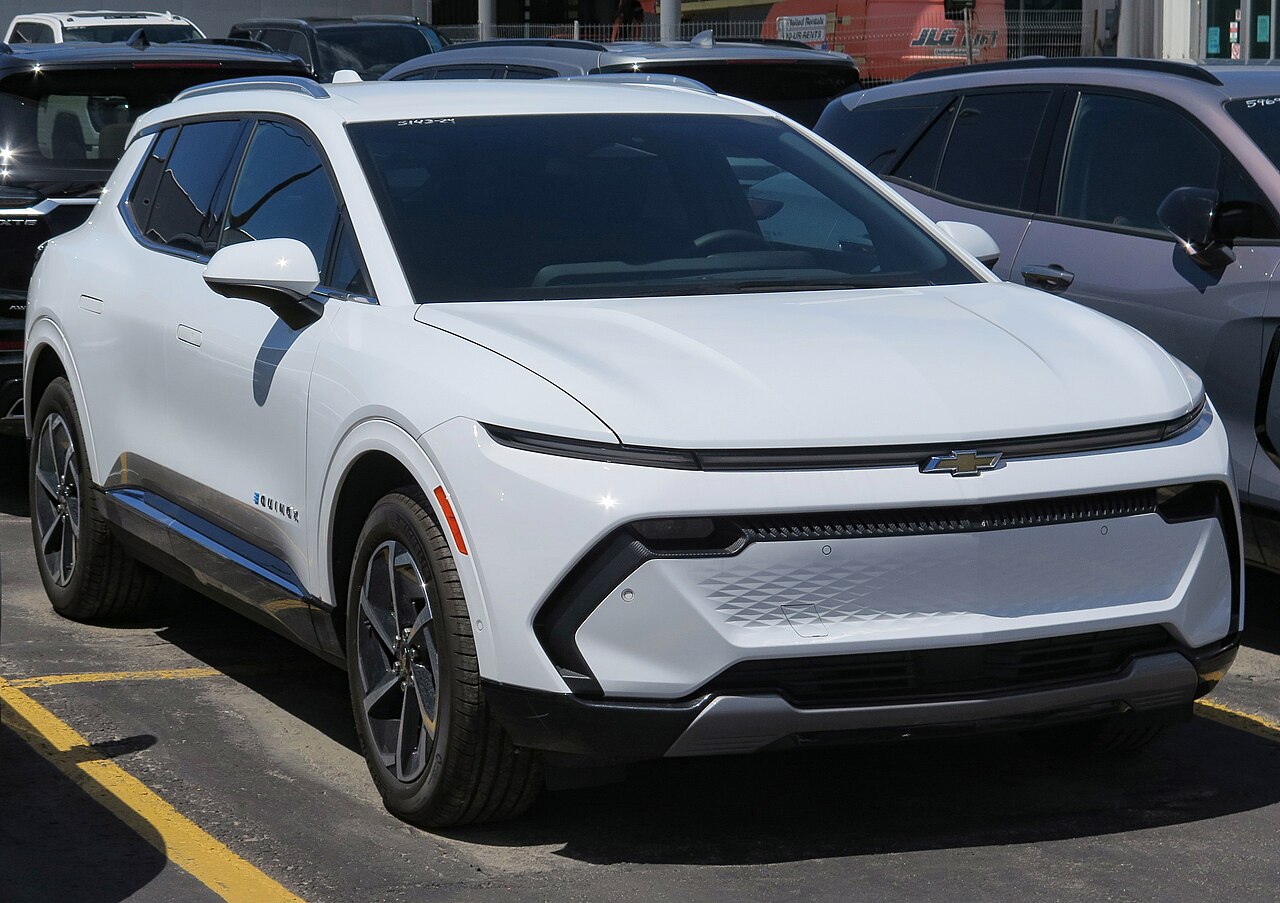
The Chevrolet Equinox EV is the best electric SUV for the money, with 513 km of official range, optional all-wheel drive and federal-incentive eligibility at a starting price of $50,043 including freight and fees.
Price: chevrolet.ca lists the 2027 LT 1 from $50,043, the LT 2 from $53,543 and the RS from $55,043, with freight, the air-conditioning charge and dealer fees included; GM does not publish a separate MSRP. The 2027 LT 1, LT 2 and LT 1 AWD are on the federal incentive list. Range and charging: NRCan rates the 2027 front-drive model at 513 km and 19.3 kWh/100 km and the AWD at 494 km. Chevrolet says the 85 kWh battery fast-charges at up to 150 kW, about 42 minutes from 10 to 80 per cent on the 2026 model.
What’s new for 2027: a built-in NACS port in place of the earlier CCS port, GM said. It is built in Ramos Arizpe, Mexico. Winter: in CAA’s test, an earlier Equinox EV covered 337 km against its 513 km rating, a 34 per cent drop. Drawback: slower fast charging than Hyundai and Kia rivals, and no IIHS award.
Best all-wheel-drive crossover: Hyundai Ioniq 5
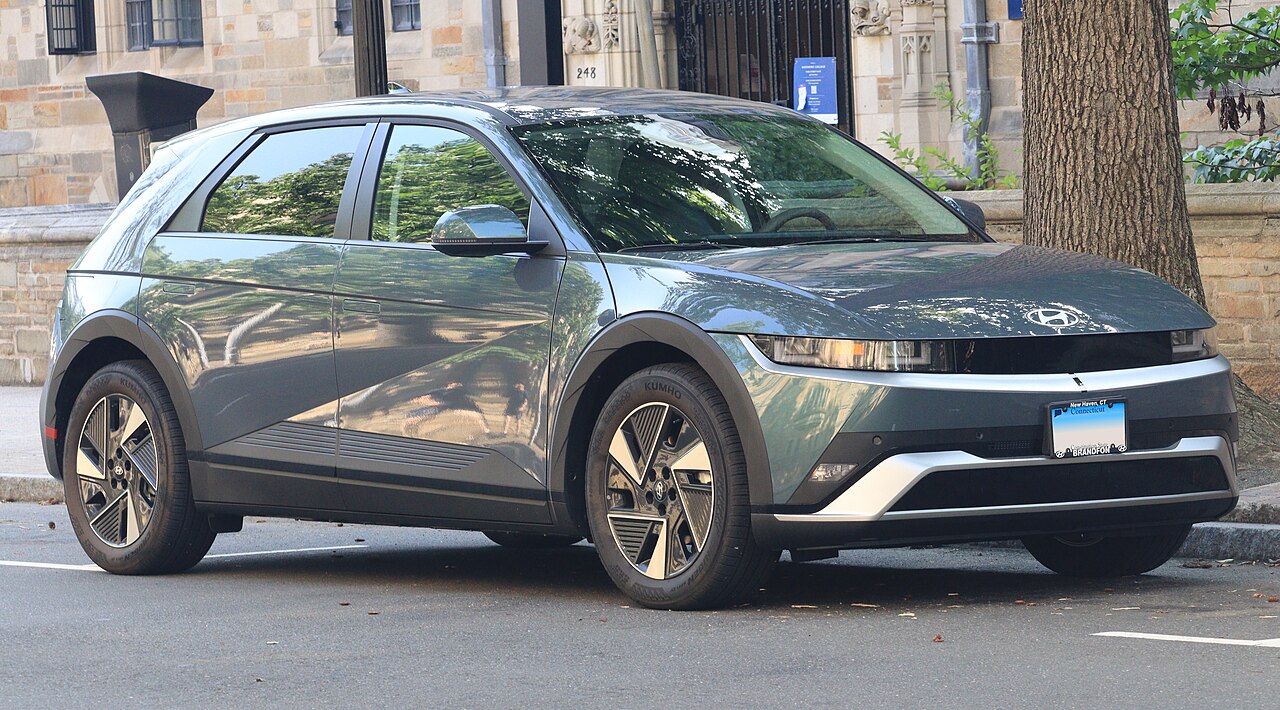
The 2027 Hyundai Ioniq 5 is the best pick for buyers who want all-wheel drive on every trim, fast 800-volt charging and an IIHS Top Safety Pick, from $57,499.
Price: Hyundai Canada lists the 2027 Ioniq 5 Preferred AWD at $57,499, or $60,544 with freight, PDI, fees and dealer administration. Because it is above $50,000 and imported, it does not qualify for the federal incentive. Range and charging: Hyundai quotes up to 463 km from an 84 kWh battery, matching NRCan’s 2026 rating for the AWD model on 19-inch wheels, with 20.1 kWh/100 km and an 8.9-hour Level 2 recharge. It has a NACS port with a CCS adapter and Supercharger access, Hyundai says.
What’s new for 2027: the lineup is all-wheel drive only, with up to 320 hp, and the 2027 model is an IIHS Top Safety Pick. Winter: an earlier Ioniq 5 lost 36 per cent of its rated range in CAA’s test. Drawback: dropping the rear-drive base model raised the entry price by $2,000 and cut the longest available range from the 2026 model’s 504 km to 463 km.
Best for winter: Kia EV9
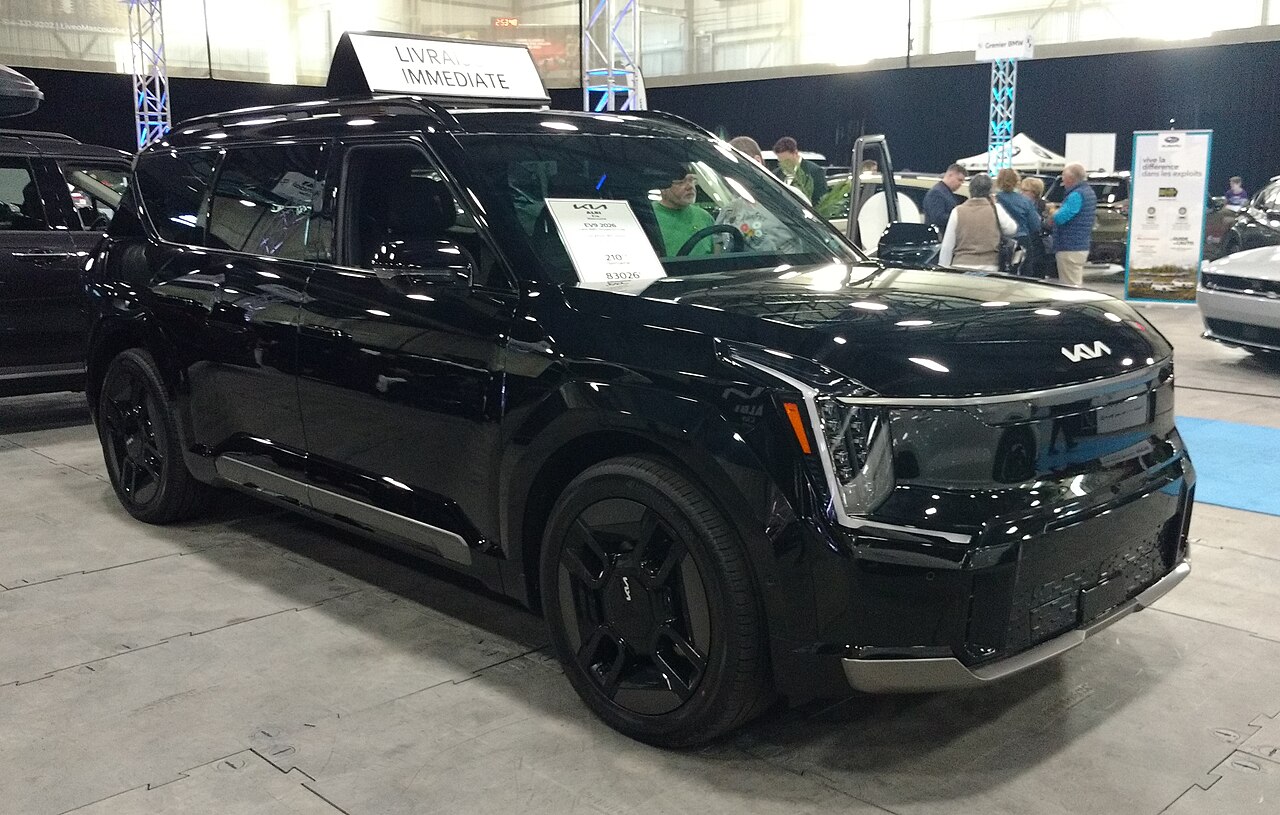
The Kia EV9 is the best EV for Canadian winters among family models, keeping 80 per cent of its rated range in CAA’s sub-zero test and charging at 139 kW in the cold, the best result for any SUV in that test.
Winter: CAA’s test on a route from Ottawa to Mont-Tremblant found the EV9 covered 349 km against a 435 km rating, a 20 per cent drop, while the test average fell between 14 and 39 per cent, according to CAA. Price: the 2026 EV9 Light RWD starts at $59,995 plus $2,185 delivery and destination on kia.ca. Range and charging: NRCan rates the Light RWD at 370 km, the Wind RWD at 491 km and the Land AWD at 455 km, at 23.6 to 24.9 kWh/100 km. Kia’s 2026 brochure says the 99.8 kWh battery charges from 10 to 80 per cent in 24 minutes on a 350 kW charger, through a new NACS port.
AWD: standard on the Land and GT trims. Safety and awards: it is an IIHS 2026 Top Safety Pick+ and the AJAC 2026 Canadian Electric Utility Vehicle of the Year. What’s new for 2026: the NACS port, a bigger range on long-range trims and a GT performance version. Drawback: CAA tested an earlier model year, and the base Light RWD’s 370 km is too short for much winter highway driving, so pick a Land AWD.
Best three-row family EV: Hyundai Ioniq 9
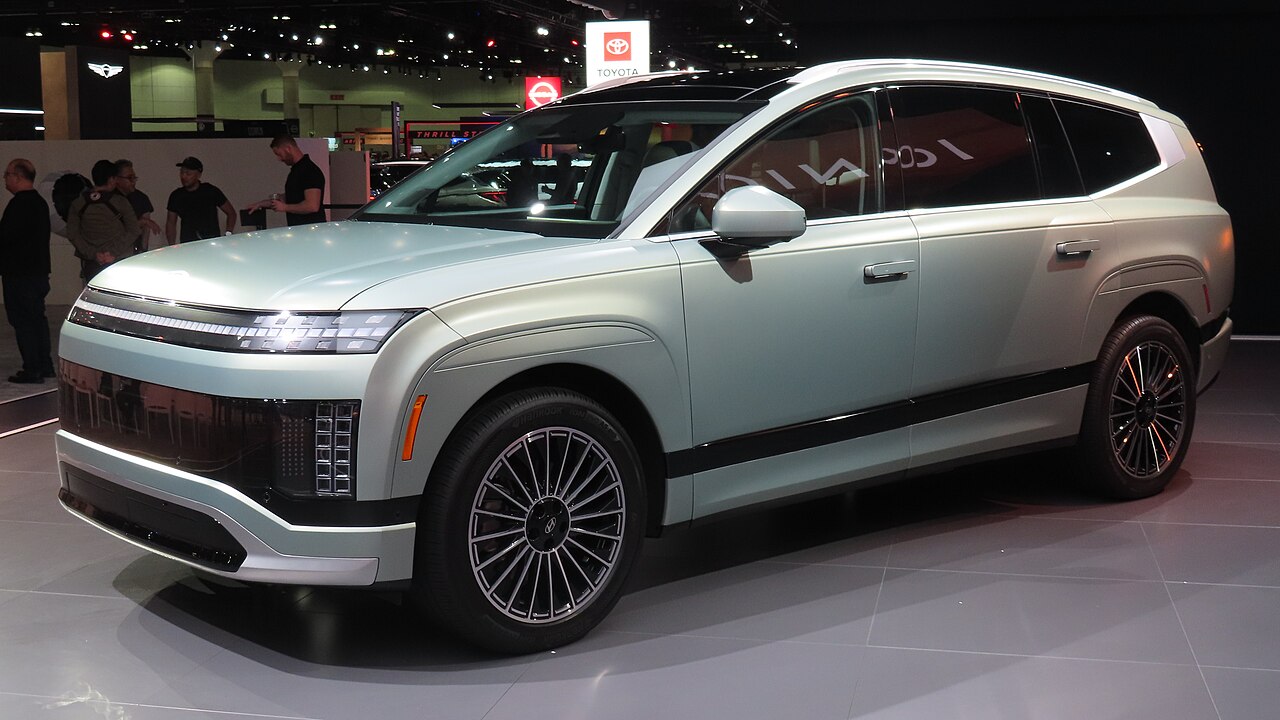
The Hyundai Ioniq 9 is the best three-row electric SUV for families, with 515 km of official range, more than the Kia EV9, and an IIHS Top Safety Pick+ award at a far lower price than the Rivian R1S.
Price: the 2027 Ioniq 9 Preferred AWD starts at $64,999, or $68,144 with freight, PDI and fees, according to Hyundai Canada; it is too expensive for the federal incentive. Range and charging: NRCan rates the 2026 AWD at 515 km and 23.8 kWh/100 km, from a 110.3 kWh battery that needs about 12 hours on Level 2. Hyundai includes AC and DC CCS adapters with the NACS port. AWD: standard on every 2027 trim. Safety: 2026 IIHS Top Safety Pick+. Winter: not in CAA’s test. Drawback: the big battery makes home charging slow on a basic Level 2 setup, and its price is about $5,000 above the EV9’s.
Best electric pickup: Chevrolet Silverado EV
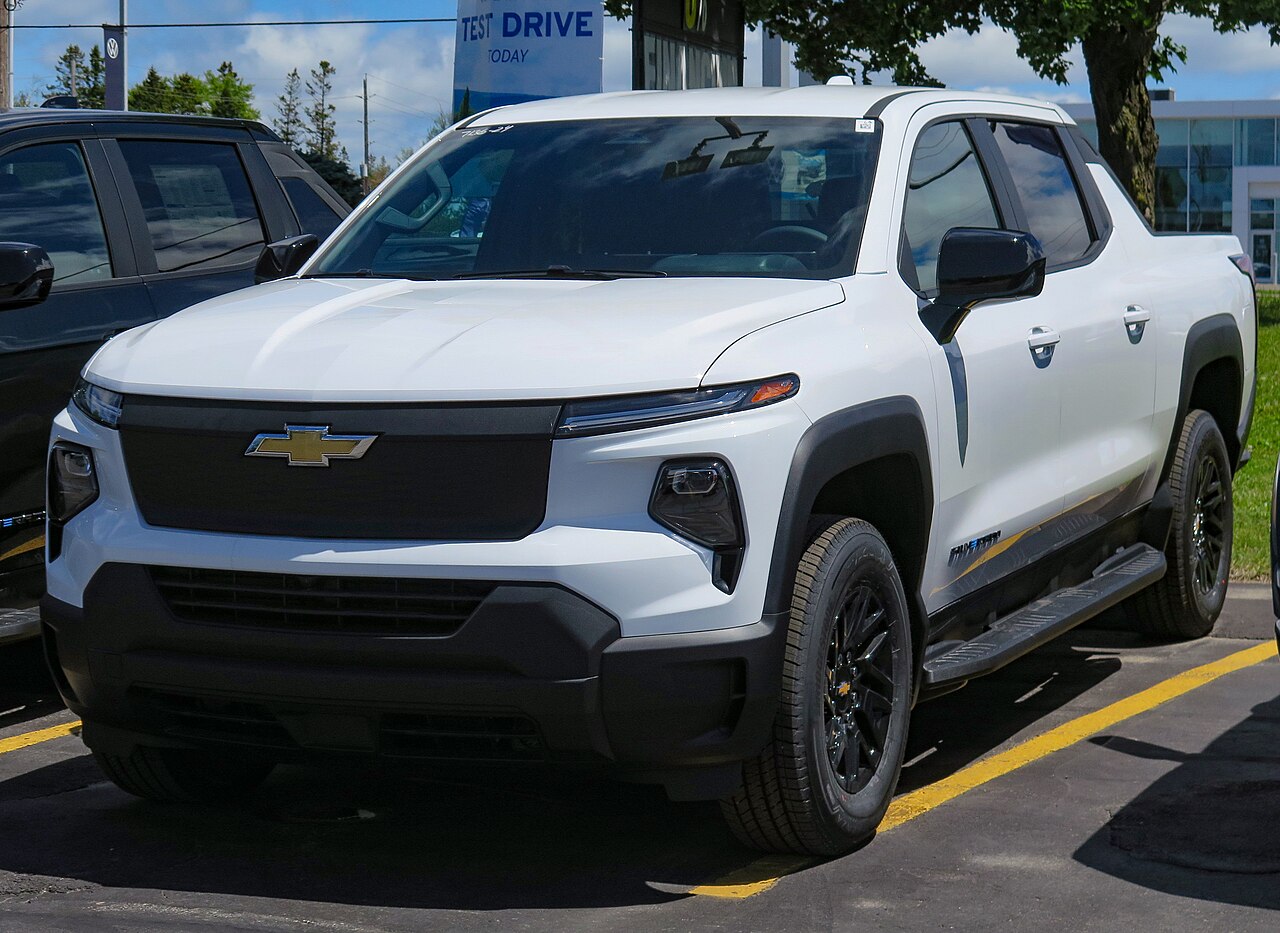
The Chevrolet Silverado EV is the best electric pickup in Canada, with up to 793 km of official range and the smallest winter range loss, 14 per cent, of any vehicle in CAA’s cold-weather test.
Price: chevrolet.ca lists the 2026 Silverado EV WT from $68,643, the LT from $82,343 and the Trail Boss from $94,143, with freight and fees included; 2027 Canadian pricing was not published as of Nov. 16. Range and charging: NRCan rates the 2026 WT Max Range at 793 km and 30.7 kWh/100 km, and the 2027 WT Extended Range at 682 km. Chevrolet offers 350 kW charging in “extremely limited supply.” The 2026 truck has a CCS port, and the 2027 model switches to NACS, GM said. AWD: four-wheel drive is standard.
Winter: the Silverado EV and Polestar 2 tied for the best result in CAA’s test, and the truck charged at 233 kW in the cold. Alternatives: Ford’s website no longer offers the F-150 Lightning new in Canada and says the next version will be an extended-range EV, according to Ford Canada, while the Rivian R1T starts at $148,107 on Rivian’s Canadian site. Drawback: it uses about twice the electricity per kilometre of a compact EV, and only the WT Max Range reaches the headline figure.
Best luxury EV: BMW iX3
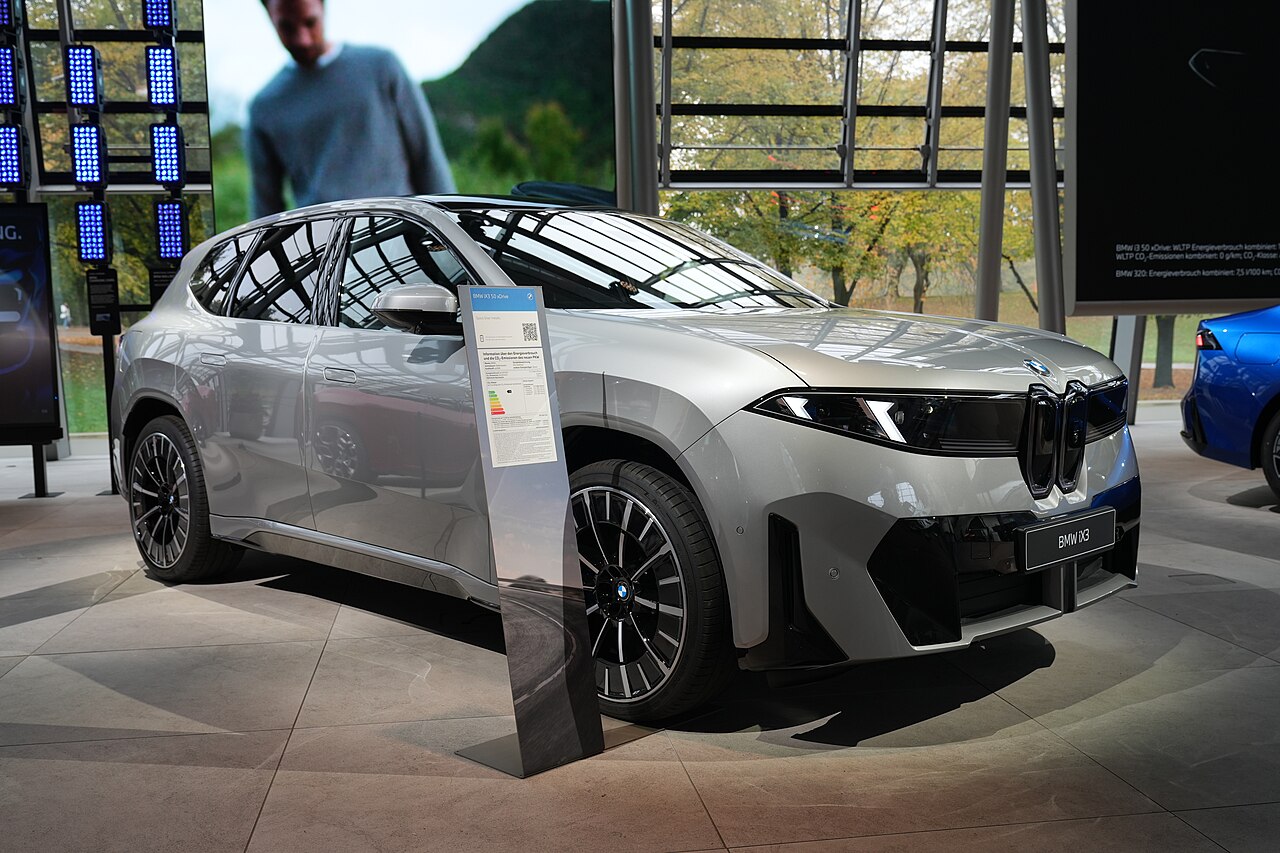
The new BMW iX3 is the best luxury EV for 2027, offering up to 698 km of range and 400 kW charging for $75,900, about the same price as a Cadillac Lyriq with much more range.
Price: the 2027 iX3 50 xDrive starts at $75,900, BMW Group Canada said in a May 6 release that did not list freight. Range and charging: BMW says the range of up to 698 km is NRCan-certified, though NRCan’s public data does not yet show its energy use. BMW’s U.S. release says it charges from 10 to 80 per cent in 21 minutes through a standard NACS port. AWD: standard (xDrive). Built in Debrecen, Hungary, BMW Canada said.
What’s new: the iX3 is the first model on BMW’s new electric platform and is a semi-finalist for AJAC’s 2027 Canadian Luxury Utility Vehicle of the Year. Safety: not yet rated by the IIHS. Winter: not in CAA’s test. Drawback: it only launched this fall, so dealer stock and long-term reliability data are thin. If you want a proven luxury EV, the 2027 Cadillac Lyriq starts at $74,843 with fees on cadillaccanada.ca, rated 525 km in rear-drive form.
Best performance EV: Hyundai Ioniq 5 N
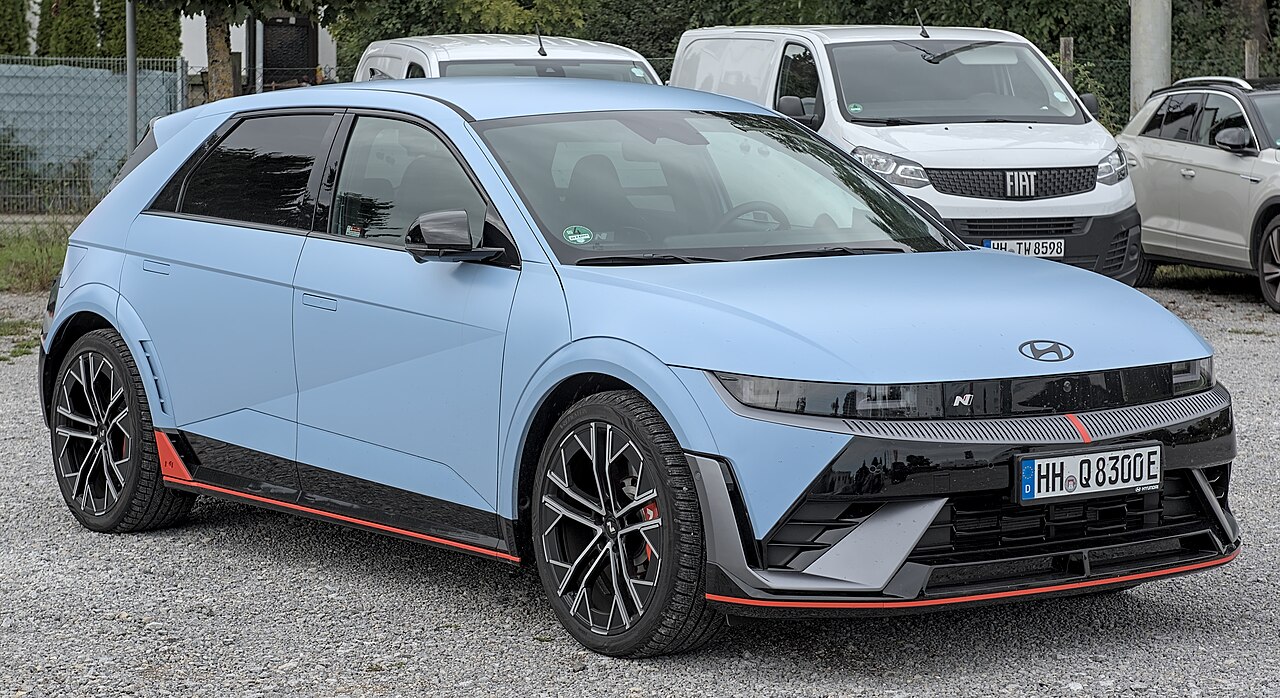
The Hyundai Ioniq 5 N is the best performance EV for the money, with up to 641 hp for $78,199, a little more than half the price of a Porsche Taycan 4S.
Price: the 2027 Ioniq 5 N has one AWD trim at $78,199, or $81,244 with freight and fees, according to Hyundai Canada, which lists 601 hp, or 641 hp with its N Grin Boost mode. Range and charging: NRCan rates it at 356 km and 26.7 kWh/100 km. Hyundai says it charges from 10 to 80 per cent in about 18 minutes on a 350 kW charger, using a CCS adapter for DC fast charging. Safety: the IIHS awards page lists the Ioniq 5 but not the N separately. For comparison, AJAC named the Porsche Taycan its 2026 Canadian Electric Car of the Year, and the 2027 Taycan 4S starts at $142,600, Auto123 reported. Drawback: the N’s 356 km rating is about 100 km less than a regular Ioniq 5, and hard driving cuts it further.
Best long-range EV: Lucid Air
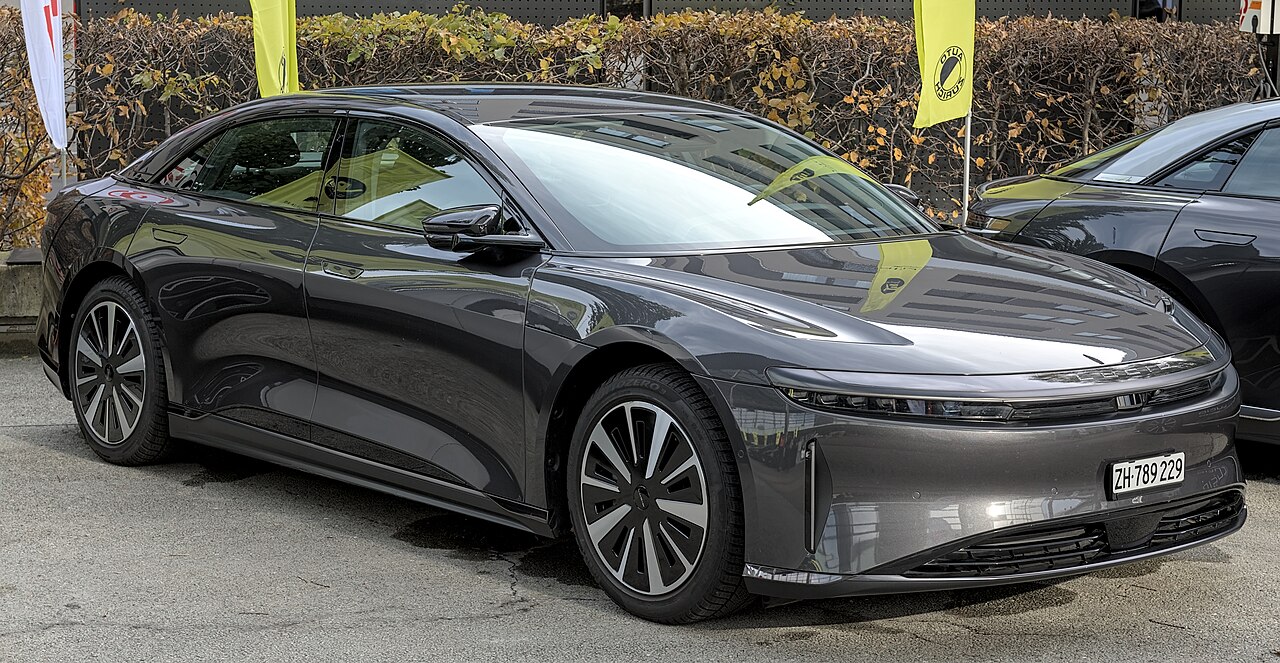
The Lucid Air has the longest official range of any EV sold in Canada in this guide, up to 824 km, and the base Pure is also the most efficient car here at 14.4 kWh/100 km.
Price: Lucid Canada lists the 2027 Air Pure RWD from $99,900, the Touring from $112,800 and the Grand Touring from $161,200, with the $2,000 destination fee, $200 documentation fee and air-conditioning tax included but federal luxury tax and sales tax excluded. Range and charging: NRCan’s latest Air ratings, for the 2025 model, are 676 km for the Pure and 824 km for the Grand Touring. Lucid says the Pure adds 320 km in about 16 minutes on a 350 kW charger. Winter: a Lucid Air Grand Touring drove 520 km in the Norwegian Automobile Federation’s January 2026 winter test, the longest distance recorded, Drive Tesla Canada reported.
The Air is a semi-finalist for AJAC’s 2027 Canadian Luxury Car of the Year. Safety: no 2026 IIHS award. Drawback: it costs about twice as much as the Model Y, and buyers of the pricier trims should ask how the federal luxury tax applies; Ottawa has proposed raising the threshold for zero-emission vehicles to $150,000, as we reported.
Other EVs worth a look in Canada
Kia’s new small models are worth checking: the 2027 EV3 crossover is listed from $39,321 excluding incentives on kia.ca, and the 2026 EV4 sedan from $41,321, with NRCan rating the EV4 Wind at 552 km. Both are 2027 AJAC semi-finalists. The 2027 Toyota bZ starts at $45,985 with a NACS port and now includes CCS adapters, Toyota Canada said, and its front-drive XLE qualifies for the federal incentive. The Rivian R1S, an IIHS 2026 Top Safety Pick+, starts at $155,107 on Rivian’s Canadian site.
The Tesla Model 3 would rank here on price and efficiency, but Tesla’s Canadian site says orders for its cheaper Premium versions are paused because its quota of China-built imports is used up, with ordering expected to resume in March 2027, Drive Tesla Canada reported. Canada allows 49,000 China-built EVs a year at a 6.1 per cent tariff instead of the 100 per cent surtax, according to Global Affairs Canada. China-built vehicles do not qualify for the federal incentive, which is limited to vehicles made in Canada or in countries with a free-trade agreement with Canada. For more on that debate, see our report on Prime Minister Mark Carney’s comments on Chinese automakers.
Plug-in hybrids if you are not ready for full electric
A plug-in hybrid can cover most daily driving on electricity and switch to gasoline on long winter trips. The federal program pays up to $2,500 on an eligible plug-in hybrid in 2026 and $2,000 in 2027, under the same $50,000 cap, according to Transport Canada, and Quebec pays $1,000 or $500 depending on the model. Our SUV guide, linked above, covers the Canadian-built Toyota RAV4 plug-in hybrid and the Mitsubishi Outlander PHEV.
EV rebates and incentives in Canada for 2027
Ottawa’s Electric Vehicle Affordability Program is active and runs to March 31, 2031, or until its funding runs out, Transport Canada says. The incentive for a battery-electric vehicle falls from $5,000 in 2026 to $4,000 in 2027, $3,000 in 2028 and 2029, and $2,000 in 2030 and 2031. The amount depends on the year the dealership submits the eligibility assessment, not the delivery date, and is applied at the dealership. Leases of 48 months or more get the full amount, and leases of 12 to 47 months get a prorated share. Buyers who want the 2026 amount must have the paperwork submitted before Jan. 1, 2027.
Quebec’s Roulez vert program pays up to $2,000 on a new battery-electric vehicle in 2026, and the province says amounts are gradually being reduced, according to Quebec.ca; no 2027 amount had been published as of Nov. 16. British Columbia’s Go Electric site now lists rebates only for commercial vehicles and chargers. Check your own province’s energy or transportation ministry before buying.
Charging an EV in Canada
Canada had at least 39,654 public charging ports at 14,743 locations as of March 25, 2026, including 8,431 DC fast-charging ports, up 33.6 per cent in a year, according to NRCan data analyzed by Electric Autonomy. Most new 2027 models in this guide use the North American Charging Standard (NACS) port first used by Tesla, which lets them plug into Tesla Superchargers; older CCS-equipped cars need an adapter. Ottawa has also budgeted $587 million over five years from 2027-28 for more than 55,000 new chargers, as covered in our Budget 2026 guide.
What is the cheapest electric vehicle in Canada for 2027? The 2027 Nissan Leaf S is the cheapest new EV in Canada at $34,998 plus $2,200 destination, according to Nissan Canada. After the $4,000 federal incentive that applies from Jan. 1, 2027, it costs $30,998 before fees and taxes. The Chevrolet Bolt at $39,999 and the Fiat 500e at $39,995 are the next-cheapest.
Is there a federal EV rebate in Canada in 2027? Yes. The federal Electric Vehicle Affordability Program pays up to $4,000 on an eligible battery-electric vehicle and up to $2,000 on a plug-in hybrid in 2027, down from $5,000 and $2,500 in 2026, according to Transport Canada. The vehicle must be made in Canada or a free-trade partner country, and its final transaction value must be $50,000 or less unless it is built in Canada.
How much range do EVs lose in a Canadian winter? In CAA’s sub-zero test of 14 EVs, vehicles drove 14 to 39 per cent less than their official range. The Norwegian Automobile Federation’s January 2026 test, run in temperatures as low as -32 C, found an average loss of 38 per cent against European ratings, the FIA reported. Preheating the battery and cabin while plugged in reduces the loss.
How much does it cost to charge an EV at home compared with gas? A Tesla Model Y RWD rated at 15.4 kWh/100 km uses about $1.40 of electricity per 100 km at Ontario’s off-peak price of 9.1 cents per kWh, or about 57 cents at the 3.7-cent ultra-low overnight price, based on Ontario Energy Board rates from Nov. 1, 2026. A gas SUV rated 9.0 L/100 km, such as the Mazda CX-5, uses about $16.16 of fuel per 100 km at October’s national average of 179.6 cents a litre from Statistics Canada. Over 20,000 km that is about $280 for electricity against about $3,230 for gas, before delivery charges, taxes and charging losses on the electricity bill.
Are electric vehicles worth it in Canada? For drivers who can charge at home, an EV usually costs far less to fuel than a gas vehicle, and the federal incentive cuts the purchase price on models under $50,000. The trade-offs are a higher upfront price on many models, range losses of 14 to 39 per cent in cold weather in CAA’s test, and slower trips where fast chargers are scarce. Drivers without home or workplace charging should check local public chargers before buying.
Sources: Transport Canada, Natural Resources Canada, the Canadian Automobile Association, the Insurance Institute for Highway Safety, the Automobile Journalists Association of Canada, Quebec.ca, the Ontario Energy Board, Statistics Canada, Global Affairs Canada and the automakers’ Canadian websites and news releases, all checked on Nov. 16, 2026. Prices change often; confirm with a dealer before you buy. Related reading: zero-emission vehicles reached 13 per cent of new sales in August.
If you find reporting like this useful, consider supporting Canada News Media, an independently owned Canadian newsroom.
Follow Canada News Media
Get the day's top Canadian stories and our two daily 60-second news videos wherever you scroll.
X Threads Facebook Instagram LinkedIn TikTok YouTube Pinterest Reddit Substack Flipboard Newsletter RSS