


Ofgem will announce the energy price cap for Jan. 1 to March 31, 2027 by Wednesday, Nov. 25, 2026, according to the regulator’s published schedule. Until then, the cap that applies from Oct. 1 to Dec. 31, 2026 is £1,723 a year for a typical dual-fuel household paying by Direct Debit, with electricity at 26.32p per kWh plus a 54.83p daily standing charge and gas at 7.97p per kWh plus 29.68p a day.
Updated Monday, Nov. 23, 2026. The January 2027 rates are not announced yet; this page will be updated with Ofgem’s figures on announcement day. All figures below come from Ofgem.
Key facts: Ofgem energy price cap, January 2027 (UK)
January to March 2027 cap: not announced yet. Ofgem says it will announce it by Nov. 25, 2026.
New cap takes effect: Friday, Jan. 1, 2027, running to March 31, 2027.
Current cap (Oct. 1 to Dec. 31, 2026): £1,723 a year for a typical household paying by Direct Debit, up 4 per cent on the July to September 2026 period.
Electricity (Direct Debit average, Oct. to Dec. 2026): 26.32p per kWh; standing charge 54.83p a day. No VAT on electricity from Oct. 1, 2026 to March 31, 2027.
Gas (Direct Debit average, Oct. to Dec. 2026): 7.97p per kWh; standing charge 29.68p a day, including 5 per cent VAT.
Next announcements: Feb. 23, 2027 (April to June 2027) and May 26, 2027 (July to September 2027).
Covers: England, Scotland and Wales. Not fixed tariffs, business contracts, heat networks or heating oil.
When will Ofgem announce the January 2027 price cap?
Ofgem says the level for Jan. 1 to March 31, 2027 will be announced by Nov. 25, 2026. It reviews the cap every three months and says it may publish earlier if external events require. The regulator’s published schedule, from Ofgem’s Oct. to Dec. 2026 price cap announcement (Aug. 26, 2026), is:
| Announcement by | Cap period |
|---|---|
| Nov. 25, 2026 | Jan. 1 to March 31, 2027 |
| Feb. 23, 2027 | April 1 to June 30, 2027 |
| May 26, 2027 | July 1 to Sept. 30, 2027 |
What are the new energy price cap rates for January 2027?
Not announced yet. We will add Ofgem’s January to March 2027 annual figure, unit rates and standing charges here as soon as the regulator publishes them. We do not repeat forecasts from consultancies, because they are estimates rather than the official cap.
What is the energy price cap now (October to December 2026)?
From Oct. 1 to Dec. 31, 2026, the price cap is £1,723 a year, a 4 per cent rise on the previous period, according to Ofgem’s unit rates and standing charges page. That figure is based on the average unit rate and standing charge for people who pay by Direct Debit in England, Scotland and Wales and use typical amounts of gas and electricity. Ofgem said the rise was the result of higher wholesale gas prices caused by the conflict in the Middle East, but added that prices remain well below the height of the 2022 energy crisis, when the government limited typical bills to £2,500.
| Direct Debit average | July 1 to Sept. 30, 2026 | Oct. 1 to Dec. 31, 2026 |
|---|---|---|
| Electricity unit rate | 26.11p per kWh | 26.32p per kWh |
| Electricity standing charge | 57.19p a day | 54.83p a day |
| Gas unit rate | 7.33p per kWh | 7.97p per kWh |
| Gas standing charge | 29.04p a day | 29.68p a day |
Source: Ofgem’s unit rates and standing charges page. Figures are rounded to two decimal places and include 5 per cent VAT on gas. There is no VAT on electricity from Oct. 1, 2026 to March 31, 2027, so Ofgem says costs cannot be compared directly with earlier periods.
Is VAT still removed from electricity bills in January 2027?
Yes. Ofgem says the government has removed VAT from electricity bills from Oct. 1, 2026 to March 31, 2027, which covers the whole of the January to March 2027 cap period. Gas is still charged 5 per cent VAT. Ofgem has said households that use more electricity than gas, or only electricity, see a bigger reduction, though high wholesale gas prices mean some people may not notice the full effect on their bills.
Does the price cap limit my total energy bill?
No. Ofgem sets the maximum a supplier can charge for each unit of energy and for the daily standing charge on a standard variable (default) tariff. The more energy you use, the more you pay. The £1,723 figure is an illustration for a typical household, not a ceiling on any bill, according to Ofgem’s price cap explainer.
Who is covered by the energy price cap?
The cap protects households on standard variable tariffs in England, Scotland and Wales, whether they pay by Direct Debit, standard credit (on receipt of a bill), prepayment meter or an Economy 7 meter. You are not covered if you have agreed a fixed tariff, have a business energy contract, or get heat from a heat network or heating oil. Northern Ireland has a separate energy market and is not covered by Ofgem’s cap.
Why do rates differ by region and payment method?
Your actual unit rate and standing charge depend on where you live, how you pay (Direct Debit, standard credit or prepayment), the fuel and your meter type. Ofgem publishes tables by region for each payment method, and you can find your region by entering a postcode on Ofgem’s unit rates and standing charges page. Standing charges vary by region because of differences in network costs, the number of customers and average use.
How does Ofgem calculate the cap?
Ofgem says the cap reflects wholesale energy costs, network costs for pipes and wires, government policy costs such as the Warm Home Discount, suppliers’ operating costs, an allowed margin (earnings before interest and tax), headroom for uncertain costs, a levelisation allowance so prepayment and Direct Debit customers pay the same standing charge, and VAT. A change in any of these can move the cap up or down.
What can I do before Jan. 1, 2027?
Ofgem says households could pay less by changing tariff or payment method, and that people with smart meters may benefit from offers such as cheaper electricity at certain times. If you cannot pay your bill, Ofgem says you should tell your supplier, which must help, for example with a repayment plan or emergency credit. Taking a meter reading close to Jan. 1 can help make sure you are billed at the right rate for each period. This page does not give financial advice; compare tariffs on their terms.
Related guides
See also public holidays 2027 in the UK, Ireland, Germany and France and Royal Mail last posting dates Christmas 2026. All of our dated UK and European guides are on the UK and Europe guides and key dates 2026-27 hub.
Frequently asked questions
When is the January 2027 energy price cap announced?
Ofgem says it will announce the cap for Jan. 1 to March 31, 2027 by Nov. 25, 2026.
What is the energy price cap from January 2027?
Not announced yet as of Nov. 23, 2026. This page will be updated with Ofgem's official figures when they are published.
What is the current energy price cap?
From Oct. 1 to Dec. 31, 2026 it is £1,723 a year for a typical dual-fuel household paying by Direct Debit, up 4 per cent on the previous period.
What are the current electricity and gas unit rates under the cap?
On average by Direct Debit, electricity is 26.32p per kWh with a 54.83p daily standing charge, and gas is 7.97p per kWh with a 29.68p daily standing charge (Oct. 1 to Dec. 31, 2026).
Is there VAT on electricity in early 2027?
No. The government removed VAT from electricity bills from Oct. 1, 2026 to March 31, 2027. Gas still carries 5 per cent VAT.
Does the price cap apply to fixed tariffs?
No. It covers standard variable (default) tariffs in England, Scotland and Wales only.
When is the next price cap change after January 2027?
Ofgem will announce the April to June 2027 cap by Feb. 23, 2027.
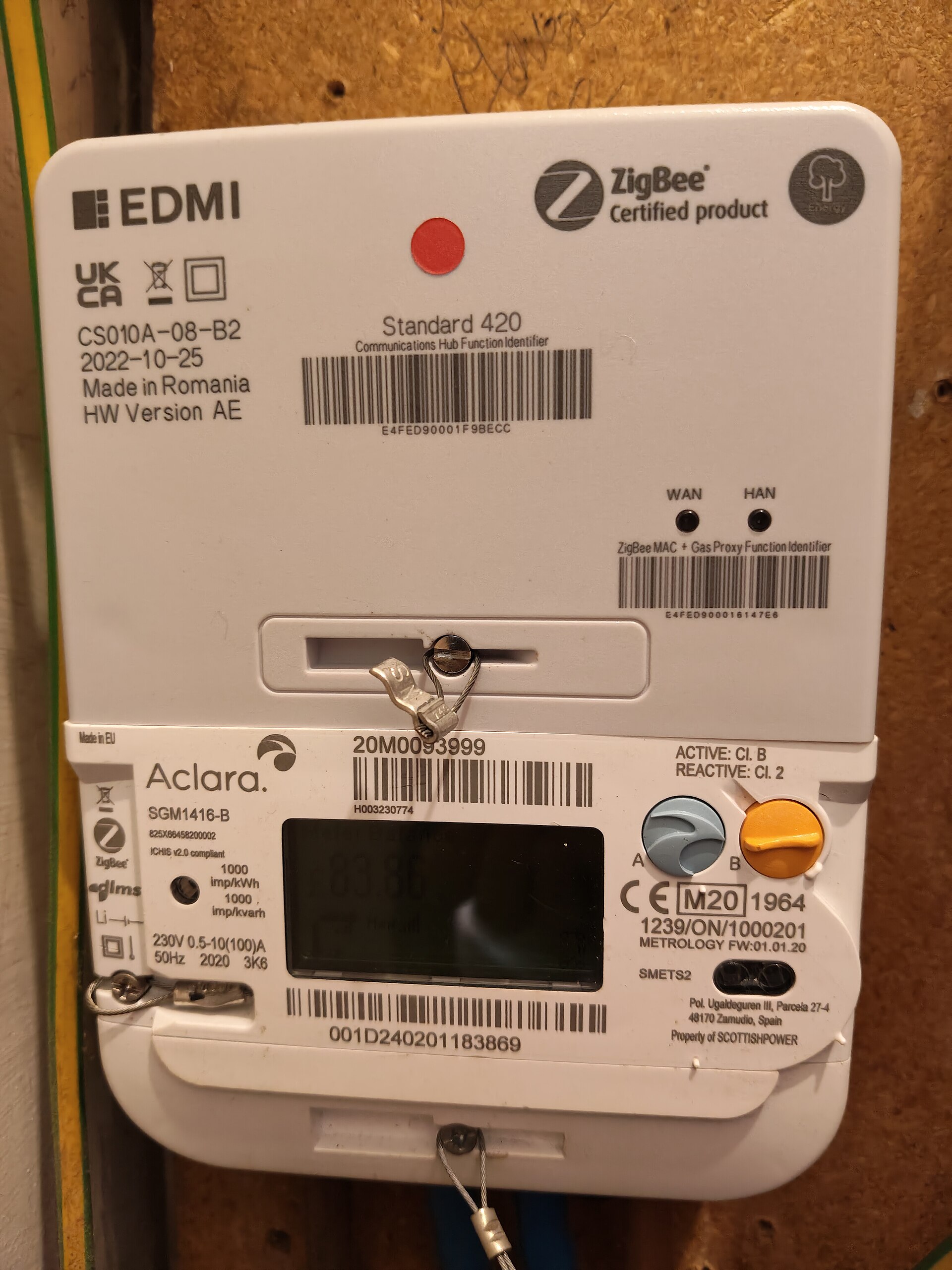
File photo: a smart prepayment electricity meter in a British home. Photo by SpicyPhoto, Wikimedia Commons, CC0.
If you find reporting like this useful, consider supporting Canada News Media, an independently owned Canadian newsroom.
Sources: Ofgem’s Oct. to Dec. 2026 price cap announcement (Aug. 26, 2026); Ofgem’s unit rates and standing charges page; Ofgem’s price cap explainer (all read Nov. 23, 2026).
Follow Canada News Media
Get the day's top Canadian stories and our two daily 60-second news videos wherever you scroll.
X Threads Facebook Instagram LinkedIn TikTok YouTube Pinterest Reddit Substack Flipboard Newsletter RSS