


The EU’s Entry/Exit System (EES) is already fully running: since April 10, 2026, non-EU travellers on short stays have their fingerprints and photo registered at every external border crossing of the 29 European countries using it. ETIAS, the EUR 20 online travel authorisation for visa-free visitors including UK, U.S. and Canadian citizens, has not started yet, and no start date has been announced as of Nov. 23, 2026; the EU says it will give several months’ notice.
Updated Monday, Nov. 23, 2026. Facts checked against the EU’s official travel site, travel-europe.europa.eu (ETIAS home page, ETIAS FAQ and EES FAQ), on Nov. 23, 2026.
Key facts: ETIAS and EES 2026-27 (Europe)
EES status: fully operational at all external border crossing points since April 10, 2026, after a six-month phased rollout that ended April 9, 2026.
EES applies to: non-EU nationals on short stays (up to 90 days in any 180), with or without a short-stay visa. That includes UK, U.S. and Canadian travellers.
EES collects: facial image plus four fingerprints for visa-free travellers (children under 12 are not fingerprinted); entry and exit dates.
ETIAS status: not in operation; no applications are being collected. Start date: not announced yet.
ETIAS cost when it starts: EUR 20. Free for applicants under 18 or over 70, and for qualifying family members of EU nationals.
ETIAS validity: three years or until your passport expires, whichever comes first; stays of up to 90 days in any 180-day period.
ETIAS countries: 30 European countries. Apply only on the official website or official app.
Beware: unofficial sites may charge extra fees or claim to take ETIAS applications now.
When does ETIAS start?
Not announced yet. The official ETIAS website says ETIAS is currently not in operation, no applications for travel authorisations are being collected, and the European Union will announce the specific start date several months before launch. That means no traveller needs an ETIAS authorisation today, and anyone who books a trip now does not need to apply. We will update this page when the EU confirms a date.
When did EES start, and is it in force now?
Yes, EES is in force. According to the EU’s EES FAQ, the system was deployed gradually across the external borders of the 29 participating countries over six months, with biometric registration introduced in phases. That progressive start lasted until April 9, 2026. From April 10, 2026, the EES has been fully operational at all external border crossing points of the countries using it.
What is the difference between EES and ETIAS?
| EES (Entry/Exit System) | ETIAS | |
|---|---|---|
| What it is | Digital border register that replaces passport stamping and records entries, exits and refusals | Pre-travel online authorisation for visa-exempt visitors |
| Status (Nov. 23, 2026) | Fully operational since April 10, 2026 | Not in operation; start date not announced |
| Cost | No application or fee for travellers | EUR 20 (free under 18, over 70 and for qualifying EU family members) |
| When it happens | At the border, on arrival and departure | Online before you travel |
| What is collected | Passport data, facial image, four fingerprints (visa-free travellers), entry and exit dates | Personal, passport, education and job details, first country of stay, security questions |
| Countries | 29 European countries | 30 European countries |
What happens at the border under EES?
The EES applies to non-EU nationals travelling for a short stay who either hold a short-stay visa or do not need one for stays of up to 90 days in any 180-day period. Your travel document and personal data, including entry and exit dates, are registered electronically. If you do not need a visa, the system stores four of your fingerprints and your facial image; if you do need a visa, it stores only your facial image, because your fingerprints were taken for the visa. Children under 12 are not fingerprinted. If you overstay, the system will identify and record it, and it also records refusals of entry, according to the EES FAQ.
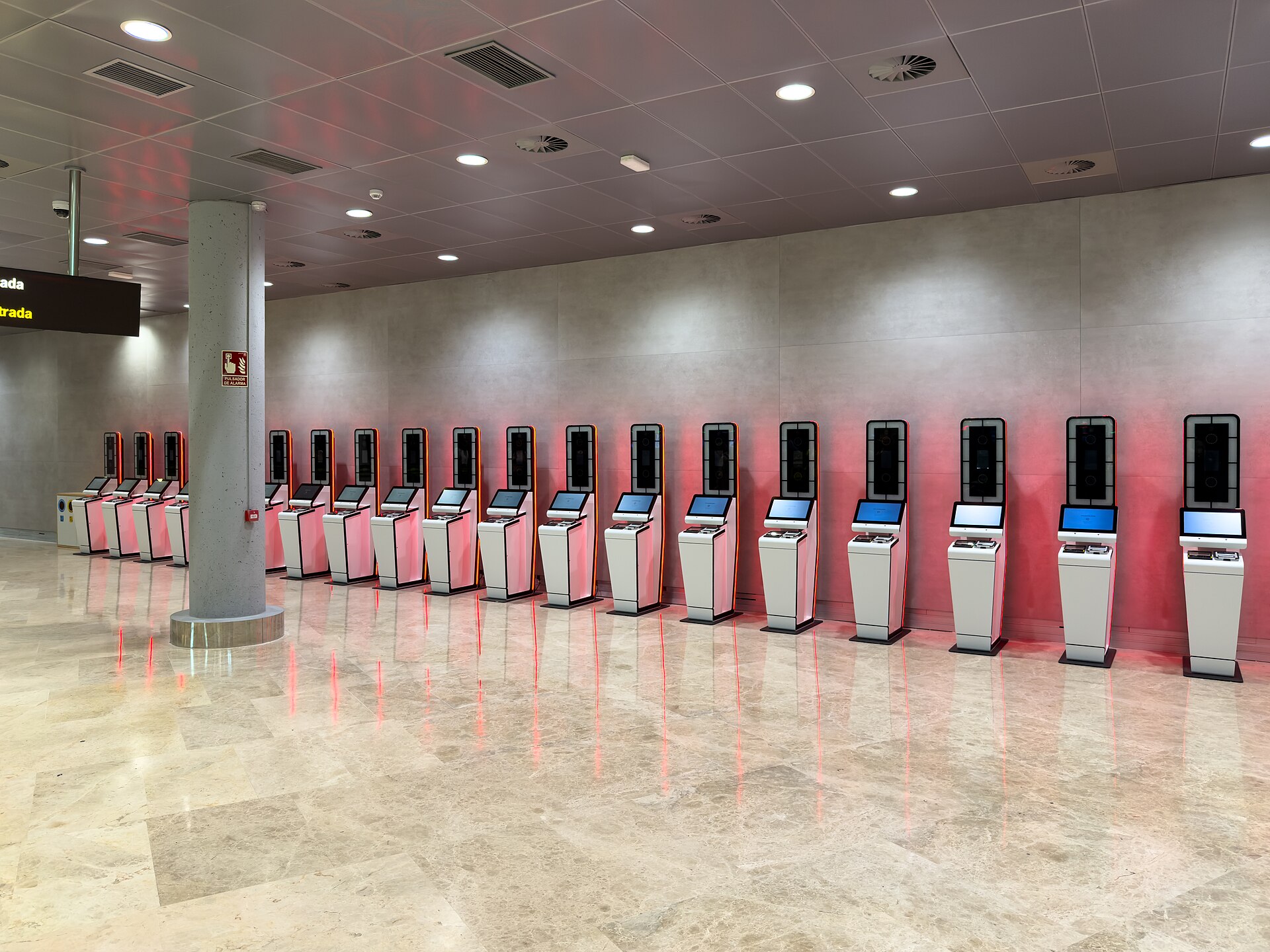
Some border crossings have self-service kiosks where you can register before seeing a border officer. You need a biometric passport, one with a chip, to use them. A non-biometric passport is still accepted at staffed booths if it is valid and you meet the other entry conditions.
How is the 90-day rule counted under EES?
The 90 days in any 180-day period is calculated as a single period for all the countries using the EES, not country by country. The EU’s travel site has a “Check how long you can stay” tool and a Travel-to-Europe mobile app. If you have questions about your remaining authorised stay, the EU says to contact the authorities of the country where you last entered or exited the Schengen area.
Who will need ETIAS?
According to the ETIAS FAQ, you will need ETIAS if you are not an EU national, you are a citizen of a country whose nationals do not need a visa for short stays in the ETIAS countries, and you do not hold certain residence cards or permits issued by those countries. Travellers with a valid visa do not need ETIAS. Without a valid ETIAS, visa-exempt travellers will be refused entry once the system is running, unless an exemption applies.
Do UK citizens need ETIAS and EES?
EES: yes, now. Since Brexit, British citizens are non-EU nationals, so UK travellers on short stays are registered in EES. People who hold a residence document issued under the EU-UK Withdrawal Agreement have different rules. ETIAS: yes, once it starts, because UK nationals are visa-exempt; the EU’s ETIAS site carries a dedicated news article on UK nationals and ETIAS. For journeys from Dover, Folkestone (Eurotunnel) and London St Pancras (Eurostar), French border checks take place in the UK before departure, so allow extra time there.
Do Americans and Canadians need ETIAS and EES?
Yes on both counts. U.S. and Canadian citizens can visit the Schengen area visa-free for short stays, so they are registered in EES at the border today and will need an ETIAS authorisation once it begins. Each traveller, including children, needs their own ETIAS; there are no family or group applications.
How much will ETIAS cost and how long will it take?
ETIAS will cost EUR 20 on the official website. Applicants under 18 or over 70 do not pay, nor do qualifying family members of EU nationals. The fee is not refundable. The EU says most applications will be processed within minutes, and at the latest within 96 hours, but some applicants may be asked for more information or an interview, which can add up to 30 days. It advises getting ETIAS before buying tickets or booking hotels.
What passport do I need for ETIAS?
Your passport must be recognised by the countries requiring ETIAS, valid for more than three months after your planned departure from the area, and issued within the last 10 years. The ETIAS is linked to your passport number, so a new passport means a new ETIAS. The application form will be available in all 24 official EU languages plus Norwegian and Icelandic.
How do I avoid ETIAS scams?
ETIAS is not running, so any website taking ETIAS applications or payments today is not the official service. When it starts, the EU says to apply only through the official ETIAS website or the official ETIAS mobile app. Other websites may act as intermediaries and charge extra fees on top of the EUR 20.
Related guides
Planning a trip? See public holidays 2027 in the UK, Ireland, Germany and France and, for Canadians, best places Canadians can travel for Christmas 2026. All of our dated UK and European guides are on the UK and Europe guides and key dates 2026-27 hub.
Frequently asked questions
When does ETIAS start?
No start date has been announced as of Nov. 23, 2026. The EU says ETIAS is not in operation and that it will announce the start date several months before launch.
Is EES in operation?
Yes. The Entry/Exit System has been fully operational at all external border crossing points of the 29 participating countries since April 10, 2026.
How much does ETIAS cost?
EUR 20 on the official ETIAS website. Applicants under 18 or over 70, and qualifying family members of EU nationals, are exempt. The fee is non-refundable.
Do UK citizens need ETIAS?
Yes, once ETIAS starts, because UK nationals are visa-exempt for short stays. UK travellers are already registered in EES at the border.
Do Americans and Canadians need ETIAS?
Yes, once it starts. U.S. and Canadian citizens are visa-exempt for short stays, so they will need ETIAS and are already registered in EES.
How long is an ETIAS valid?
Three years or until your passport expires, whichever comes first, for stays of up to 90 days in any 180-day period.
What does EES collect?
Passport data, entry and exit dates, a facial image and, for visa-exempt travellers, four fingerprints. Children under 12 are not fingerprinted.
Can I apply for ETIAS now?
No. ETIAS is not collecting applications. Any website taking ETIAS applications or payments now is not the official service.
File photo: EES self-service kiosks at Valencia Airport, Spain, in 2025. Photo by Mike Peel, Wikimedia Commons, CC BY-SA 4.0.
If you find reporting like this useful, consider supporting Canada News Media, an independently owned Canadian newsroom.
Sources: European Union, official ETIAS website; ETIAS frequently asked questions; EES frequently asked questions (all read Nov. 23, 2026).
Follow Canada News Media
Get the day's top Canadian stories and our two daily 60-second news videos wherever you scroll.
X Threads Facebook Instagram LinkedIn TikTok YouTube Pinterest Reddit Substack Flipboard Newsletter RSS