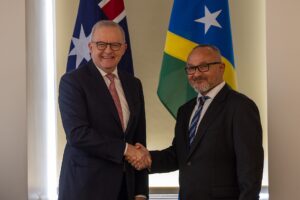



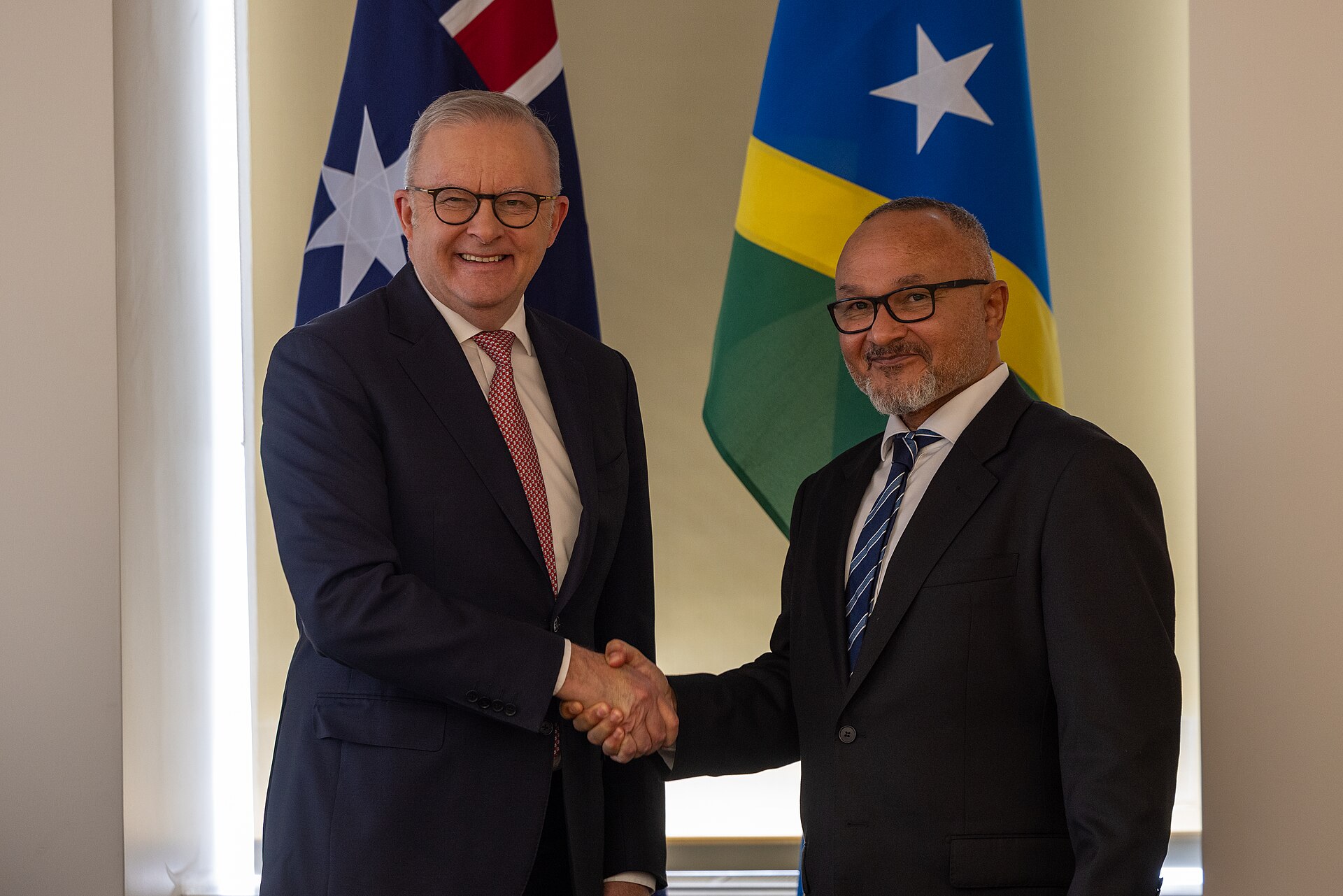
Australia and Solomon Islands signed a bilateral security treaty in Canberra on Wednesday, Nov. 25, 2026, and the Australian Broadcasting Corporation reported that Honiara has told China it will not renew its own 2022 security pact.
The treaty commits Solomon Islands not to allow its territory to be used for any foreign military or security base. It comes more than four years after Honiara signed its own security agreement with Beijing.
Prime Minister Anthony Albanese and Solomon Islands Prime Minister Matthew Wale signed the agreement after a ceremony at Parliament House, the ABC reported. Albanese called it a “new chapter in our partnership” and said Australia “remains the Solomon Islands’ security partner of choice.”
Under the text quoted by the ABC, Solomon Islands agrees that its “sensitive infrastructure shall remain free from militarisation, any form of foreign interference or unauthorised access.” The treaty does not explicitly bar partnerships with outside powers such as China, but it says security cooperation should come from members of the Pacific Islands Forum, the ABC reported. Australia will help strengthen the Solomon Islands police force and open migration pathways, including for aged-care and childcare workers.
The Press Trust of India, in a wire report datelined Melbourne, said the joint statement names Australia the Solomon Islands’ “primary security partner” and states that “there will be no foreign military or security base.”
The China question remains officially unanswered. Wale did not confirm that his government had told Beijing it would end the 2022 agreement when it expires in April 2027. “Unfortunately, there is a non-disclosure clause in the treaty with China, so I am unable to talk about that. We have ongoing discussions with China,” Wale said in Canberra, according to the ABC.
The ABC reported on Tuesday that Wale’s government had informed Beijing of the decision, citing sources, after Nine Newspapers first reported it. Neither the Solomon Islands government nor the Chinese Embassy had replied to the ABC’s requests for comment, the broadcaster said.
China’s Foreign Ministry spokesperson Guo Jiakun did not directly answer a question on Tuesday about whether Solomon Islands had said it would end the pact, the PTI reported. He said China “always follows the principle of mutual respect and equality” and that there is “no element of geopolitical rivalry or bloc confrontation.”
Money is part of the picture. The ABC reported in September that Australia would provide $980 million in additional funding by 2028. Leaked texts seen by the ABC show $142 million earmarked for Wale’s free-education policy and $47.8 million for visa improvements and security requests from Solomon Islands. Those figures come from leaked documents, and the full treaty text had not been officially released as of Tuesday, the ABC said.
Foreign Minister Penny Wong told the Australian Senate on Tuesday that the 2022 China agreement was Australia’s “worst foreign policy blunder in the Pacific since the end of World War II,” the ABC reported. Oliver Nobetau, Pacific Islands program director at the Lowy Institute, called an end to the China deal a “massive win” for Australia.
The 2022 agreement, signed under then-prime minister Manasseh Sogavare, allows China to rotate police training teams through the country, and about two dozen Chinese police are permanently based there, the ABC reported. Sogavare, now opposition leader, warned on Monday that the country “must carefully consider what it stands to lose” from the decision. Wale, who leads a government facing a threatened no-confidence motion, said the treaty was decided by his caucus and cabinet and that he “welcomes another motion of no confidence.”
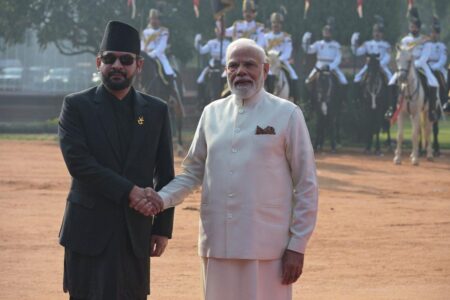
For Canadians, the link is indirect but real. Solomon Islands is a Commonwealth realm that shares King Charles as head of state with Canada, and Prime Minister Mark Carney travelled to Antigua earlier this month to meet Commonwealth leaders. Ottawa has no role in the treaty, and Canada News Media has not seen a Canadian government comment on it. Ottawa is also working on its own Indo-Pacific ties, as in our coverage of a pending Taiwan trade arrangement, and security alignments are shifting across the region, as when Japan and India agreed to live-fire drills.
What to watch next is whether Wale survives a no-confidence challenge, whether the full treaty text is published, and whether Beijing confirms or disputes that its pact will end in April 2027.
Via the Australian Broadcasting Corporation and the Press Trust of India.
If you find reporting like this useful, consider supporting Canada News Media, an independently owned Canadian newsroom.
Follow Canada News Media
Get the day's top Canadian stories and our two daily 60-second news videos wherever you scroll.
X Threads Facebook Instagram LinkedIn TikTok YouTube Pinterest Reddit Substack Flipboard Newsletter RSS