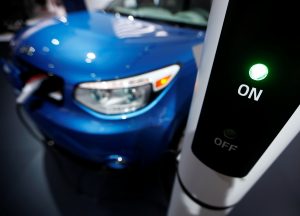




Recalls classed under “high voltage” in Transport Canada’s recall database, the category that covers the battery and power systems of electric and plug-in hybrid vehicles, rose from two in 2020 to 39 in 2024, and 14 of the 139 posted since 2020 say that repairs done under an earlier recall may not be effective, according to a Canada News Media count of every record in the file.
The yearly numbers climb steeply and then level off. We counted 2 high-voltage recalls in 2020, 5 in 2021, 10 in 2022, 23 in 2023, 39 in 2024 and 31 in 2025. From Jan. 1 to Oct. 22, 2026, the latest recall date in the file, there were 29, against 25 in the same weeks of 2025. That is 5.7 per cent of the 507 recalls posted so far this year, compared with 0.4 per cent (2 of 536) in 2020. The notices for the 2024 to 2026 recalls list 253,326 affected units. A vehicle can be named in more than one recall, so that figure measures the size of the recalls, not the number of vehicles on the road.
About half of these recalls describe a fire risk. Fire is mentioned in 14 of the 23 high-voltage recalls in 2023, 22 of 39 in 2024, 20 of 31 in 2025 and 15 of 29 so far in 2026. Many use similar wording, that a battery fault “can create a fire risk, even while the vehicle is parked and turned off.” The 15 recalls this year that mention fire list 51,437 units.
Some notices go beyond a repair appointment and tell owners to change how they use the vehicle until the fix is ready. Six recalls this year advise owners to park outdoors or away from buildings and other vehicles, against three in 2025 and seven in 2024. Jaguar’s recall 2026-049, posted Feb. 5, recommends that owners “charge and park your vehicle outside” and away from other vehicles or buildings until repairs are done. Chrysler’s recall 2026-272 for plug-in hybrid models, posted June 4, and Nissan’s 2026-145, posted March 26, tell owners not to charge at all and to park outdoors. Volvo’s 2026-001, Volkswagen’s 2026-018 and Mercedes-Benz’s 2026-052 pair the outdoor-parking advice with a cap on the maximum charge setting. Notices that tell owners to cap the charge level or stop charging numbered 6 in 2024, 6 in 2025 and 9 so far in 2026.
The records also show a pattern of second repairs. Fourteen high-voltage recalls, the first posted in October 2023, say that repairs completed under an earlier recall may not be effective, or may not have been done correctly, and that a second or another repair is required. That is about one in 10 of the 139 high-voltage recalls since 2020, and three of this year’s 29. The notices name Ford and its Lincoln brand (2023-554, 2025-105, 2025-628 and 2026-070), Jaguar (2023-564, 2024-073, 2024-152 and 2026-049), Jeep and Chrysler (2024-412, 2024-566 and 2025-595), Mercedes-Benz (2025-700 and 2026-052) and Chevrolet (2024-371). Recall 2026-070, covering 22,955 Lincoln vehicles, is the largest high-voltage recall posted this year. It says a software update installed under an earlier Ford recall, 2024-781, may not be effective. The notices do not say how many vehicles needed a second visit.
The largest high-voltage recall in the period we examined, 2024-701, posted Nov. 18, 2024, covers 34,529 Hyundai vehicles whose charging control unit could be damaged, leaving the 12-volt battery unable to charge. Since the start of 2024, Mercedes-Benz leads the manufacturer count with eight high-voltage recalls, followed by Audi with six and Nissan, Jaguar and Ford with five each. Those counts reflect the manufacturer named in the record, and a recall can cover several brands.
What the records do not show is how many owners have had the work done, how many vehicles caught fire, or whether any of the second repairs were needed because of a dealer error or a design problem. The recall notices say only that an earlier fix may not be effective. Transport Canada’s open data lists recalls and unit counts but not completion rates.
For owners, the practical steps are simple. Check a vehicle by make, model and year in Transport Canada’s motor vehicle recalls database, or by vehicle identification number on the manufacturer’s website. If a notice says to cap the charge, avoid fast charging or park outdoors, follow it until the repair is done. Recall repairs are normally free of charge at a dealer, and keeping your address current with the manufacturer means the notice reaches you by mail.
How we checked: We downloaded Transport Canada’s full Vehicle Recalls Database file (vrdb_full_monthly.csv, last modified Nov. 23, 2026, covering 18,044 recall numbers since 1975) and reduced it to one record per recall number using the earliest recall date. We kept recalls whose system type is “High Voltage,” which is Transport Canada’s own classification and includes hybrids and electric buses as well as cars and SUVs. We counted a recall as mentioning fire when its English description contains the word “fire,” as advising outdoor parking when it tells owners to park outside, outdoors or away from structures, buildings or other vehicles, and as a second repair when it says an earlier recall’s repairs may not be effective or may not have been done correctly, or that a second or another repair is required. Cap-or-stop-charging counts use the phrases “maximum charge” and “should not charge.” Year-to-date comparisons use Jan. 1 to Oct. 22 in each year. Unit counts are the largest “units affected” figure listed for each recall, summed. Quotations are from the recall notices. Word-based counts can miss notices that describe the same advice in other words, so the true totals may be somewhat higher.
Follow Canada News Media
Get the day's top Canadian stories and our two daily 60-second news videos wherever you scroll.
X Threads Facebook Instagram LinkedIn TikTok YouTube Pinterest Reddit Substack Flipboard Newsletter RSS