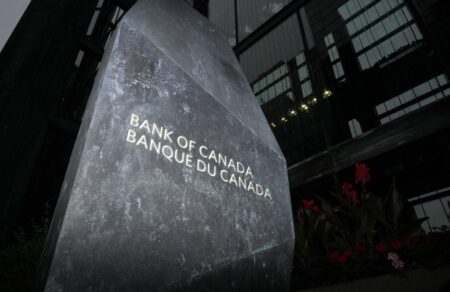




The Bank of Canada raised its overnight rate by 25 basis points to 2.5 per cent on Oct. 28, its first increase since 2023, landing on a housing market that was already losing momentum in several of the country’s largest cities.
RBC Economics, in an analysis by chief economist Frances Donald and assistant chief economist Nathan Janzen, called the move “a risk management hike.” The bank cited higher energy prices and a firmer growth outlook. It also said there could be a need to raise the rate further but that it would “proceed carefully.” RBC expects another hike at the December or January meeting.
RBC cautioned that “highly interest rate sensitive sectors like housing could be impacted more in the coming months.” It also noted that much of the expected tightening was already priced into government bond yields, which, rather than the policy rate alone, drive fixed-rate borrowing costs for consumers.

Where the market stood before the hike matters. In an Oct. 6 report on September data, RBC assistant chief economist Robert Hogue said Toronto-area resales fell 5.2 per cent month over month and the benchmark price slipped 0.5 per cent. Active listings in Toronto were down 9.3 per cent from a year earlier, a sign sellers are holding back rather than flooding the market.
The picture differs by city. Hogue reported that Montreal inventory was up 20 per cent from a year ago, while Vancouver’s composite MLS Home Price Index was down 5.5 per cent year over year. Calgary resales were described as generally stable and historically robust, though below last year’s pace. RBC pointed to the trade war with the United States and rising long-term interest rates as the main pressures.

Supply is the other half of the story. Canada Mortgage and Housing Corporation (CMHC) reported on Oct. 16 that the seasonally adjusted annual pace of housing starts rose three per cent in September to 248,896 units from 242,223 in August. Actual starts in centres of 10,000 or more people were 19,984, down 11 per cent from September 2025, and year-to-date starts in those centres were 170,964, down four per cent from last year.
CMHC deputy chief economist Aled ab Iorwerth said a key risk for Canada now is not building enough during this period of softening housing markets. He added that the country still faces a long-term housing supply gap. Higher borrowing costs for developers and buyers could test that concern, though neither CMHC nor RBC has quantified the effect of the hike on construction.
For buyers, RBC’s analysis suggests fixed-rate mortgage costs depend on bond yields, which had already priced in expected hikes, rather than on the policy rate alone.
The next data point is close. CMHC will release October housing starts on Nov. 17 at 8:15 a.m. ET. Canada News Media will track whether the hike shows up in resale volumes and listings.
Sources: Bank of Canada decision as analysed by RBC Economics (Oct. 28, 2026); RBC Economics, “More turbulence hits Canada’s housing markets to kick off fall” (Oct. 6, 2026); CMHC, “Housing starts and construction data for September 2026” (Oct. 16, 2026); The Canadian Press via BNN Bloomberg (Oct. 16, 2026).
Follow Canada News Media
Get the day's top Canadian stories and our two daily 60-second news videos wherever you scroll.
X Threads Facebook Instagram LinkedIn TikTok YouTube Pinterest Reddit Substack Flipboard Newsletter RSS