

The Supreme Court of Canada ruled in December 1939 that a Montreal tavern was free to refuse service to Fred Christie because he was Black, ruling that a merchant’s “freedom of commerce” outweighed his complaint.
Christie, a chauffeur born in Jamaica in 1902, lost the case, Christie v. The York Corporation, reported at [1940] S.C.R. 139. The Canadian Encyclopedia describes the facts as follows: on July 11, 1936, he walked into the York Tavern, on the ground floor of the Montreal Forum, with two friends, one Black and one French Canadian. He put 50 cents on the table and ordered three glasses of beer.
The waiter and bartender refused to serve him because of his race. The encyclopedia says Christie did not know that management had recently imposed a segregation policy. He had drunk at the tavern between periods of hockey games. He called police, who came but took no action.
The encyclopedia says the policy “may have been” tied to Canadian Olympic boxing trials held at the Forum the following Monday, amid racial tension around boxing. That explanation is the encyclopedia’s interpretation, not a documented finding.
Christie came to Canada and settled near Montreal in 1919, according to the encyclopedia. He lived in Verdun. He sued for $200 for humiliation, represented by lawyer Lovell Carroll. A legal fund chaired by Kenneth Melville, described by the encyclopedia as the first Black medical student at McGill University, helped support the case.
His lawyer argued two points: that the tavern breached its contract once the order was placed, and that its liquor licence required it to serve everyone without discrimination.
The trial judge agreed with Christie and awarded him $25. On appeal, a majority of judges sided with the tavern. Justice Galipeault dissented, quoting an earlier ruling that Quebec’s constitution “does not admit of distinction of races and classes,” according to the encyclopedia.
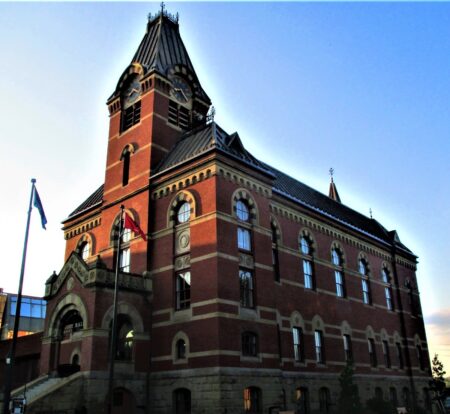
The Supreme Court heard the appeal in Ottawa on May 10, 1939, before Chief Justice Lyman Poore Duff and four other judges. It dismissed Christie’s claim that December.
Justice Thibaudeau Rinfret wrote for the majority. He noted that the tavern staff had refused “quietly, politely and without causing any scene or commotion whatsoever,” and he described Christie’s decision to persist and call police as “entirely unwarranted by the circumstances,” the encyclopedia reports. The majority’s test was that “a merchant or trader is free to carry on his business in the manner that he conceives to be best for that business.”
Justice Henry Davis dissented alone. According to the encyclopedia, he wrote that because governments regulate the sale of alcohol, taverns must serve the public without discrimination, and that a public-law duty had displaced freedom of contract. His reasons also described Christie’s life in Montreal and his status as a British subject. The encyclopedia says Davis wrongly wrote that Christie was on his way to a hockey game.
The encyclopedia says that after the Second World War, provinces and Parliament began outlawing discrimination in goods and services. Quebec enacted its Charter of Human Rights and Freedoms in 1975, which the encyclopedia says finally prevented taverns from discriminating on the basis of race.
After losing, Christie left Montreal and moved to Vermont, the encyclopedia says. CTV News reported in 2022 that historian Dorothy Williams of Concordia University has told his story, and described him as a little-known Quebec civil rights hero.
The ruling belongs to a longer record of Canadian businesses excluding Black patrons. Canada News Media has reported on Dresden’s vote to keep Black patrons out, on how Carrie Best’s newspaper put Viola Desmond’s case in print, and on a Black delegation’s 1954 challenge to Ottawa.
If you find reporting like this useful, consider supporting Canada News Media, an independently owned Canadian newsroom.
Sources: The Canadian Encyclopedia, “Fred Christie Case” (thecanadianencyclopedia.ca/en/article/fred-christie-case); University of Toronto Libraries exhibit on Christie v. The York Corporation, [1940] S.C.R. 139; CTV News Montreal, Feb. 2, 2022.
Follow Canada News Media
Get the day's top Canadian stories and our two daily 60-second news videos wherever you scroll.
X Threads Facebook Instagram LinkedIn TikTok YouTube Pinterest Reddit Substack Flipboard Newsletter RSS