

Newfoundland voters on Nov. 13, 1869, returned 21 anti-Confederate members to the 30-seat House of Assembly, rejecting union with Canada in a general election that Premier Frederic Carter had called on the question.
The result left Carter’s Confederate side with nine seats, according to Wikipedia’s account of the vote. Sixteen seats were needed for a majority. The Heritage Newfoundland and Labrador website, which also gives the date as Nov. 13, 1869, described the outcome as a vote of no confidence in Canada and a vote of confidence in Newfoundland.
Charles Fox Bennett, a St. John’s merchant and mine owner who was 76 at the time, led the anti-Confederate campaign, according to Heritage. Bennett ran in the district of Placentia and St. Mary’s and went on to form the government.
Heritage said the campaign turned on fear rather than fine print. Anti-Confederates told voters that Canadians would tax everything and anything once Newfoundland joined. Heritage quoted Bennett as warning that young men would be made to shed their blood and leave their bones to bleach in a foreign land. Wikipedia said Bennett alleged Newfoundlanders would be drafted into the Canadian army if they backed the government.
The Confederate side answered with a personal attack. Heritage said Carter’s supporters claimed Bennett was protecting his business, investments and mining rights over about a million acres in Bay d’Espoir, Fortune Bay and the Burin Peninsula. Wikipedia said the Conservatives, as Carter’s side was labelled, were unprepared for the campaign and argued that Bennett was mainly defending his own interests.
Voting in 1869 was not secret, and Heritage said merchant influence shaped the outcome in Protestant districts. The same account said the anti-Confederates won every district with a Roman Catholic majority, along with Bonavista Bay and three seats elsewhere. Heritage gave average turnout as 77.9 per cent.
Wikipedia’s tally put the anti-Confederate vote at 11,289, or 80.77 per cent, against 2,688 for the Confederate side. The encyclopedia noted that its totals are incomplete because results from Bay de Verde, Burin, Carbonear, Harbour Grace and Trinity Bay are missing, so the percentages are approximate.
The two sources differ on some local details. In Brigus-Port de Grave, Heritage put the anti-Confederate majority at 634 votes, while Wikipedia’s figures for the district (733 to 101) give a margin of 632. Wikipedia also noted that Carter’s own win in Burin was challenged over proxy votes from Frenchman’s Cove before the votes were rejected and he was returned.
Confederation was not dead for good, but the 1869 result ended the debate for a generation. Wikipedia said the Conservatives abandoned the issue and the question was settled for the moment. Heritage concluded that union was not an acceptable option for the foreseeable future. Newfoundland remained a separate colony, and later a dominion, until it joined Canada in 1949.
The vote is one of the clearest examples in Canadian history of a colony asked directly whether it wanted to join the country and answering no. It also shows how much of the argument rested on taxes, military service and who stood to gain, questions that still shape debates over how provinces relate to Ottawa.
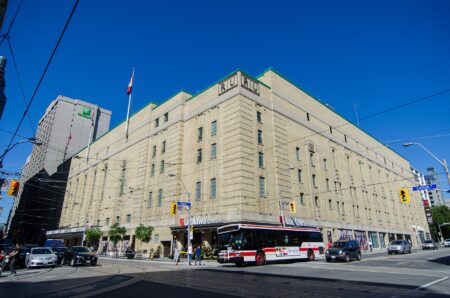
Canada News Media has more in its Canadian history series, including the story of how Crysler’s Farm halted an American advance on Montreal in 1813 and the opening of Maple Leaf Gardens in 1931.
If you find reporting like this useful, consider supporting Canada News Media, an independently owned Canadian newsroom.
Sources: Heritage Newfoundland and Labrador, “The Confederation Election of 1869” (heritage.nf.ca); Wikipedia, “1869 Newfoundland general election.”
Follow Canada News Media
Get the day's top Canadian stories and our two daily 60-second news videos wherever you scroll.
X Threads Facebook Instagram LinkedIn TikTok YouTube Pinterest Reddit Substack Flipboard Newsletter RSS