


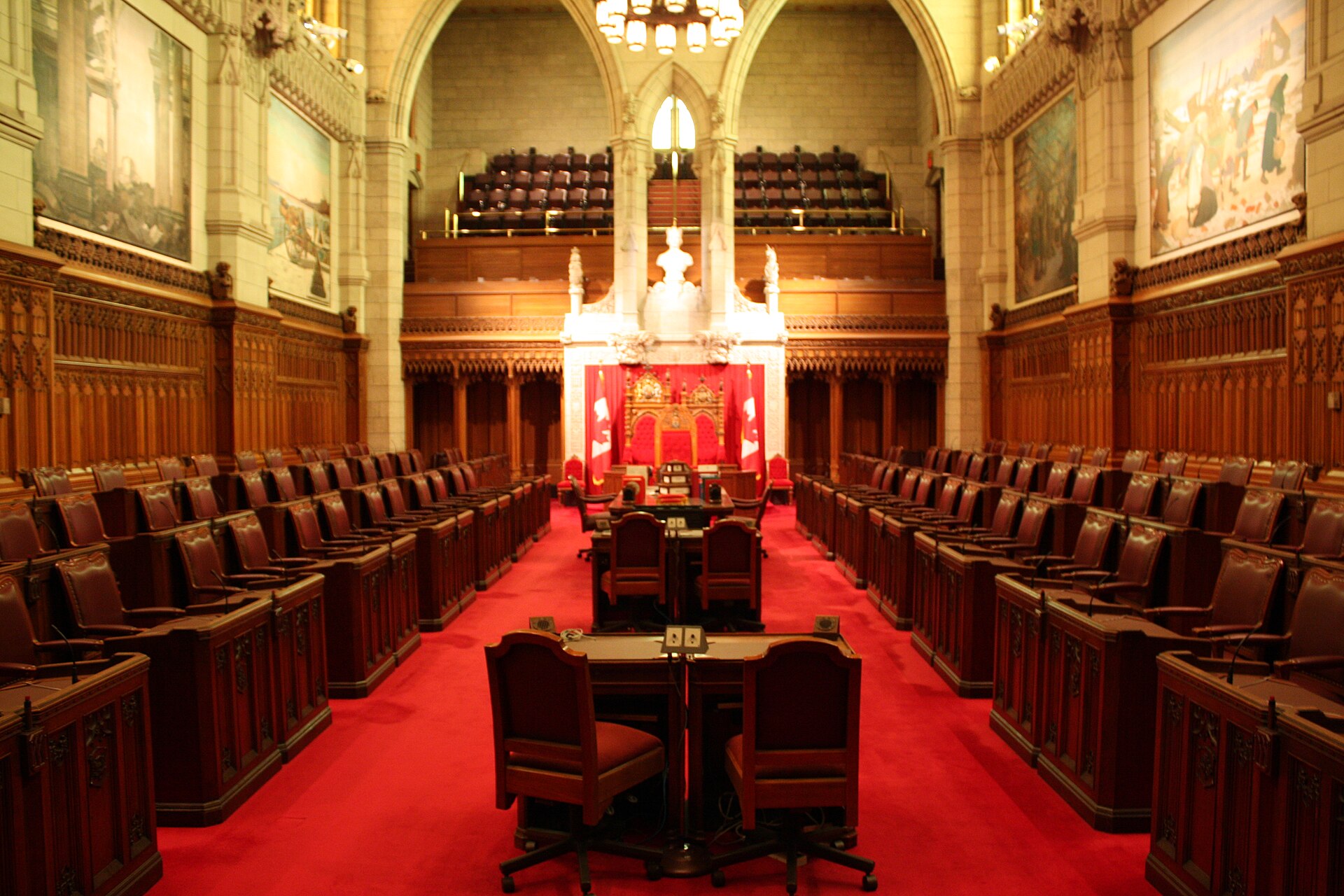
Thelma Chalifoux, a Métis grandmother from Alberta, was appointed to the Senate of Canada on Nov. 26, 1997, becoming the first Métis woman and the first Indigenous woman to sit in the upper house.
Prime Minister Jean Chrétien made the appointment, according to the Canadian Encyclopedia and the Alberta Women’s Memory Project. Chalifoux, then 68, later recalled the prime minister telling her, “Madame Chalifoux, we need you in the Senate. We need your voice,” the Globe and Mail reported after her death.
She was born in Calgary on Feb. 8, 1929, to a Métis father with roots in St. Albert and Lac Ste. Anne, the Canadian Encyclopedia said. The Alberta Women’s Memory Project gives her birthday as Feb. 9, a discrepancy that has not been settled in the sources reviewed.
Her path to Ottawa was not a conventional one. In 1958, social services removed her four children from her care, in what became known as the Sixties Scoop, and she did not regain them until 1965, according to the Canadian Encyclopedia, the Globe and the Alberta Women’s Memory Project. She later had three more children.
She studied sociology at a college in Lethbridge and construction estimating at the Southern Alberta Institute of Technology, then took up community work. In the late 1960s she moved to Edmonton and worked as a fieldworker for the Métis Association of Alberta, where she helped set up welfare and land departments. She spent about 12 years in Slave Lake, Alta., where she helped found the town’s Native Friendship Centre and ran what the Canadian Encyclopedia described as the first domestic violence safe house in the area. She was also the first Métis woman to broadcast on private radio, on a weekly program at CKYL in Peace River, Alta.
In the early 1980s she was part of a Métis delegation that met then prime minister Pierre Trudeau during the constitutional talks, the Canadian Encyclopedia and the Globe reported.
In the Senate, Chalifoux chaired the Standing Committee on Aboriginal Peoples and sat on committees dealing with agriculture and forestry, human rights, fisheries and oceans, illegal drugs, and legal and constitutional affairs, according to the Canadian Encyclopedia. The Alberta Women’s Memory Project said she also appointed a task force on Indigenous youth gangs in Edmonton and championed a proposed act to overturn Louis Riel’s high treason conviction. Her priorities included Métis housing and the education of Indigenous youth.
Chalifoux reached the mandatory retirement age of 75 and left the Senate on Feb. 8, 2004, the Canadian Encyclopedia said. She returned to Alberta, founded the Michif Cultural Institute in St. Albert and served as an elder in residence at the Northern Alberta Institute of Technology.
She died on Sept. 22, 2017, in St. Albert at age 88, Global News reported. “My mother was a wonderful, caring trailblazer and an example to everyone she met,” her eldest son, Robert Coulter, told Global News. The Métis Nation of Alberta called her “a champion for Métis rights and a valued member of the Métis community,” the Globe reported.
Her name has outlasted her career. The Canadian Encyclopedia says NAIT has given a Senator Thelma Chalifoux Award since 2000, the University of Alberta named a residence for her in 2018, and Canada Post issued a commemorative stamp in her honour on June 13, 2023.
If you find reporting like this useful, consider supporting Canada News Media, an independently owned Canadian newsroom.
Sources: the Canadian Encyclopedia, the Globe and Mail, Global News and the Alberta Women’s Memory Project.
Follow Canada News Media
Get the day's top Canadian stories and our two daily 60-second news videos wherever you scroll.
X Threads Facebook Instagram LinkedIn TikTok YouTube Pinterest Reddit Substack Flipboard Newsletter RSS