



A first home savings account (FHSA) is a registered plan that lets first-time home buyers in Canada save for a qualifying first home tax-free, up to certain limits, according to the Canada Revenue Agency (CRA). Contributions are generally tax deductible, and money taken out to buy a qualifying home does not count as income.
The CRA says the account is meant for people who have not recently owned the home they lived in. To open one, you must be a resident of Canada, at least 18 years old (19 in provinces where that is the legal age to sign a contract) and no older than 71 as of Dec. 31 of the year you open it. You also must be a first-time home buyer under the CRA’s test. That means you did not live in a qualifying home that you owned, or that your spouse or common-law partner owned, in the year you open the account or in the previous four calendar years. A qualifying home is a housing unit in Canada, and the CRA lists houses, townhouses, condominium units, mobile homes and apartments in multi-unit buildings as examples.
The CRA says your FHSA participation room in the year you open your first account is $8,000. Participation room is the most you can contribute, or transfer in from your registered retirement savings plans (RRSPs), in a year without creating an excess amount. The CRA says that room applies to contributions and RRSP transfers combined, and to all of your FHSAs together. You can open more than one account, but you cannot get a separate $8,000 for each one.
Unused room carries forward. The CRA’s calculation sets the carry-forward at no more than $8,000, which means the most you could put in during any one year after the first is $16,000, made up of that year’s $8,000 plus a full $8,000 carried over. Over your lifetime, the CRA says, the most you can deduct from your income for FHSA contributions is $40,000. Transfers from your RRSPs into an FHSA are not deductible and reduce the amount you can deduct over your lifetime. Income earned inside the account, such as investment income and capital gains, generally does not use up your participation room.
When you buy a home, you make what the CRA calls a qualifying withdrawal. You can take out everything in the account, in one withdrawal or several, without paying tax and without having to repay it. The CRA lists several conditions. You must be a first-time home buyer at the time of the withdrawal, which is a slightly different test from the one used to open the account. You must have a written agreement to buy or build a qualifying home, and the purchase or construction must be completed before Oct. 1 of the year after the withdrawal. If you and another person are buying together, each of you can make a qualifying withdrawal from your own account. The CRA says there is no minimum time that money has to sit in the account before it can be withdrawn this way.
Money taken out for any other reason is a taxable withdrawal and must be reported as income on your return. Contributing too much carries a cost as well. The CRA says an excess amount can be taxed at 1 per cent of the highest excess in a month, for each month it remains.
An FHSA does not last forever. The CRA says your maximum participation period ends on Dec. 31 of the earliest of three years: the year of the 15th anniversary of opening your first account, the year you turn 71, or the year after your first qualifying withdrawal. Before then, any remaining money can generally be transferred without immediate tax into an RRSP or a registered retirement income fund (RRIF). Property left in an account after the period ends loses its FHSA status, and its fair market value on Dec. 31 of that year must be included in your income.
The CRA publishes its rules and a calculator on its FHSA pages, and your bank or credit union can explain how to open an account. Our guide to first-time home buyer programs in Canada looks at how the FHSA fits with the Home Buyers’ Plan, the GST rebate and land transfer tax rebates. Sources: the CRA’s pages on the first home savings account, opening an FHSA, participating in your FHSAs and withdrawals. This article explains how the account works and is not tax or financial advice; check your own situation with a qualified adviser or the CRA.
If you find reporting like this useful, consider supporting Canada News Media, an independently owned Canadian newsroom.
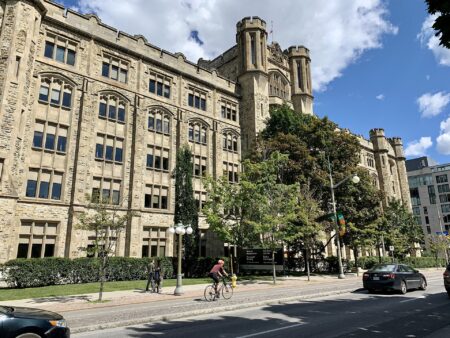
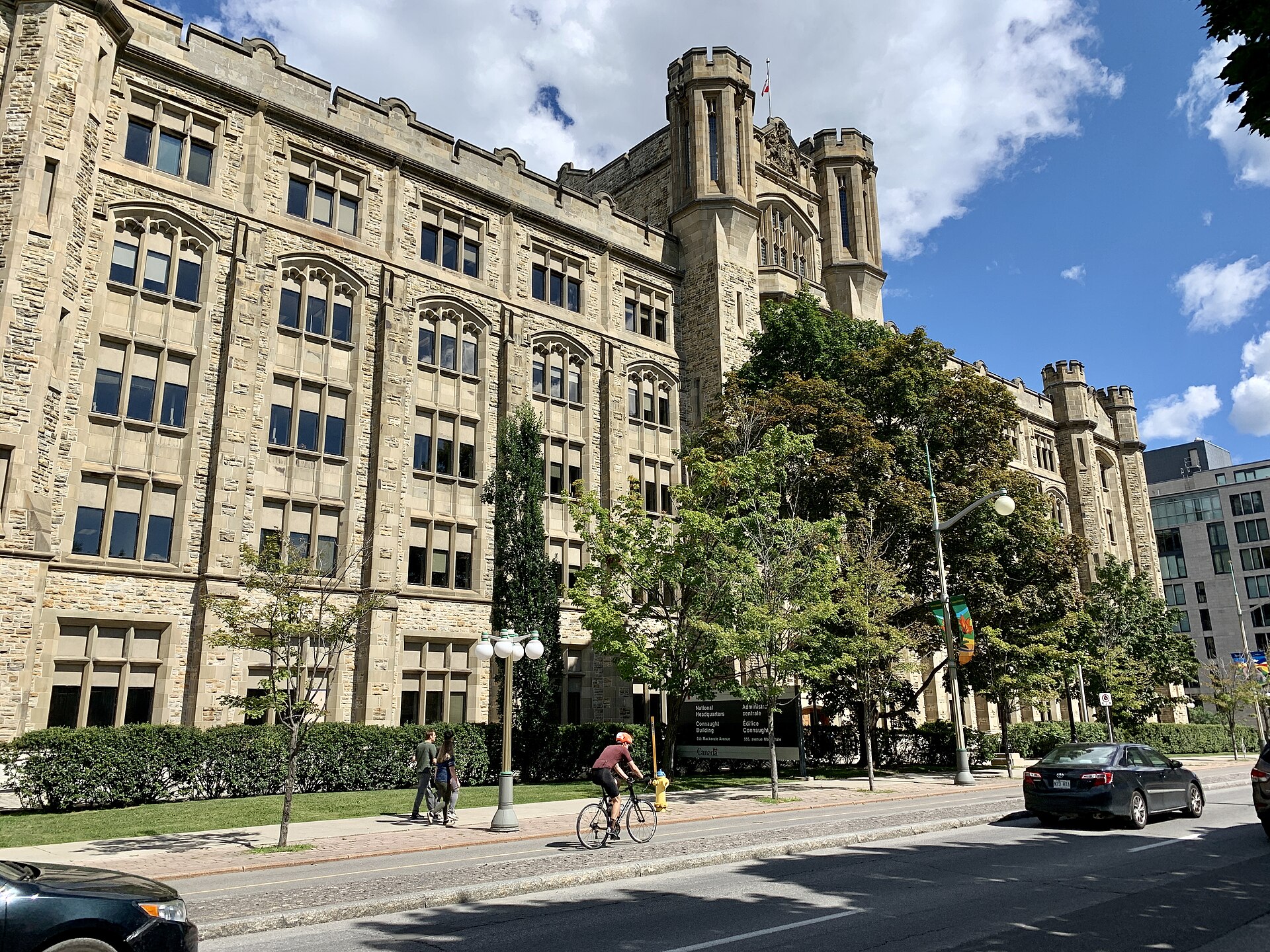
File photo: the Connaught Building in Ottawa, headquarters of the Canada Revenue Agency. Photo by Itooksomepics, Wikimedia Commons, CC BY-SA 4.0.
Follow Canada News Media
Get the day's top Canadian stories and our two daily 60-second news videos wherever you scroll.
X Threads Facebook Instagram LinkedIn TikTok YouTube Pinterest Reddit Substack Flipboard Newsletter RSS