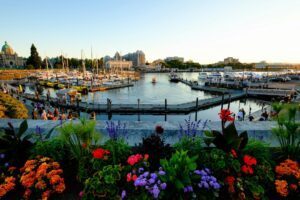

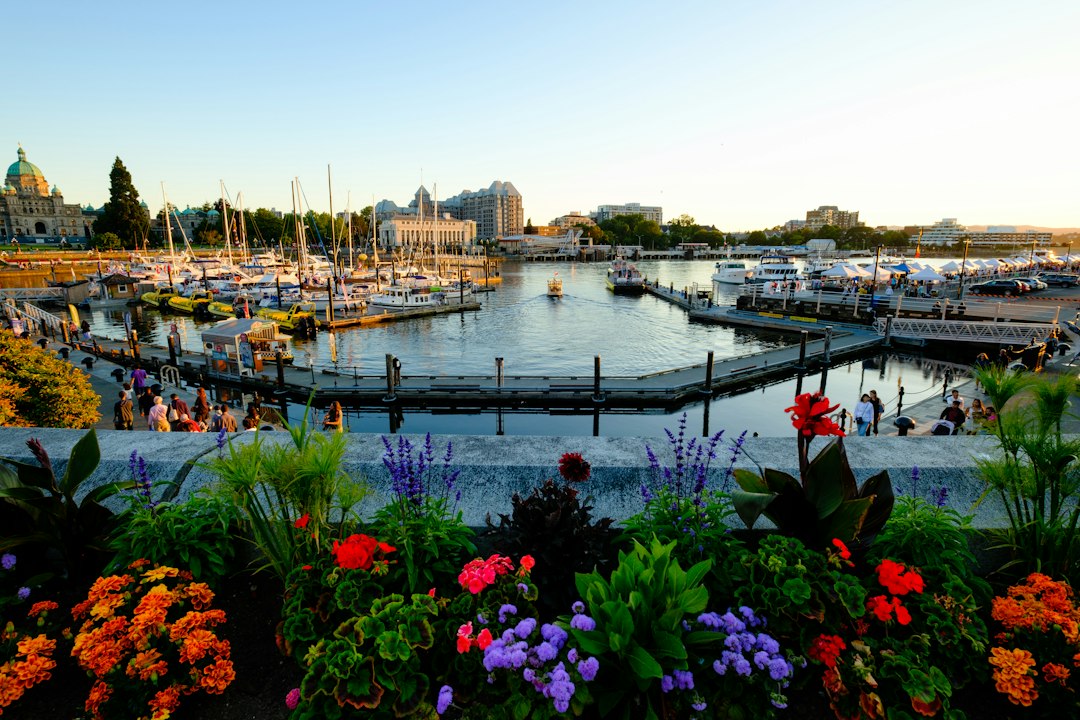
On April 25, 1858, a scouting party of 35 Black Californians stepped off the steamship Commodore into Victoria harbour, according to the Legislative Assembly of British Columbia. They had come to meet the governor of the Colony of Vancouver Island, James Douglas, and to find out whether his invitation to settle was real.
What they were weighing, and what happened to the people who accepted, is a story of promised equality that arrived only in part.
Why they looked north
The Legislative Assembly of British Columbia says the Black community of San Francisco feared for its well-being and political rights in the 1850s. A law passed in 1852 allowed the arrest of escaped slaves in California. In 1858, the Assembly adds, a bill to ban Black Americans from immigrating to the state was introduced, although it was never enacted. The Historic Sites and Monuments Board plaque at Shady Creek United Church in Saanich refers to “the oppressive racial conditions of San Francisco.”
Douglas had his own reasons. The Canadian Encyclopedia, in an article by Mathias Joost, says he invited free Black Americans to Vancouver Island to increase settlement and deter possible American annexation, and that he knew they faced growing racial animosity in California. The Legislative Assembly notes that Douglas was of mixed ancestry and was born in Demerara, British Guiana. The scouts, it says, confirmed that the colony would grant equal political and economic rights once they became British subjects.
How many came
The numbers differ by source, and they are worth stating plainly. The scouting party was 35. The Canadian Encyclopedia says more than 600 accepted the offer and settled in Victoria, Saanich and Saltspring Island. The Legislative Assembly says several hundred. The federal plaque says nearly 800 free Black people left San Francisco in 1858. Mifflin Gibbs, who became a prominent politician, estimated in his 1902 autobiography that “three or four hundred” Black men from California and other states settled in Victoria. The Legislative Assembly adds that the newcomers included free people from the northern and southern United States, escaped slaves, and travellers seeking fortune.
The Government of Canada designated the 1858 arrival of the Black pioneers a National Historic Event on September 22, 1997, according to the BC Black History Awareness Society. The plaque was unveiled on February 20, 2000.
A militia the colony did not honour
Equal rights on paper did not mean equal treatment in the street. The Canadian Encyclopedia reports that Black volunteers for Victoria’s fire brigade were rejected by white organizers in 1859. The Legislative Assembly dates a denial of fire-department membership to 1861. The sources disagree on the year, but they agree on the insult.
Black men then formed their own unit. The Canadian Encyclopedia says the Victoria Pioneer Rifle Corps, also called the Pioneer Rifles or African Rifles, was formed in April 1860 and officially sworn in as a unit in July 1861. (The Legislative Assembly dates the request for Douglas’s support to 1861 and does not give a founding date.) Douglas agreed, the Encyclopedia says, because he feared war with the United States over the San Juan Islands. The corps was led by Black officers, drilled with Royal Marine instructors from Esquimalt, and averaged 40 to 50 soldiers over five years, with recruiting reaching 60. A brass band formed after instruments arrived in January 1863.
The corps was still barred from public ceremony. The Canadian Encyclopedia says it was not allowed to parade at Governor Arthur Edward Kennedy’s inauguration in April 1864, because organizers said the volunteer fire brigades would not march behind it. Kennedy said he would accept no unit based on “class, colour or nationality,” the Encyclopedia reports, but did nothing for Black men seeking entry to a white regiment. The Legislative Assembly says that despite being the senior military unit in the colony, the corps was not allowed to march at Douglas’s retirement or at Kennedy’s installation.
The unit dissolves
The Canadian Encyclopedia says the Pioneer Rifles had dissolved by 1866 for lack of interest, and notes that many Black immigrants returned to the United States after the Civil War ended in 1865. The Legislative Assembly gives a different reason: believing they would never receive the respect they deserved, it says, the group disbanded. The two accounts need not conflict, but the sources do not settle which weighed more.
What the record does show is a pattern. A colonial governor courted skilled, free settlers for strategic reasons, and then the colony’s institutions kept them at the margins of public life. The pioneers still shaped Victoria, Saanich and Saltspring Island, and the BC Black History Awareness Society quotes Gibbs saying they were “the recipients of respect and esteem from the community.” That description sits uneasily beside the parade ground, and both belong in the account.
The same questions of who gets to belong ran through later chapters. Ottawa’s attempt to ban Black immigrants in 1911 pushed Black settlers toward the Prairies, where they founded Amber Valley, Alta., in 1910. In the First World War, Black volunteers were turned away until 1916. Earlier, nearly 2,000 Black Refugees reached Nova Scotia after 1814.
Sources: Legislative Assembly of British Columbia, “1858: First Black settlers arrive in Victoria”; Mathias Joost, “Victoria Pioneer Rifle Corps,” The Canadian Encyclopedia (April 29, 2022); BC Black History Awareness Society, “An Event of National Historic Significance.”
If you find reporting like this useful, consider supporting Canada News Media, an independently owned Canadian newsroom.
Follow Canada News Media
Get the day's top Canadian stories and our two daily 60-second news videos wherever you scroll.
X Threads Facebook Instagram LinkedIn TikTok YouTube Pinterest Reddit Substack Flipboard Newsletter RSS