


On Aug. 12, 1911, the federal cabinet under Prime Minister Wilfrid Laurier approved an order in council barring anyone “belonging to the Negro race” from entering Canada for one full year, on the stated grounds that Black people were “deemed unsuitable to the climate and requirements of Canada,” according to the Canadian Encyclopedia and the Canadian Museum of Immigration at Pier 21. Order in Council P.C. 1911-1324 was never enforced, but the story of why it was written, why it was quietly withdrawn, and what Ottawa did instead says more about the country’s history than the order itself ever could.
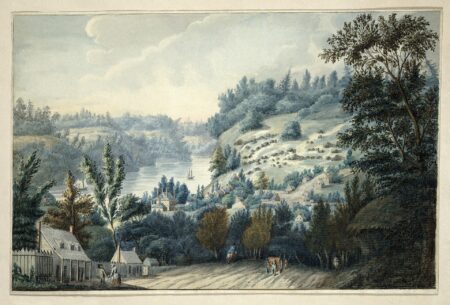
The ban followed several years of rising alarm in Western Canada over a small but visible wave of Black homesteaders. Beginning around 1905, families fled Jim Crow segregation and racial violence in Oklahoma and other U.S. states for the promise of $10-an-acre farmland on the Prairies, settling communities including Amber Valley, Junkins (later Wildwood), Campsie and Keystone (now Breton) in Alberta, and Eldon and land near Rosetown in Saskatchewan, the Canadian Encyclopedia reports. The Canadian Encyclopedia estimates roughly 1,500 Black Americans migrated to Western Canada between 1905 and 1912; Library and Archives Canada separately documents more than 1,500 arriving as farmers between 1909 and 1911, part of the same movement.
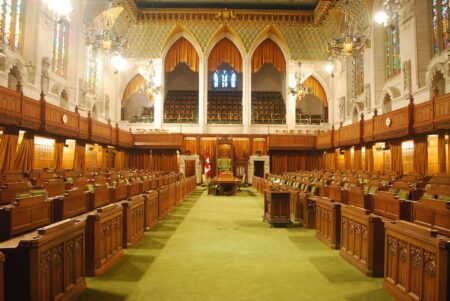
Their arrival triggered an organized backlash. Petitions circulated through boards of trade and citizens’ groups in Edmonton, the Canadian Encyclopedia reports, and on April 3, 1911, Ontario MP William Thoburn stood in the House of Commons to ask whether it was “preferable to preserve for the sons of Canada the lands they propose to give to n–ers,” according to the Hansard record cited by the Canadian Encyclopedia. Frank Oliver, the minister of the interior and himself the MP for Edmonton, championed restricting Black entry, and the cabinet he sat in approved the order that August.
Six weeks later, on Oct. 5, 1911, cabinet quietly revoked it. The official reason given, per the Canadian Encyclopedia, was a technicality: Oliver had not been present when it was approved. The real motivation was political. Ottawa was heading into an election and was wary of damaging trade relations with Washington and of the diplomatic embarrassment an openly race-based immigration bar would invite, the Canadian Encyclopedia notes. The order was never repealed out of principle. It was shelved because enforcing it openly was inconvenient.
What replaced it was quieter and, by design, harder to challenge. Rather than a public law, Canadian officials built an informal system of exclusion at the border, according to Pier 21 and the Canadian Encyclopedia. Immigration agents subjected Black applicants to unusually strict medical examinations, and at least one medical examiner was offered a financial incentive for each Black applicant he turned away, Pier 21’s research shows. Officials also refused to issue the certificates Black settlers needed to qualify for reduced railway settler fares, forcing them to pay full price, and invoked the “continuous journey” regulation, the same tool Canada would use three years later to turn away the passengers of the Komagata Maru, against Black British subjects arriving from the United States. That same summer, Ottawa arranged for Dr. G.W. Miller, a Black physician from Chicago, to tour Oklahoma communities warning prospective migrants away with discouraging claims about Canada’s climate and border scrutiny, publishing his warnings in the Oklahoma Guide newspaper, both Pier 21 and the Canadian Encyclopedia report. It worked. Under the 1910 Immigration Act’s broader power to bar “undesirable” races, Black immigration to Canada slowed to a trickle for decades, Library and Archives Canada’s own history notes.
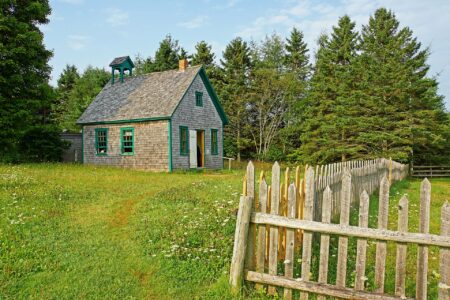
The families already on the Prairies stayed and built. Amber Valley, Alberta’s northernmost and largest Black settlement, traces its founding to 1905, when Henry Parson Sneed led early arrivals from Oklahoma, joined by Jordon Murphy and Nimrod Toles, according to the Canadian Encyclopedia and Wikipedia’s sourced community history. Jefferson Davis Edwards and his wife, Martha Murphy Edwards, arrived by 1910; their son Romeo was the settlement’s first recorded birth. Willace Bowen homesteaded land his son Obadiah later worked. John and Stella King raised a daughter, Violet King Henry, who became the first Black woman called to the bar in Canada. The community built a schoolhouse in 1913 and a church in 1914, and supported several hundred residents by the time its post office opened in 1931. Like many Prairie communities, it emptied out through the mid-20th century as families moved to Edmonton and Calgary for work; its post office closed in 1968.
That history nearly vanished with it. It has resurfaced in recent years through renewed research and public commemoration, including a Canada Post stamp honouring Amber Valley for Black History Month and a documented rise in visitors to the site, CBC News and Global News have reported. What endures from 1911 is not the order Ottawa signed and then unsigned. It is the fact that a government can abandon a law for looking too much like what it is, and keep doing the same thing anyway, unwritten.
If you find reporting like this useful, consider supporting Canada News Media, an independent Canadian newsroom with no corporate parent.
Follow Canada News Media
Get the day's top Canadian stories and our two daily 60-second news videos wherever you scroll.
X Threads Facebook Instagram LinkedIn TikTok YouTube Pinterest Reddit Substack Flipboard Newsletter RSS