


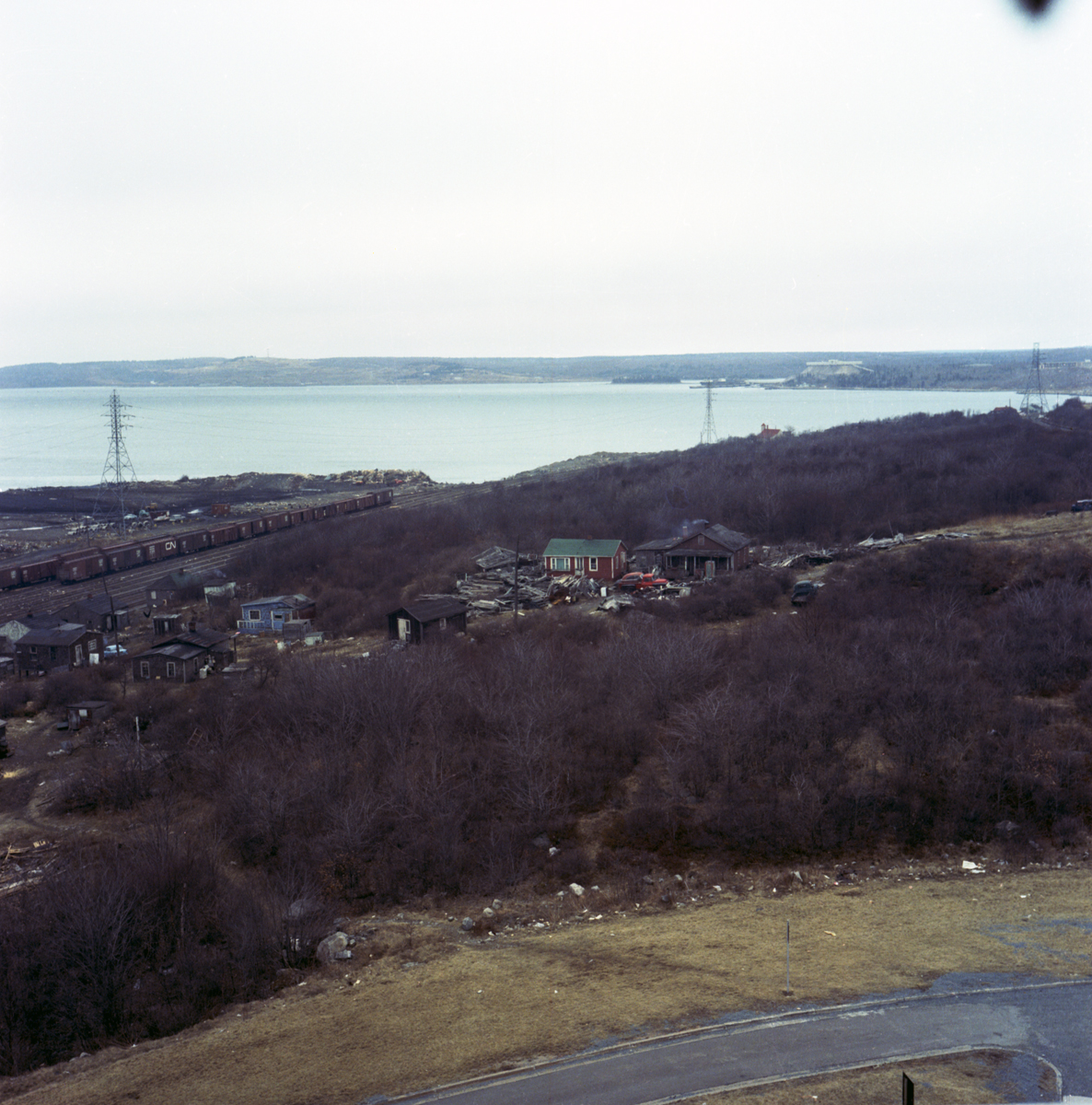
Halifax staff told their city manager in a confidential 1993 memo that Africville residents had been fairly paid for their land and that the city would be “dealing more with myths than reality” as it prepared to negotiate with them, according to a 72-page file held by the Halifax Municipal Archives.
The same memo conceded that follow-up for the people the city moved “was a weak effort at best.” Seventeen years later, the municipality apologized for the destruction of the community.
The file, number 102-135-1, is posted on the municipality’s website. It holds the working papers of a staff committee active from about 1991 to 1993, after Irvine Carvery of the Africville Genealogy Society wrote asking that the matter be reopened, according to a newspaper column kept in the file. Several pages are marked private and confidential, and the quotes here are taken from scanned copies. They show what staff told their managers at the time, not the position of council then or of the municipality today.
The memo, dated Jan. 20, 1993, went from Mildred Royer, the director of employee relations, to city manager Donald Murphy. It said the committee was unanimous that land purchases in the 1960s “resulted in fair and equitable compensation” and that compensation for land “would not be an appropriate response.” It said the weak follow-up was “more a failure of philosophy, rather than an indication of discrimination or abuse.”
The committee warned against judging the 1960s by the values of the 1990s, and it questioned the community’s memory of itself. Over 30 years, the memo said, Africville had been “mythologized.” It said the file was “ultimately silent” on what legal commitments councils had made to residents, and that residents appeared to have taken no action beyond the mid-1960s. Yet residents formed an Africville Action Committee in 1969, The Canadian Encyclopedia says.
It recommended keeping the report from circulating and leaned toward an education fund open to the wider Black community in Halifax, instead of one limited to Africville families, and said a purpose of early meetings would be to assess those who “purport legitimately or illegitimately” to represent them.
The file’s numbers come from a March 1992 report by Claude Isaacs of the real estate division. He put the lands at about 23 acres, bought from 1964 to 1970 for roughly $700,000, or about $30,000 an acre, which he said was well above what comparable raw land later fetched. Direct property costs were about $608,000, with a further $20,000 trust fund for the church. He said a review of about 106 files showed owners were “fairly treated and properly compensated.”
His examples show the terms. Theresa Dixon was paid $11,923.02 in December 1966 for a two-storey, eight-room house, with the total covering a furniture allowance, a payment to an heir, back taxes and a hospital bill. The report itself compared that to an eight-room house advertised on Agricola Street about 18 months later for $18,000, which it described as a superior property with water and sewer.
Former residents have long told it differently. Residents without deeds, many of whom had lived there for generations, were offered $500, CBC News has reported. The encyclopedia says the money often covered only a down payment or a short period of rent, and that families moved on the back of city dump trucks. A staff finance memo in the file, dated Jan. 30, 1992, began from the premise that “the buildings had no inherent value.”
An unsigned staff paper in the file, Africville to 1992, said the city had thought water and sewer too costly for residents to afford, since owners then paid those charges themselves, and that the settlements were “more than reasonable.” It also noted the loss of an informal economy got little recognition. It called the Dalhousie study by Donald Clairmont and Dennis Magill a contributor to “the development of myths” and said society was reacting to a “guilt complex.”
Isaacs raised a practical concern in October 1992: a recreation fund would be “more palatable to the public at large” because athletic facilities benefit the city as a whole.
The file also holds an undated newspaper column by Sanjeev Chowdhury saying Murphy, as city solicitor in the 1960s, was the official who offered Aaron “Pa” Carvery, Africville’s last resident, a briefcase of cash for his home. The column quotes Murphy saying the matter was handled poorly but that he acted alone: “I did it on my own for my own reasons.” The column questioned whether he should handle the file. A page from a council record in the file shows a speaker in that era demanding an apology and a resolution expressing “total disapproval of the use of cash as an inducement.”
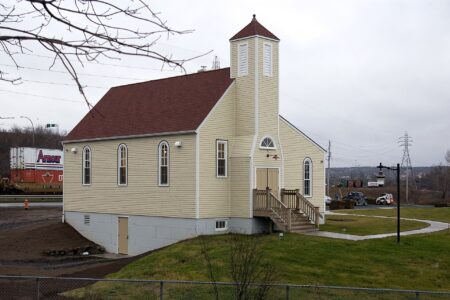
The 2010 settlement with the genealogy society brought an apology, land and $3 million for a replica church and endowment, but no individual payments. The municipality’s website now says the city failed to provide amenities other residents enjoyed, including sewers and clean water.
A lawsuit over the land continues. Lawyer Robert Pineo has argued in court documents that residents were not told their rights, and that those who farmed, fished and ran businesses were undercompensated. Nelson Carvery, Pa Carvery’s son, was the only named plaintiff as of February 2025, when CBC reported that 93 more people wanted to join and that Halifax opposed adding them. Canada News Media found no report of a ruling since.
Canada News Media asked the municipality and the Africville Museum on Nov. 4 to respond to the file, and asked the municipality where the case stands. Any response will be added to this story.
The file sits alongside the wider question of why Canadians rarely talk about Africville.
If you find reporting like this useful, consider supporting Canada News Media, an independent Canadian newsroom with no corporate parent.
Follow Canada News Media
Get the day's top Canadian stories and our two daily 60-second news videos wherever you scroll.
X Threads Facebook Instagram LinkedIn TikTok YouTube Pinterest Reddit Substack Flipboard Newsletter RSS