

Canadians rarely talk about Africville, the Black Halifax community razed in the 1960s, in part because the school curricula Canada News Media checked treat it mostly as an optional example and its site sits in an industrial corner of Halifax that is hard to reach, a review of public records found.
The review looked at official curriculum documents in three provinces and at public readership data. It is not a national audit: Alberta’s documents could not be retrieved, and Quebec, Nova Scotia and other provinces were not checked.
In Ontario’s Grade 9 and 10 curriculum, Africville appears on six of 198 pages, each time as a sample question or an example in brackets, such as “the demolition of Africville” in a list that includes the 1972 Summit Series. The document says sample questions “are meant to illustrate the kinds of questions teachers might pose.” Ontario’s elementary document has one mention, a Grade 6 sample question: “What was Africville?”
In British Columbia, it turned up in the Social Studies 10 document as one of three examples of racial segregation, alongside Amber Valley in Alberta and Little Burgundy in Montreal. It did not appear in the B.C. Grade 5, Explorations 11 or Social Justice 12 pages checked. Manitoba’s 162-page kindergarten to Grade 8 social studies framework does not mention it. Those documents set out what teachers may use, not what happens in each classroom, so a teacher can still choose to teach it, and many may.
Reading habits show a similar gap. Wikimedia’s public pageview records show the English Wikipedia article on Africville drew 34,020 views in 2025. Viola Desmond, the Nova Scotia civil rights figure on the $10 bill, drew 168,020. The Oka Crisis drew 189,080 and the Komagata Maru incident 216,821. The internment of Japanese Canadians drew 46,522. Africville did outdraw Vancouver’s Hogan’s Alley, at 13,094, and the Chinese head tax, at 4,418. The figures count readers worldwide and measure curiosity, not knowledge, but they are one of the few public yardsticks available. Canada News Media did not find a national poll asking Canadians whether they know about Africville.
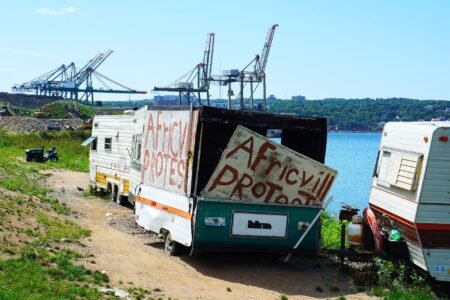
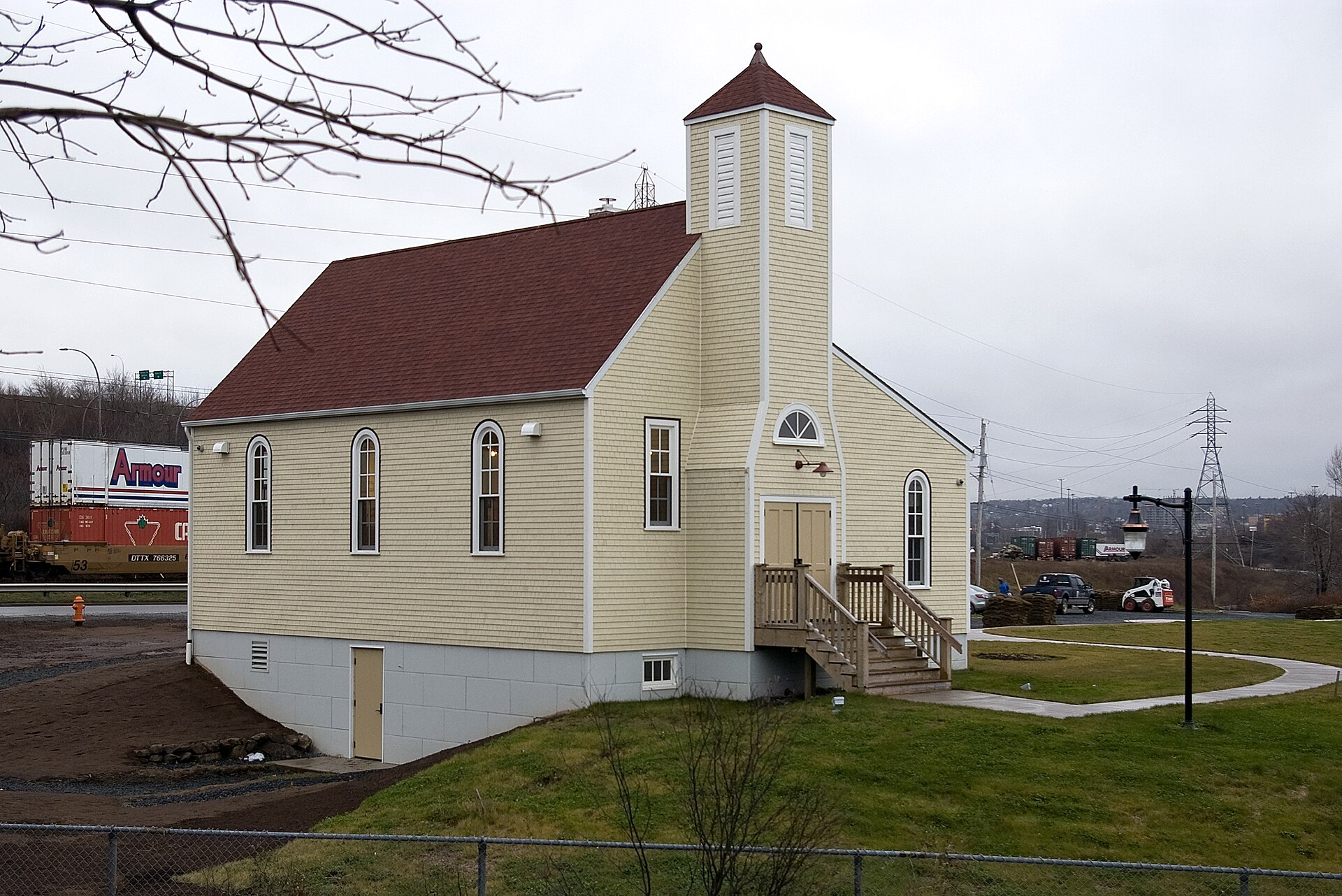
Geography does not help. In a letter to the municipality, the Africville Heritage Trust said the site’s location posed challenges of access, isolation and safety, surrounded by the Halifax Port Authority, CN Rail and Irving Shipbuilding, the Halifax Examiner reported in 2024. The trust wanted more land partly because tour buses had too little room to park. The lack of public transit to the site has been a controversy for years, and Beatrice Wilkins, who gives tours there, told CBC News in January that it is dangerous to walk the road in among the big trucks.
Percy Paris, then the trust’s chair, told council he had a bold prediction: “Africville will be as well known as Peggy’s Cove,” the Examiner reported.
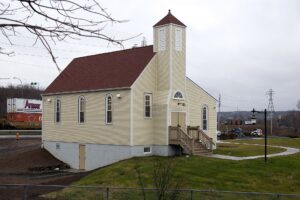
Some scholars point to how Canada sees itself. George Elliott Clarke, the poet and former parliamentary poet laureate, argues in his essay collection Whiteout: How Canada Cancels Blackness that the country’s celebration of itself as a multicultural, humanitarian place has blinded its leaders and citizens to its own crimes, according to the publisher’s description, which singles out the political failure to reckon with Africville. When the replica church was unveiled, Clarke called it the beginning of a recovery of a culture and history that had been neglected, CBC reported.
Those who were there have also said the story is not finished, which makes it harder to file as settled history. The 2010 apology came with land and $3 million but no individual payments, and a lawsuit seeking them continues. Descendants disagree publicly about who speaks for Africville. “We are still divided amongst ourselves,” Eddie Carvery III told council in 2024. Beatrice Wilkins, a co-founder of the Africville Genealogy Society, said at the same hearing that “the time for bickering and fighting has to end.” The protest camp his grandfather kept for 55 years ended only with his death and the removal of his trailer this year.
Official recognition has grown over three decades. Ottawa named Africville a national historic site in 1996, Canada Post put it on a stamp in 2014, and in 2024 it became Canada’s first UNESCO Place of History and Memory linked to enslavement and the slave trade. In September, Nova Scotia’s legislature voted unanimously to put up signs marking 52 historic African Nova Scotian communities, including Africville, The Canadian Press reported.
Ontario’s Grade 6 question is answered in this account of what Africville was.
If you find reporting like this useful, consider supporting Canada News Media, an independent Canadian newsroom with no corporate parent.
Follow Canada News Media
Get the day's top Canadian stories and our two daily 60-second news videos wherever you scroll.
X Threads Facebook Instagram LinkedIn TikTok YouTube Pinterest Reddit Substack Flipboard Newsletter RSS