


Three ships landed between 550 and 600 Jamaican Maroon men, women and children in Halifax Harbour on July 21 and 22, 1796, after the colonial government in Jamaica decided to remove them from the island, according to The Canadian Encyclopedia.
The encyclopedia’s entry on the Maroons of Nova Scotia, written by John N. Grant, names the vessels as the Dover, the Mary and the Ann. It describes Halifax as the 47-year-old capital of the colony, and says it was chosen because it was the nearest British port on the transport fleet’s route.
The Maroons came from Trelawny Town, one of five major Maroon communities in Jamaica. In 1795 the Trelawny Maroons began an uprising that became the Second Maroon War. The Canadian Encyclopedia says they were led by Montague James, Leonard Parkinson and James Palmer, agreed to a truce on Dec. 21, 1795, and that the conflict was over by March 1796. Jamaica then determined to exile them, claiming the terms of the treaty had not been met, the encyclopedia said. It added that Jamaica granted £25,000 for the expenses.
Parks Canada, on a page about the Halifax Citadel national historic site, describes the same group as about 150 families, or more than 500 adults and children, who were transported against their will. It said many became sick and several died on the voyage. The two sources differ on the headcount (550 to 600 versus more than 500) and on where Trelawny Town sat: the encyclopedia places it in the Cockpit Country of central Jamaica, while Parks Canada says the mountains of northwestern Jamaica. This article uses the ranges as each source gives them.
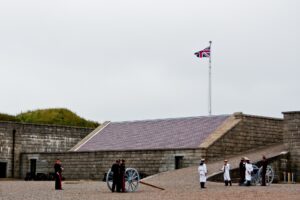
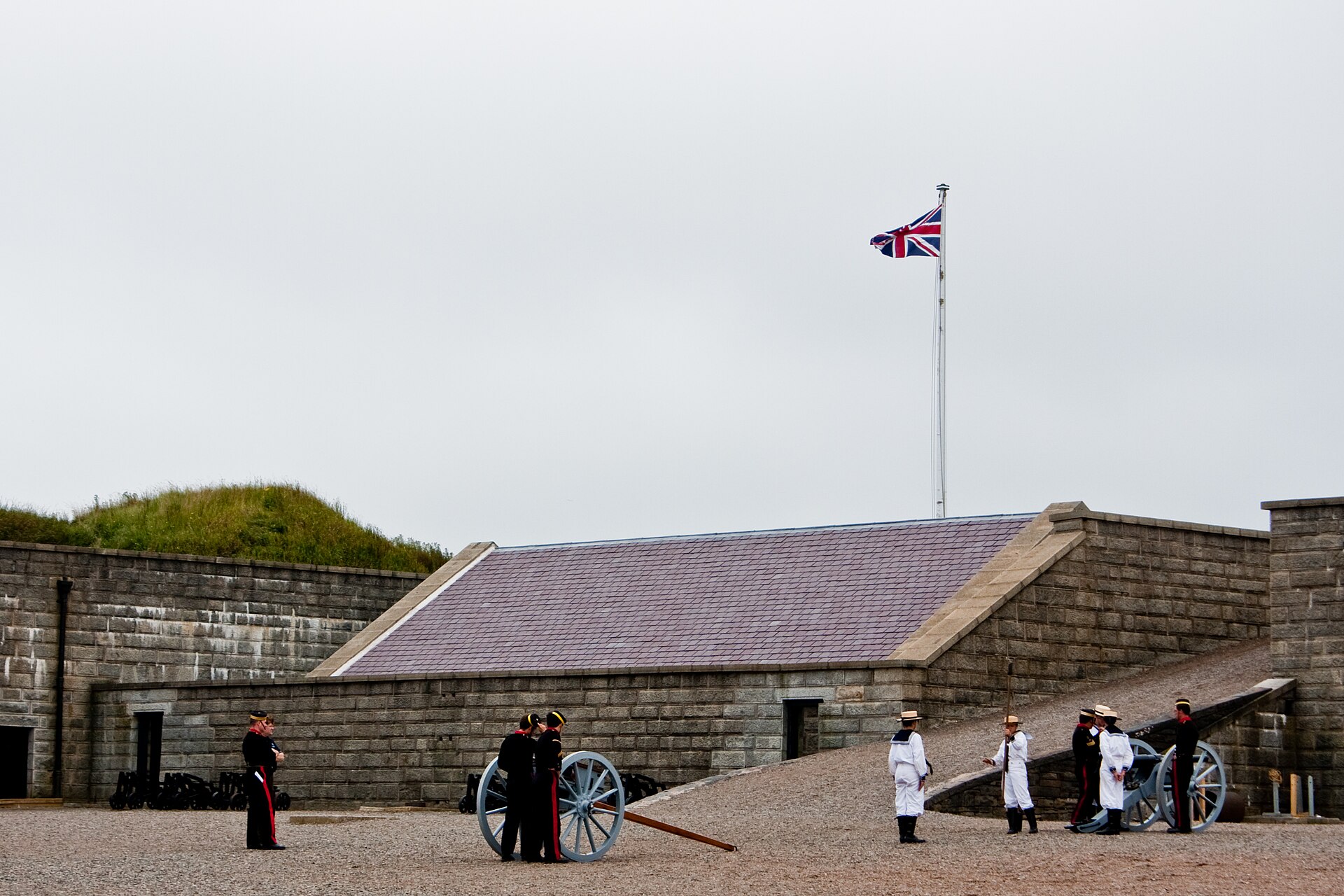
What the Maroons did in Halifax is where the record is most concrete. The Canadian Encyclopedia said Prince Edward Augustus, later the Duke of Kent, employed them to work on his refortification of Citadel Hill, and that in 1800 the men were digging the foundation for the new Government House, which remains the official residence of Nova Scotia’s lieutenant-governor. Parks Canada said they concentrated their efforts on the north-west demi-bastion of the third Citadel, which in 19th-century cultural memory became known as the Maroon Bastion. That fort was later replaced by the fourth and final Citadel, the stone one visitors see today. A plaque near the rear entrance of the site marks the Maroons’ presence, Parks Canada said.
Parks Canada said the Maroons also fought for the same wages as white workers on the same projects, endured discrimination, and faced pressure to convert to Christianity, adopt settler agriculture and take on hard manual labour for low pay. They first lived in Halifax and were later given land in the Preston area, where Black Loyalists had settled about a decade earlier. The story of that earlier migration is told in our report on why 1,196 Black Loyalists left Nova Scotia in 1792.
The climate was a hardship the encyclopedia singled out. It said the winters of 1796 and 1797 were longer and colder than anything the Maroons had known, with deep snow and frozen lakes and rivers. They protested by withdrawing boys from school and staying away from church, and they kept their own faith system, which the encyclopedia said included polygamy.
In April 1798 the Maroons petitioned the colonial authorities. The Canadian Encyclopedia quotes their line that “the Maroon cannot exist where the pineapple is not.” The encyclopedia said the Preston Maroons wanted to leave, while the Boydville Maroons, led by Palmer, asked for sheep, seed grain and a cow or two. Parks Canada said they petitioned British authorities repeatedly for the freedom to leave.
They got it in 1800. On Aug. 7 of that year, 551 Maroon men, women and children sailed from Halifax aboard HMS Asia, bound for Freetown, Sierra Leone, and arrived on Sept. 30, the encyclopedia said. Parks Canada noted that a small number stayed behind in Nova Scotia, and that they had been in the colony for only four years.
The Maroons’ place in the national record is recent. Parks Canada announced on Feb. 22, 2023, that the Jamaican Maroons in Nova Scotia had been designated an event of national historic significance. Then-minister Steven Guilbeault said the Maroons “left a lasting legacy with their dignity, strength, resiliency, and resistance to oppression.” Parks Canada’s own Citadel page says a plaque was unveiled at the site on Aug. 1, 2024, Emancipation Day. That same page gives the designation year as both 2022 and 2024, which conflicts with the February 2023 news release, so readers citing the date should rely on the release. The federal recognition of Aug. 1 is covered in our report on Parliament’s 2021 Emancipation Day law.
A different Halifax story, of a community the city later displaced, is told in our piece on what Africville was before Halifax tore it down.
Sources: The Canadian Encyclopedia, “Jamaican Maroons in Nova Scotia” (John N. Grant); Parks Canada, “The Jamaican Maroons in Nova Scotia,” Halifax Citadel National Historic Site; Parks Canada news release, Feb. 22, 2023.
If you find reporting like this useful, consider supporting Canada News Media, an independent Canadian newsroom with no corporate parent.
Follow Canada News Media
Get the day's top Canadian stories and our two daily 60-second news videos wherever you scroll.
X Threads Facebook Instagram LinkedIn TikTok YouTube Pinterest Reddit Substack Flipboard Newsletter RSS