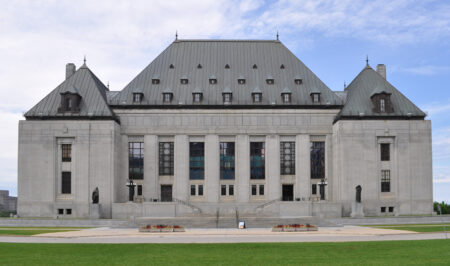


MPs voted unanimously on March 24, 2021, to designate Aug. 1 as Emancipation Day in Canada, formally recognizing a commemoration that Black communities here had been holding for more than 150 years, CBC News reported.
The date marks Aug. 1, 1834, when the British Parliament’s Slavery Abolition Act took effect and ended enslavement in most British colonies, including those in what is now Canada, according to The Canadian Encyclopedia. The encyclopedia says Black communities in Canada have celebrated Emancipation Day since the 1850s, with 19th-century events held in what are now Ontario, Quebec, Nova Scotia, New Brunswick and British Columbia.
The 2021 motion was introduced by Liberal MP Majid Jowhari, who represents Richmond Hill, Ont. It was seconded by Conservative MP Alex Ruff, who represents Owen Sound, Ont., CBC reported.
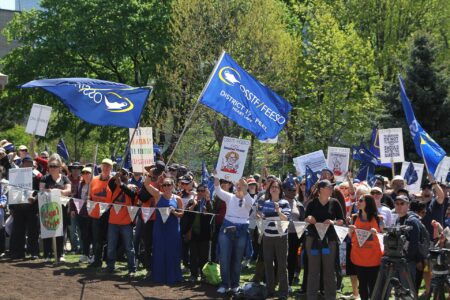
Owen Sound has its own claim on the story. CBC reported that the Ontario city has celebrated Emancipation Day since 1862, before Confederation, and was the northernmost endpoint of the Underground Railroad. The festival began as an all-Black picnic and now welcomes people of all backgrounds, and it recognizes Indigenous people who helped people escaping slavery, according to CBC.
Windsor, Ont., hosted another large observance. CBC reported that from the 1930s to the 1960s the Windsor celebration drew thousands of people, including celebrities and U.S. civil rights leaders, and that Martin Luther King Jr. attended in 1956.
Official recognition came slowly. Ontario began officially marking the day in 2008, and the City of Vancouver followed in 2020, CBC reported. In 2018, Nova Scotia Sen. Wanda Thomas Bernard introduced a private member’s bill in the Senate to recognize Emancipation Day. CBC reported that it did not pass first reading, and The Canadian Encyclopedia says the bill was dropped.
The 2021 vote followed the murder of George Floyd in Minneapolis in May 2020, which Jeffrey Smith, chair of the Owen Sound Emancipation Festival board, said had raised awareness of racism, according to CBC. Smith said his parents were “probably clapping from up high right now.”
Preston Chase, an Ottawa teacher and documentary maker whose great-uncle Walter Perry helped create Windsor’s celebration, told CBC his relative would have been elated. “But he’d probably say, ‘It’s about time,'” Chase said.
Bernard told CBC she hoped the motion would “create an anchor” for further reparations, and argued that slavery is embedded in present-day anti-Black racism. Green Party Leader Annamie Paul, the first Black leader of a major federal party, said that “for almost 200 years, Emancipation Day has gone generally uncommemorated, and untaught.”
That silence was not for lack of history. Slavery in the territory that became Canada predates the 1834 act by two centuries, a record this site has traced through the case of Olivier Le Jeune. Upper Canada’s 1793 law, born of Chloe Cooley’s ordeal, limited the practice without freeing those already enslaved. The 1834 act is the point at which the law finally ended it across the colonies.
Those who built the communities that kept the date alive include people who fled to Canada West, among them Mary Ann Shadd, who published a newspaper for Black settlers.
The Canadian Encyclopedia notes that celebrations now take place across the country.
If you find reporting like this useful, consider supporting Canada News Media, an independent Canadian newsroom with no corporate parent.
Follow Canada News Media
Get the day's top Canadian stories and our two daily 60-second news videos wherever you scroll.
X Threads Facebook Instagram LinkedIn TikTok YouTube Pinterest Reddit Substack Flipboard Newsletter RSS