




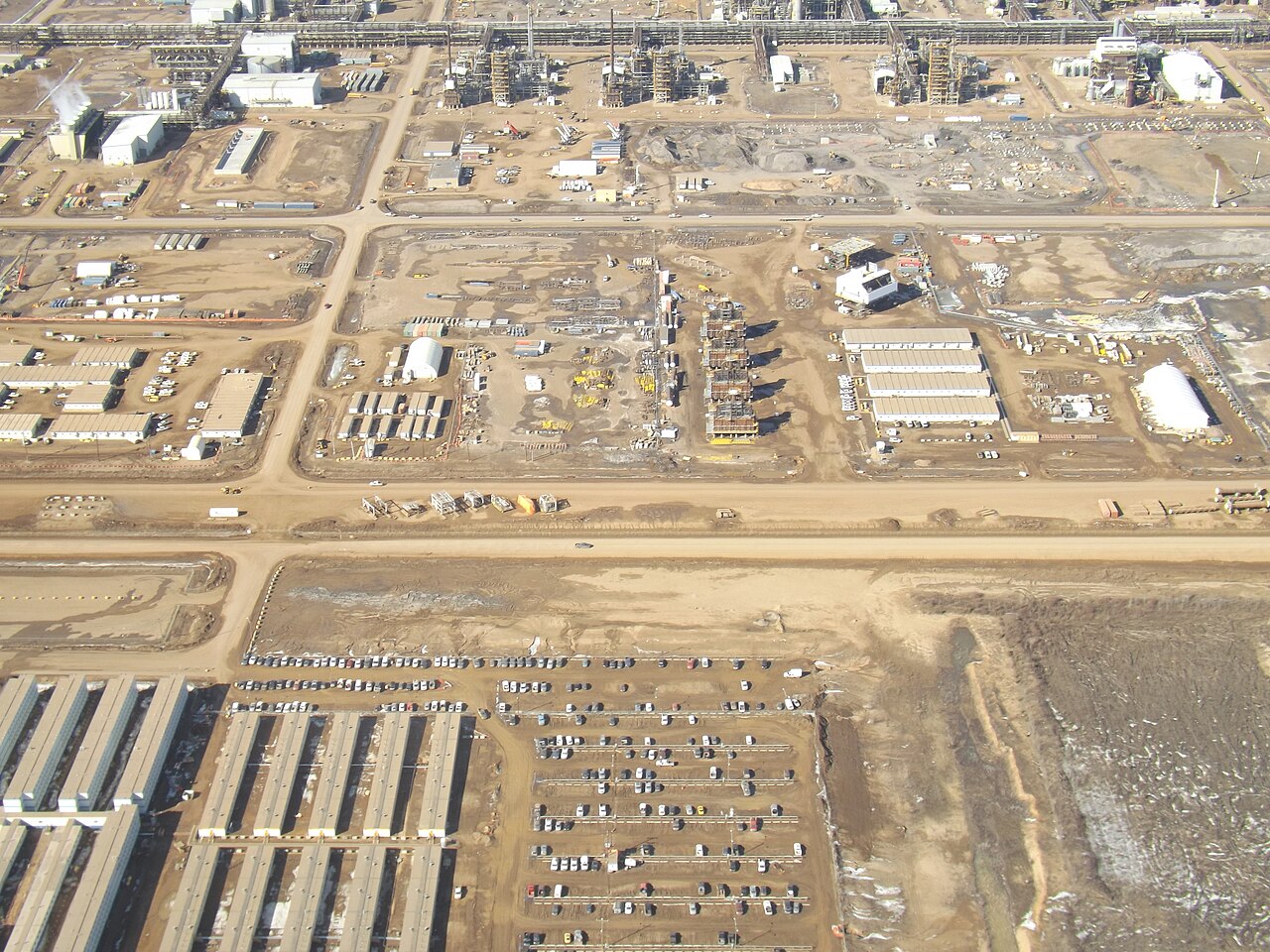
Canadian Natural Resources Ltd. (TSX:CNQ) said Thursday it has reached its $13-billion net debt target and will now put 100 per cent of free cash flow toward share buybacks, as the Calgary-based producer reported third-quarter net earnings of about $3.0 billion.
The company said adjusted funds flow was about $5.5 billion, or $2.68 per share, and adjusted net earnings from operations were $3.4 billion, or $1.67 per share. Net debt fell to $12.1 billion at Sept. 30. Canadian Natural said it will buy back shares at a targeted pace of $800 million a month in both November and December.
By our calculation from the company’s reported figures, Canadian Natural returned about $5.3 billion to shareholders in the quarter, or roughly 96 per cent of its adjusted funds flow. Of that, $2.9 billion went directly to shareholders, made up of $1.3 billion in dividends and $1.6 billion in buybacks, which is about 53 per cent of funds flow. The remaining $2.4 billion went to debt reduction. At $800 million a month, the November and December buyback pace is $1.6 billion, equal to the whole of the third quarter’s buyback spending.
The board approved a quarterly dividend of 62.5 cents a share, or $2.50 a year, payable Jan. 5, 2027, to shareholders of record on Dec. 15. The company said the dividend has now grown for 26 consecutive years. In the first nine months of 2026, it said it has returned about $8.9 billion directly to shareholders through $5.1 billion in dividends and $3.8 billion in buybacks of about 58.2 million shares at an average $65.85.
Production averaged about 1,652,000 barrels of oil equivalent a day, up 2 per cent, or 31,000 boe/d, from a year earlier, including about 1,217,000 barrels a day of liquids and 2.6 billion cubic feet a day of natural gas. A planned turnaround at the Horizon oilsands mining and upgrading complex north of Fort McMurray cut liquids volumes by about 75,000 barrels a day for the quarter. Synthetic crude output was 543,089 barrels a day, down 7 per cent from a year earlier.
Thermal in situ production set a quarterly record of 299,632 barrels a day, up about 9 per cent, led by record output of 143,039 barrels a day at Jackfish, which the company said exceeded its nameplate capacity by about 23,000 barrels a day. Two new steam-assisted gravity drainage pads at Pike 1 are producing about 46,500 barrels a day at a steam-to-oil ratio of 1.7. Conventional North American liquids production, excluding thermal, also set a record at about 358,000 barrels a day, up 16 per cent.
The Horizon turnaround finished Oct. 6 in 28 days, seven days ahead of budget, which the company said adds about 23,000 barrels a day of synthetic crude in the fourth quarter. Oilsands mining and upgrading output is averaging about 640,000 barrels a day since the restart. The company now plans to stretch major Horizon turnarounds to once every three years, which it said lifts the complex’s three-year average capacity by 5,000 barrels a day to about 597,000.
The results come in the same week as other large Alberta producers reported. Suncor Energy posted record cash flow and lifted its dividend 10 per cent, while Cenovus Energy earned $3.36 billion with output above one million boe/d. Canadian Natural’s net earnings of about $3.0 billion compare with $3.81 billion at Suncor and $3.36 billion at Cenovus, though the companies report different non-GAAP cash flow measures, so the figures are not a like-for-like ranking. Imperial Oil reported a record $2.45-billion profit a week earlier.
The quarter also showed what a high synthetic crude price is worth. Canadian Natural said its synthetic crude sold at an average US$6.65 a barrel premium to West Texas Intermediate because of strong diesel prices, and that sulphur sales added about $0.5 billion in pre-tax net revenue in the quarter and $0.9 billion so far this year. Meanwhile, Western Canadian Select has been trading at a wide discount, as we reported last week. Canadian Natural’s synthetic crude premium to WTI shows the upgraded product is priced very differently from heavy blend.
For Albertans, the shift from debt reduction to buybacks matters because Alberta collects royalties on oilsands output and corporate income tax on profits, both of which rise with production and prices. Canadian Natural is also a member of the Pathways Alliance, the oilsands carbon capture group whose Nov. 15 deal target Imperial’s CEO discussed this week.
The company said its figures include a planned Horizon turnaround and lower commodity prices than the second quarter, and that share repurchases in 2027 remain subject to market conditions. Canadian Natural’s 2026 annual production guidance range is unchanged at 1.637 million to 1.682 million boe/d.
If you find reporting like this useful, consider supporting Canada News Media, an independent Canadian newsroom with no corporate parent.
Follow Canada News Media
Get the day's top Canadian stories and our two daily 60-second news videos wherever you scroll.
X Threads Facebook Instagram LinkedIn TikTok YouTube Pinterest Reddit Substack Flipboard Newsletter RSS