


When the first issue of the Provincial Freeman appeared in Windsor, Canada West, on March 24, 1853, the name on the masthead was not the name of the person running it. Samuel Ringgold Ward, a well-known Black abolitionist and lecturer, was listed as editor. The woman doing the work was Mary Ann Shadd, and she had decided that her name would do the paper more harm than good.
According to the Canadiana library collection notes on the paper, Shadd “did not list her own name, or take any credit for articles written by her, thus concealing the paper’s female editorship.” The Canadian Encyclopedia says she was aware that putting her name on the masthead could alienate readers who considered newspapers and editorships to be men’s affairs. Alexander McArthur, a white Congregational minister, was named corresponding editor. By the standard of the day, the arrangement was a calculated disguise. By the standard of history, it made her the first Black woman in North America to publish and edit a newspaper, as the Canadian Encyclopedia and Heritage Toronto both put it.
From a Windsor classroom to a newspaper
Shadd was born on Oct. 9, 1823, in Wilmington, Delaware, and died on June 5, 1893, in Washington, D.C., according to the Canadian Encyclopedia. She moved to Canada West in the fall of 1851 to set up a school for formerly enslaved children in Windsor. Henry Bibb, owner and editor of the Voice of the Fugitive, had encouraged the move.
The friendship did not last. By 1852 there was a serious falling out between Shadd and the Bibbs. The Canadian Encyclopedia describes disputes over segregated schools, over how the Bibbs’ Refugee Home Society managed its land scheme, and over what Shadd regarded as the society’s practice of “begging” for funds. Those arguments spilled onto the pages of the Voice of the Fugitive itself. At the core was a difference in philosophy: Bibb represented the separatist strain of the movement, Shadd the integrationist.
Those quarrels, historians of the period note, pushed Shadd toward starting her own paper. The first issue, published in Windsor on March 24, 1853, was intended as a prototype to solicit financial support for a weekly that would offer a view different from the Voice of the Fugitive’s.
A paper that moved with its editor
The Provincial Freeman did not stay in one place. Canadiana’s description of its holdings lists three places of publication: Windsor (1853 to 1854), Toronto (1854 to 1855) and Chatham (1855 to 1857). Heritage Toronto says weekly publication began in Toronto in 1854, with the office on King Street East. Sources differ slightly on the exact dates of each move and on when the paper ended, and Canadiana’s catalogue and Heritage Toronto, which says it ceased around 1860, do not fully agree. Readers should treat the year-level dates here as approximate.
What is not in dispute is the paper’s purpose. The Provincial Freeman was an anti-slavery newspaper, devoted to anti-slavery advocacy, temperance and general literature, with the motto “Self-Reliance is the True Road to Independence,” according to Canadiana. As a leading emigrationist, Shadd strongly advocated Canada West as a place for African Americans to settle. Her integrationist view, that Black families should send their children to the same schools and take part in the same civic life as everyone else, ran directly against the separatist institutions that others in the community were building.
Why the masthead matters
Reading the story only as a “first” can flatten it. The decision to hide a woman’s authorship tells us something about the limits the community’s own press placed on women in the 1850s, and about how an editor navigated those limits without waiting for them to change. She did the work, took no public credit, and let a man’s name carry the paper to readers who might otherwise have turned the page.
Shadd later returned to the United States. Heritage Toronto records that she helped recruit Black soldiers into the Union army during the American Civil War and studied law in Washington, becoming one of the first Black women to earn a law degree.
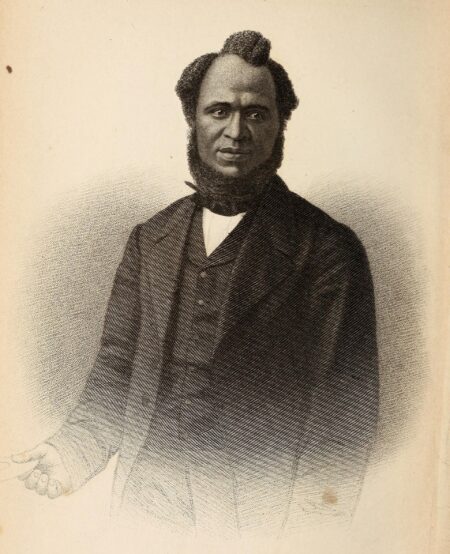
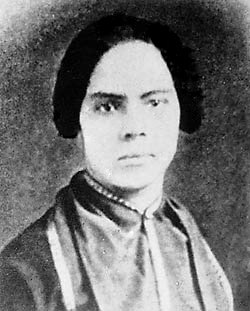
Her portrait survives in the National Archives of Canada (C-029977), and her words survive in the Provincial Freeman’s issues, which Canadiana has digitized. Neither shows a woman who was hiding. They show one who understood exactly how much of her audience she needed to persuade, and who published anyway.
Sources: The Canadian Encyclopedia, “Mary Ann Shadd” and “The Provincial Freeman”; Canadiana (oocihm.N_00107); Heritage Toronto, “Mary Ann Shadd Cary” (Being Black on King map tour). Date discrepancies among these sources are noted above.
If you find reporting like this useful, consider supporting Canada News Media, an independent Canadian newsroom with no corporate parent.
Follow Canada News Media
Get the day's top Canadian stories and our two daily 60-second news videos wherever you scroll.
X Threads Facebook Instagram LinkedIn TikTok YouTube Pinterest Reddit Substack Flipboard Newsletter RSS