


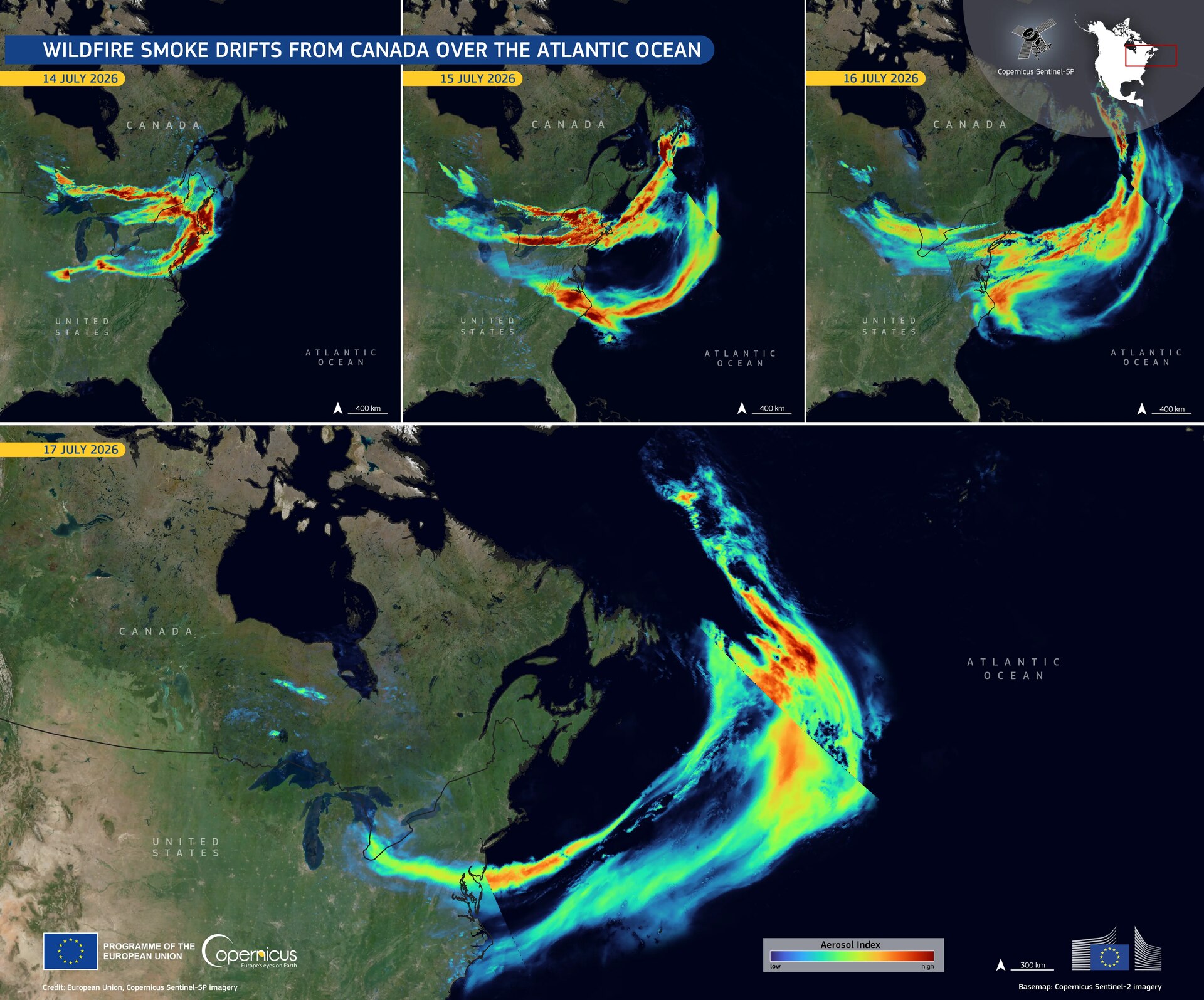
Wildfires burned about 4.5 million hectares across Canada in 2026 and forced more than 33,750 people from their homes, including more than 8,800 people from First Nations communities, the federal government said in its end-of-season update on Oct. 15.
Public Safety Canada said in the release that the country had more than 5,400 wildfires since April. Some fires were still burning when the update was issued, but the department said the situation had improved significantly.
The season began slower than average, according to the release. Prolonged heat, drought and low humidity then drove heavy activity in several regions, particularly northwestern Ontario and southern British Columbia, where fires threatened communities and critical infrastructure.
The Northwest Territories was extremely active and accounted for more than one third of all area burned nationally, the department said. A running public tally of the season on Wikipedia, which cites provincial and territorial figures, puts the territory at about 1.7 million hectares as of Aug. 31, with Ontario at roughly 743,000 hectares and British Columbia at about 477,000 hectares. Those figures have not been confirmed by the federal release.
The release does not compare 2026 with earlier seasons, and it does not say how many of the evacuees have gone home. The same public tally describes 2023 as Canada’s worst season by area burned and 2025 as the second worst, and says 2026 was less destructive than either.
The evacuation figure for First Nations is the part of the update with the most consequences for communities that are far from help. Many northern First Nations are fly-in communities, where evacuations depend on aircraft rather than roads.
The federal government said its Government Operations Centre supported two requests for federal assistance. In Ontario, that meant air evacuation support, including for about 900 residents of Eabametoong First Nation, also known as Fort Hope. In British Columbia, the Canadian Armed Forces provided lodging for evacuees at the Vernon Cadet Camp.
Eabametoong is about 370 kilometres northeast of Thunder Bay. In July, Chief Sol Atlookan told Ricochet, in a report carried by Turtle Island News on July 20, that elders and vulnerable residents had been waiting three days for evacuation as fires burned around the community. He said “getting us out doesn’t seem to be a high priority.” The federal release does not address that account or say how long the evacuation took.
The Turtle Island News report was only partly visible to Canada News Media. The chief’s remarks are reported here as published in the portion available.
The public tally also says First Nations leaders have called for a public inquiry into Ontario’s wildfire response. Canada News Media could not confirm the status of that request with the province or First Nations organizations.
On the response side, the release credits a new national aerial surge capacity, set up in Budget 2025 with $316.7 million over five years and run through the Canadian Interagency Forest Fire Centre. The centre leased 10 firefighting aircraft from Conair Group Inc., Coldstream Helicopters and VIH Helicopters. They logged more than 2,120 flight hours and made more than 14,400 water and fire retardant drops across nine provinces and territories, the department said.
The government also said more than 560 firefighters from Mexico, Costa Rica, New Zealand and Australia helped over the summer, and that it announced $47.8 million over five years in May to strengthen Parks Canada’s wildfire preparedness and response.
Emergency Management Minister Eleanor Olszewski said in the release that “this summer showed the strength of what we can accomplish when we work together.” Indigenous Services Minister Mandy Gull-Masty said thousands of people “had to leave their homes, and families and communities faced significant disruption.”
The government said it will keep working with provinces, territories and Indigenous partners on recovery and rebuilding. Earlier coverage on this site looked at why some B.C. farmers stayed to fight fires despite evacuation orders and at how residents of Clinton, B.C., recounted evacuating.
If you find reporting like this useful, consider supporting Canada News Media, an independent Canadian newsroom with no corporate parent.
Sources: Public Safety Canada (via CNW, Oct. 15); 2026 Canadian wildfires (public tally); Turtle Island News via Ricochet.
Follow Canada News Media
Get the day's top Canadian stories and our two daily 60-second news videos wherever you scroll.
X Threads Facebook Instagram LinkedIn TikTok YouTube Pinterest Reddit Substack Flipboard Newsletter RSS