


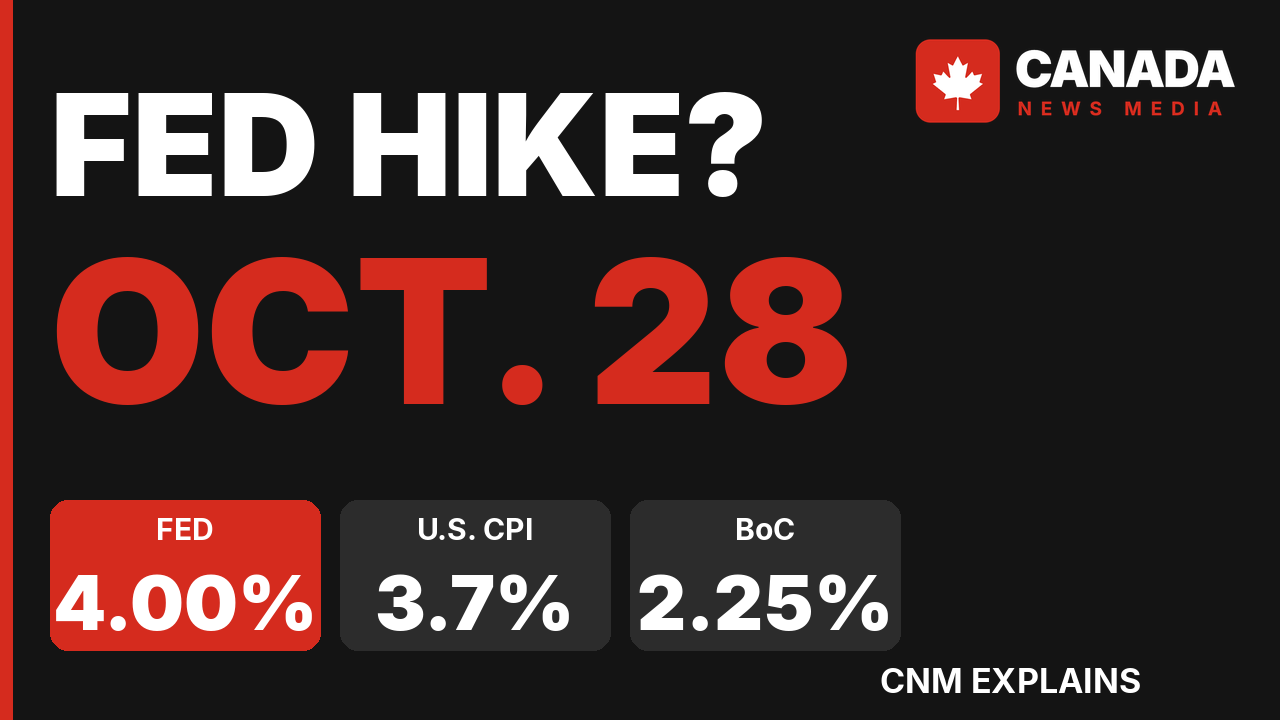
The U.S. Federal Reserve raised its key rate by a quarter of a percentage point on Sept. 16, to a range of 3.75 to 4 per cent, in a 12-0 vote and the first increase since July 2023. It decides again on Oct. 28, the same day as the Bank of Canada. U.S. consumer prices rose 3.7 per cent in September from a year earlier, up from 3.4 per cent in August, the Bureau of Labor Statistics reported, with gasoline up 9.1 per cent in the month. Markets lean toward a hold: Forbes reported on Oct. 19 that the CME FedWatch tool put the chance at about 80 per cent, and Fed Chair Kevin Warsh has declined to say in advance what the Fed will do. The Fed does not set Canadian rates, but it can move the loonie: one U.S. dollar cost C$1.4157 on Oct. 16, against C$1.4045 a year earlier, so US$1,000 costs about C$11 more, by our calculation. If the Bank of Canada raises by a quarter point, a variable-rate mortgage of $500,000 would cost about $70 more a month in our illustration. Odds are estimates, not decisions, and this is not financial advice.
Full story: Fed and Bank of Canada both set rates Oct. 28.
Sources: Federal Reserve press release, Sept. 16, 2026; Federal Reserve meeting calendar; Federal funds target (FRED); U.S. Bureau of Labor Statistics, Consumer Price Index; Federal Reserve H.10 exchange rates (FRED); Bank of Canada Valet; investinglive on Warsh, Oct. 16; Forbes (CME FedWatch odds, Oct. 19) and a Reuters poll of economists (Oct. 21-23), as reported in our article. Mortgage and currency figures are our calculations for illustration. Charts drawn by Canada News Media.
Read our coverage: Fed and Bank of Canada both set rates Oct. 28; Will the Bank of Canada raise interest rates on Oct. 28?
Follow Canada News Media
Get the day's top Canadian stories and our two daily 60-second news videos wherever you scroll.
X Threads Facebook Instagram LinkedIn TikTok YouTube Pinterest Reddit Substack Flipboard Newsletter RSS