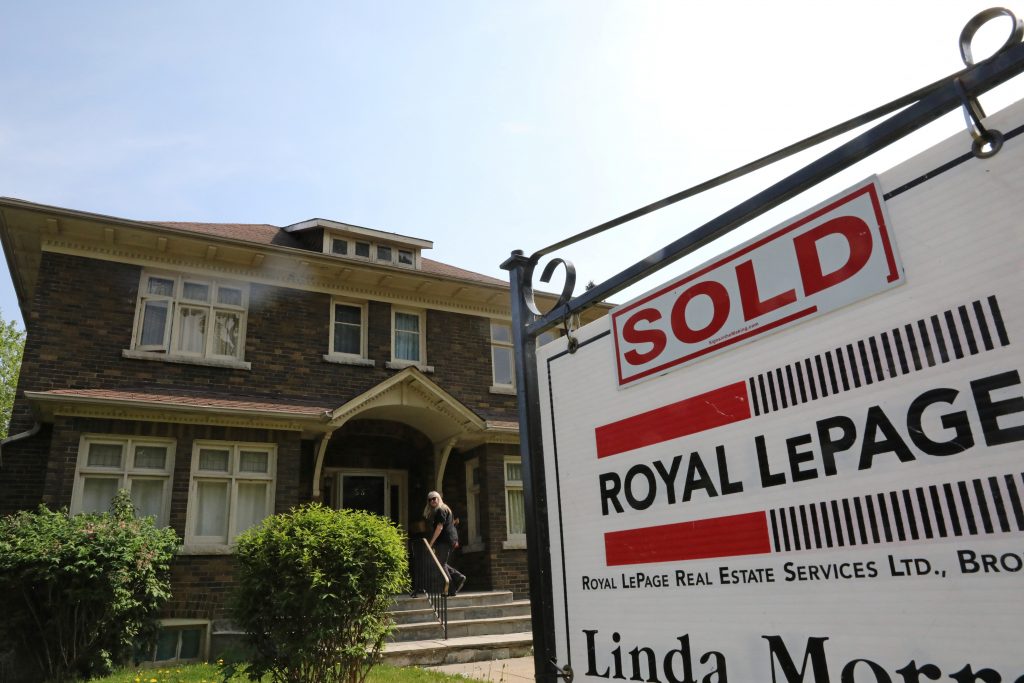



Ontario homeowners will pay their 2026 property taxes on what their houses were worth on Jan. 1, 2016, the tenth consecutive tax year the province has billed against a decade-old valuation date, and the Association of Municipalities of Ontario says that leaves Ontario alone in the country.
“Ontario is the only province in Canada that has not resumed property reassessments post COVID-19 pandemic, with the last assessment taking place in 2016,” AMO said in an Aug. 13 policy update, which disclosed a July 31 letter the association sent to Premier Doug Ford calling for a clear path back to regular assessment cycles.
The Municipal Property Assessment Corporation confirms the freeze on its own website: “Property assessments for the 2026 property tax year will continue to be based on fully phased-in January 1, 2016 current values.” MPAC assessed more than five million Ontario properties in that 2016 update, the last province-wide one it has completed. The Ontario government postponed the 2020 assessment update during the pandemic and, in a regulation filed Aug. 16, 2023, extended the postponement through the end of the 2021 to 2024 cycle.
A frozen valuation date does not, on its own, mean smaller tax bills. Municipal tax rates are set by dividing the amount a council needs to raise by the total assessment base, so if assessed values are uniformly low, rates simply rise to compensate. The problem is that values did not move uniformly.
That is the finding of an analysis by Ryan’s Canadian property tax practice, published in January 2025, which examined more than 3,400 open-market residential sales in Vaughan between July 1, 2023, and June 30, 2024, a window bracketing what would have been the Jan. 1, 2024, reassessment reference date. Across the full sample, sale prices ran an average of 82 per cent above the properties’ 2016 current value assessments.
The average is not the story. The spread around it is.
Ryan’s Scott Powell and Margaryta Lysenko singled out two Vaughan sales on the same street. One, a three-bedroom detached home built in 2003, sold for $1,215,000 on May 9, 2024, against an assessed value of $698,000, a gap of 74 per cent. The other, a three-bedroom freehold townhome built in 2002, sold for $1,220,000 on June 12, 2024, against an assessed value of $624,000, a gap of 96 per cent.
The two homes sold within $5,000 of each other. Applying Vaughan’s 2024 residential tax rate of 0.713805 per cent, the detached home was billed $4,982 and the townhome $4,454, a difference of $528 a year on properties the market priced as equivalent.
“The delayed reassessment in Ontario is creating property tax winners and losers, in a system that should be built on fairness,” Powell and Lysenko wrote.
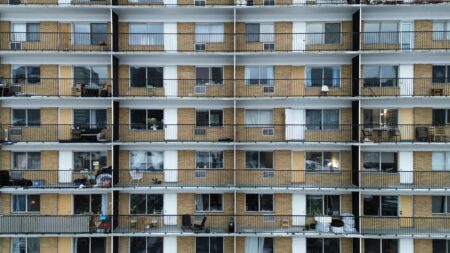
Because assessment is the mechanism that distributes a fixed municipal levy, any segment of the market whose value has risen faster than the class average is currently under-taxed, and any segment that has lagged is over-taxed. The Ryan analysis found the variance tracked both property type and price band, with condominium apartments above roughly $1.58 million showing the largest gap between sale price and assessment, and stacked townhomes under about $1.13 million the smallest.
Ten years on, the market has begun moving in the other direction. The Ontario MLS Home Price Index composite benchmark was $745,400 in August 2026, down 3.6 per cent from a year earlier, according to figures released by the Canadian Real Estate Association in co-operation with the Ontario Real Estate Association. Apartments fell hardest, down 6.4 per cent to $489,200, while the single-family benchmark slipped 3.4 per cent to $826,900. Provincial sales of 13,620 units were the lowest August total in 25 years and 22.6 per cent below the 10-year average for the month.
Falling prices narrow the raw gap between assessed and market values. They do nothing about the relative gaps, which are what actually determine who pays what. If apartment values are declining faster than detached house values, the distortion the Ryan study measured is being reshuffled rather than resolved.
Annual reassessment is legislated in Alberta and British Columbia. AMO said it has offered to work with MPAC and the province on communicating a transition back to a regular cycle. The province has not announced a valuation date for the next update.