

Landlords in Ontario can raise rent by no more than 1.9 per cent on most units in 2027, while the limit is 2.2 per cent in British Columbia, 2.1 per cent in Prince Edward Island and 3.0 per cent in Manitoba, according to provincial government announcements.
Updated Oct. 13, 2026
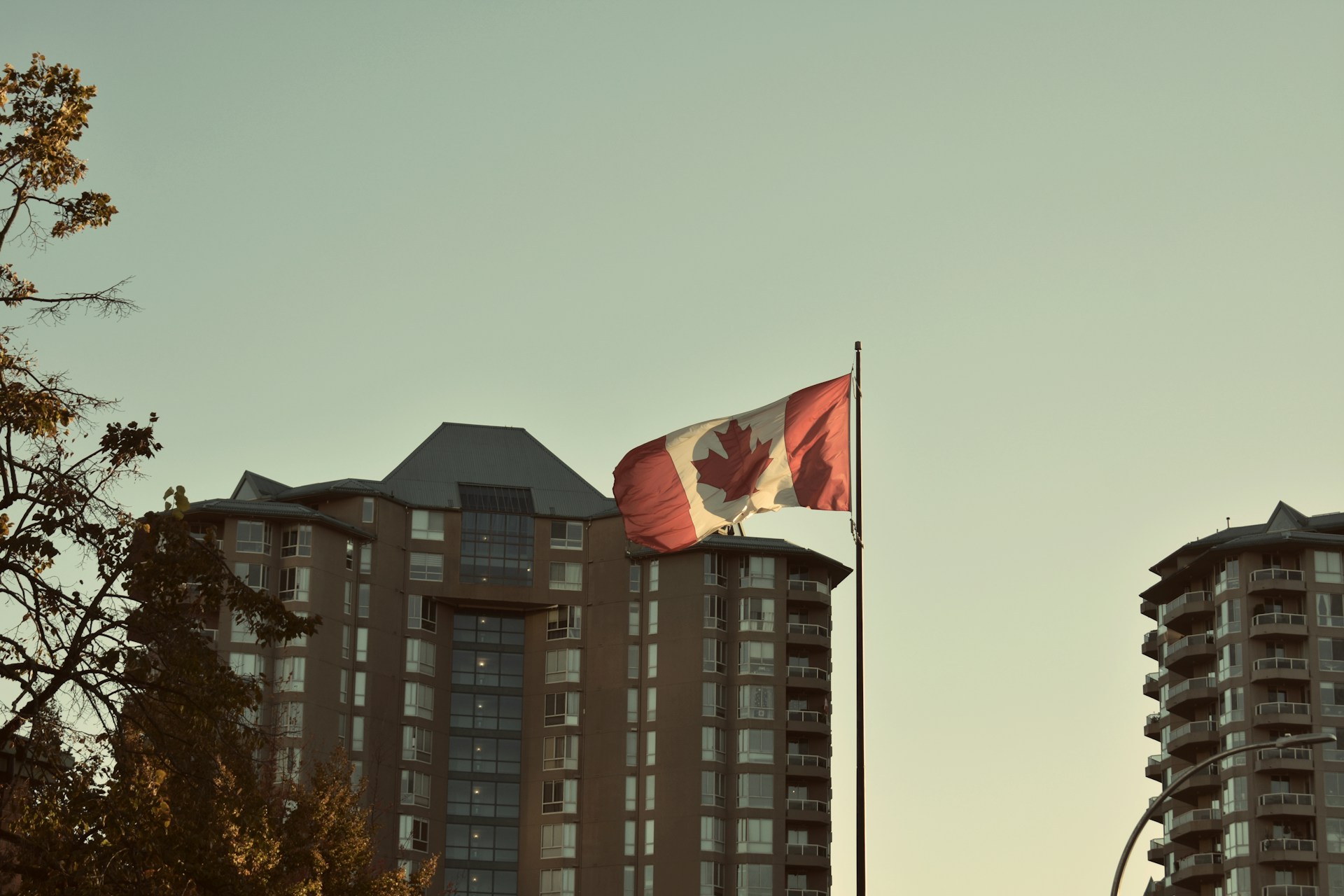
File photo: a Canadian flag in front of apartment buildings. Photo by Ruth Bourke, Unsplash.
Nova Scotia’s cap stays at five per cent a year through the end of 2027. Alberta, Saskatchewan and Quebec do not set a fixed provincial percentage, but each has its own rules on timing and notice.
The table below sets out each province’s 2027 limit as published by its government. Most increases take effect on Jan. 1, 2027.
| Province | 2027 limit | Notice required |
|---|---|---|
| Ontario | 1.9 per cent (2.1 per cent in 2026) | 90 days, written, on the proper form |
| British Columbia | 2.2 per cent (2.3 per cent in 2026) | Three months, on the required form |
| Manitoba | 3.0 per cent | Three months, written |
| Prince Edward Island | 2.1 per cent | See the province’s Rental Office |
| Nova Scotia | 5 per cent a year, cap runs to Dec. 31, 2027 | Not stated on the release cited below |
| Quebec | No fixed cap; 3.1 per cent reference figure for 2026 leases | Tenant has one month to accept or refuse |
| Alberta | No cap | Three full tenancy months for month-to-month |
| Saskatchewan | No cap listed by the province | 12 months for most landlords |
Ontario
The Ontario government’s rent increase guideline page sets the 2027 guideline at 1.9 per cent, down from 2.1 per cent for 2026. A landlord must give a tenant written notice on the proper Landlord and Tenant Board form at least 90 days before the increase takes effect.
Ninety days before Jan. 1 is Oct. 3, so a notice served now would not take effect before about Jan. 11, 2027.
British Columbia
The B.C. government said on Aug. 27, 2026, that the maximum allowable increase for 2027 is 2.2 per cent, tied to inflation and down from 2.3 per cent in 2026, according to its news release. It takes effect Jan. 1, 2027. Landlords must give at least three months’ notice using the required Notice of Rent Increase form.
Manitoba
Manitoba’s Residential Tenancies Branch lists a 2027 guideline of 3.0 per cent, effective Jan. 1, 2027. Units renting for $2,000 or more a month are exempt from the guideline. Tenants must receive written notice at least three months before an increase, which meant Sept. 30 for a Jan. 1 start.
Prince Edward Island
P.E.I.’s Rental Office set the maximum allowable annual increase at 2.1 per cent for 2027, effective Jan. 1, 2027. Landlords may apply for up to an additional three per cent, but the Director must approve any increase above the allowable amount by order.
Nova Scotia
The province’s announcement of the extension says the rent cap is five per cent a year and will run to Dec. 31, 2027. That release does not say what happens after that date. Mobile-home park lots follow a separate formula, and the 2027 figure for land-lease communities is 2.2 per cent.
Quebec
Quebec has no fixed provincial cap. The Tribunal administratif du logement’s reference figure for leases renewing between April 2, 2026, and April 1, 2027, is 3.1 per cent, CBC News reported. The tribunal’s rent increase page says a tenant has one month after receiving the landlord’s notice to accept or refuse. Canada News Media did not find a published figure for leases renewing after April 1, 2027.
Alberta
Alberta’s government says there is no limit on the amount a landlord may raise the rent. A landlord cannot raise it until 365 days have passed since the last increase or the start of the tenancy, and not during a fixed term. Month-to-month tenancies need three full tenancy months’ written notice.
Saskatchewan
Saskatchewan’s rent increase page lists no cap on the amount. Most landlords must give 12 months’ notice and cannot raise rent within the first 18 months of a tenancy. Members of the prescribed landlord associations may use six months’ notice after the first 12 months.
New Brunswick, Newfoundland and Labrador and the territories are not covered here. Canada News Media will add them when their rules are confirmed from government sources.
For other 2026 cost-of-living changes, see our guides to minimum wage by province and the November CCB payment date.
If you find reporting like this useful, consider supporting Canada News Media, an independent Canadian newsroom with no corporate parent.
Sources: Government of Ontario, B.C. government, Manitoba Residential Tenancies Branch, P.E.I. Rental Office, Nova Scotia government, Tribunal administratif du logement, Government of Alberta, Government of Saskatchewan.
Follow Canada News Media
Get the day's top Canadian stories and our two daily 60-second news videos wherever you scroll.
X Threads Facebook Instagram LinkedIn TikTok YouTube Pinterest Reddit Substack Flipboard Newsletter RSS