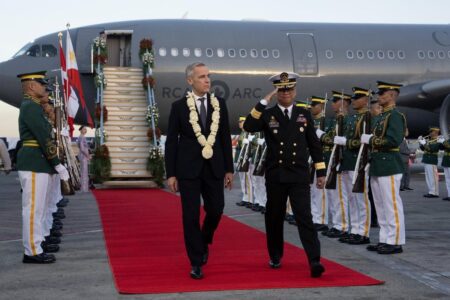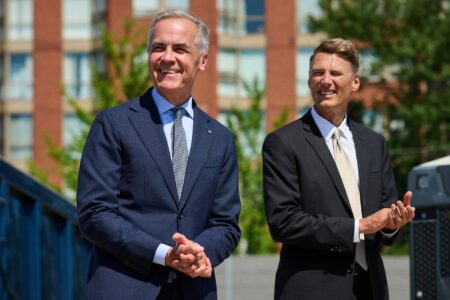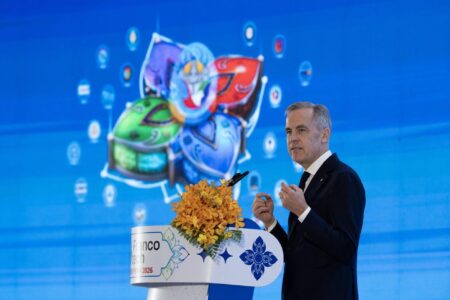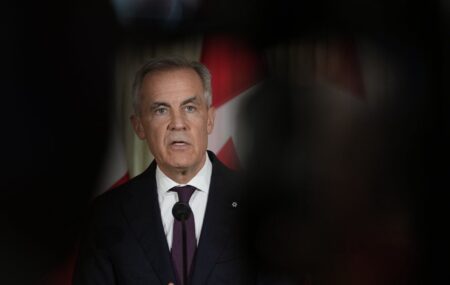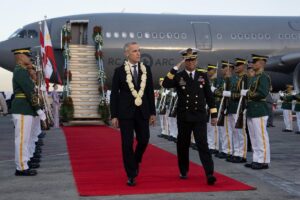


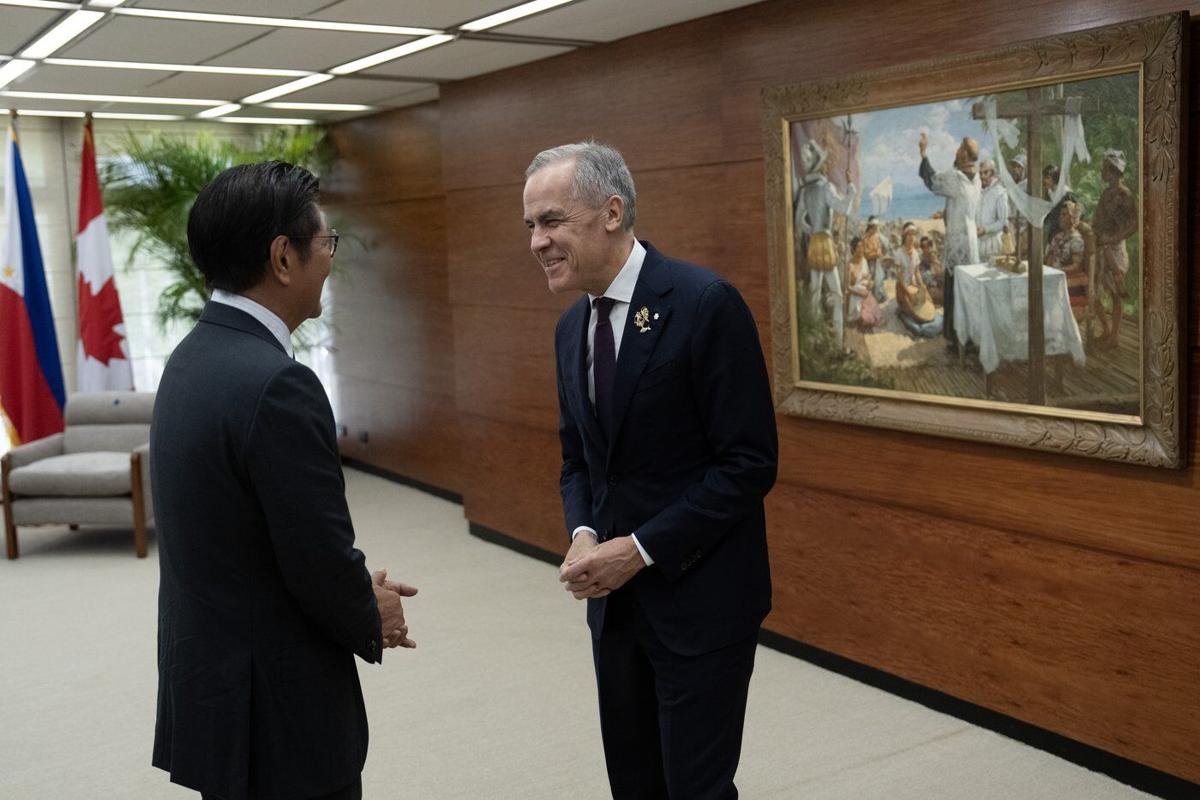
A post spreading on Threads says Canada’s new $26 million for the Philippines “will go straight to politician’s pockets.” The first part of the claim is true: Prime Minister Mark Carney did announce $26 million for the Philippines in Manila on Nov. 14. But Canada’s own project list shows none of the money is a cash transfer to the Philippine government. All four projects are run by named Canadian or international organizations.
The figure first spread through a Philippine Star graphic headlined “Canada provides $26 million aid for Philippine projects.” In a Threads reply that tagged Canada News Media, one user wrote that the Philippines has “99% corrupt government officials” and that the donation would end up with politicians. We checked the claim against the Prime Minister’s Office records.
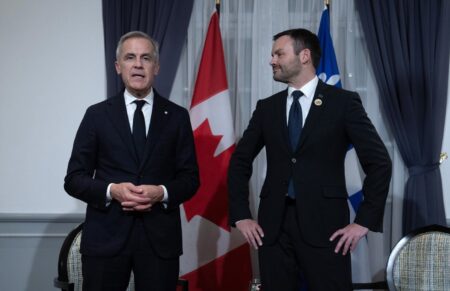
In its readout of Carney’s meeting with President Ferdinand Marcos Jr., the Prime Minister’s Office said Canada “announced $26 million in international assistance for projects that will support community resilience, investment readiness and food logistics in the Luzon Economic Corridor, climate-resilient agriculture, and the strengthening of nuclear regulatory capacity in the Philippines.”
A backgrounder released the same day names the partner organization, the amount and the timeline for each of the four projects, and together they add up to exactly $26 million. The largest is $10 million over six years through Atomic Energy of Canada Limited, the federal Crown corporation, to build Philippine expertise in nuclear safety, security and regulation. Next is $9.5 million over six years through Développement international Desjardins, the international arm of the Quebec co-operative group. It funds the KLIMA project for women agri-entrepreneurs and smallholder cacao and coffee farmers in disaster-prone rural areas.
The Asian Development Bank receives $4 million over four years to prepare a pipeline of investment-ready infrastructure projects, including food logistics, in the Luzon Economic Corridor around Subic Bay, Clark, Manila and Batangas. The Asia Foundation receives $2.5 million over two years to help coastal communities and local authorities plan for maritime disruptions to food supply, energy and communications.
Spreading the money over four to six years also means the $26 million will not all be paid out at once. If all four projects run at the same time, the yearly total comes to about $5.5 million ($1.67 million, $1.58 million, $1 million and $1.25 million a year).
Canada’s international assistance generally works this way. Global Affairs Canada signs a funding agreement with an implementing partner, which reports back on spending and results, and the department publishes active projects in its online Project Browser. That does not rule out waste or misuse once a project is under way, and audits of foreign aid in many countries have found problems. But the claim that the money will be handed directly to Philippine politicians is not supported by the government’s published project list.
Concerns about corruption in the Philippines are not new. In 2025 the government faced large street protests over alleged kickbacks in flood-control contracts. The statement that 99 per cent of officials are corrupt is an opinion, though, and no data supports that figure.
The aid was one of several announcements during the visit. The two leaders concluded negotiations on a Canada-Philippines free trade agreement, which we reported on Nov. 14, and they are aiming to sign it in 2027. Canada also extended its Dark Vessel Detection program, which uses satellite data to track ships that switch off their location transponders, to 2033. Two-way merchandise trade between the countries reached $3.4 billion in 2025, according to the readout.
Separately, at the ASEAN summit in Manila, Carney announced more than $15.9 million for regional projects, including $1.2 million through Canada’s Shared Ocean Fund to fight illegal fishing in Southeast Asian waters, the Philippines included.
Verdict: the $26 million figure is accurate. The claim that it will “go straight to politician’s pockets” is not supported by the public record, which shows the funds going to four named partner organizations under multi-year agreements.
How we checked: we read the Prime Minister’s Office readout of the Carney-Marcos meeting and its Nov. 14 backgrounder, which lists each project’s partner, amount and duration, and added up the four amounts ($10 million, $9.5 million, $4 million and $2.5 million). We also reviewed Philippine coverage of the announcement and how Global Affairs Canada publishes its funded projects. If you have seen a claim you want us to check, email our newsroom.
Follow Canada News Media
Get the day's top Canadian stories and our two daily 60-second news videos wherever you scroll.
X Threads Facebook Instagram LinkedIn TikTok YouTube Pinterest Reddit Substack Flipboard Newsletter RSS