

The Guaranteed Income Supplement, or GIS, is a monthly, tax-free federal payment for people 65 and older who receive the Old Age Security pension and have a low income, according to the Government of Canada. It is paid on top of the OAS pension, and the amount depends on your marital status and your income from the previous year.
The GIS is one of three income-tested benefits in the Old Age Security program. The other two, the Allowance and the Allowance for the Survivor, are separate benefits with their own rules, listed alongside the GIS on Service Canada’s GIS overview page. The OAS pension itself is paid to most Canadians 65 and older regardless of income, though higher earners repay part of it through the recovery tax, which we explain in our guide to Old Age Security and the clawback.
To qualify, you must be 65 or older, receive the OAS pension, live in Canada and have an annual income below the limit for your situation, according to Service Canada’s eligibility page. You also cannot be under a sponsorship agreement. Since Oct. 1, 2025, people sponsored to immigrate to Canada cannot receive the GIS, the Allowance or the Allowance for the Survivor for the full length of their sponsorship agreement, and parent and grandparent sponsorship agreements now run 20 years instead of 10, except in Quebec. Exceptions apply if the sponsor has died, is imprisoned for more than six months, has been convicted of an offence against the person sponsored, or declares personal bankruptcy.
For couples, Service Canada uses the combined income of both partners. The table below shows the maximum monthly payment and the income limit for each situation for October to December 2026, according to the government’s OAS payment amounts page.
| Your situation | Annual income must be less than | Maximum monthly GIS |
|---|---|---|
| Single, widowed or divorced | $23,112 | $1,138.90 |
| Spouse or partner receives the full OAS pension | $30,528 (combined) | $685.56 |
| Spouse or partner receives the Allowance | $42,768 (combined) | $685.56 |
| Spouse or partner receives neither OAS nor the Allowance | $55,392 (combined) | $1,138.90 |
Those figures are maximums. Service Canada says the amount you actually receive can be lower, depending on your income.
The amounts are adjusted four times a year, in January, April, July and October, to reflect increases in the cost of living. Service Canada says payments do not go down if the cost of living falls.
Some seniors are enrolled without filling out an application. According to Service Canada’s application page, if the department has enough information, it sends a letter shortly after your 64th birthday confirming your OAS enrolment and saying it will try to enrol you in the GIS automatically. If it cannot, the letter invites you to apply. Anyone who has not received a letter a month after turning 64 should contact Service Canada.
Applications can be made online through My Service Canada Account, in the Old Age Security section, once you are at least one month past your 64th birthday. On paper, form ISP-3550 is used to apply for both OAS and the GIS, and form ISP-3025 for the GIS alone. Applicants need their social insurance number, details about a spouse or partner if they have one, where they have lived since age 18, any drop in employment or pension income in the past two years, foreign income, and banking information for direct deposit.
Once you receive the GIS, the benefit is reviewed every year using your federal income tax return, so filing by April 30 each year is essential even though the GIS itself is not taxed, Service Canada says on its page for people receiving the benefit. In July, recipients get a letter saying whether their benefit has been renewed, stopped, started or resumed, or whether more information is needed.
A few rules catch people off guard. The GIS stops if you are outside Canada for more than six months, and Service Canada asks people to tell it before they leave to avoid overpayments they would later have to repay. Changes in marital status, address or income should be reported as soon as possible. Couples who live apart for reasons beyond their control, such as one partner moving into long-term care, may qualify for a higher amount using form ISP-3040. And if retirement or a smaller pension has cut your income, you can ask Service Canada to base the benefit on an estimate of your current-year income rather than last year’s.
Service Canada’s GIS pages point to the federal benefit payment calendar for payment dates.
This article explains how the program works and is not financial or tax advice. Check your own situation with Service Canada or a qualified adviser.
If you find reporting like this useful, consider supporting Canada News Media, an independently owned Canadian newsroom.
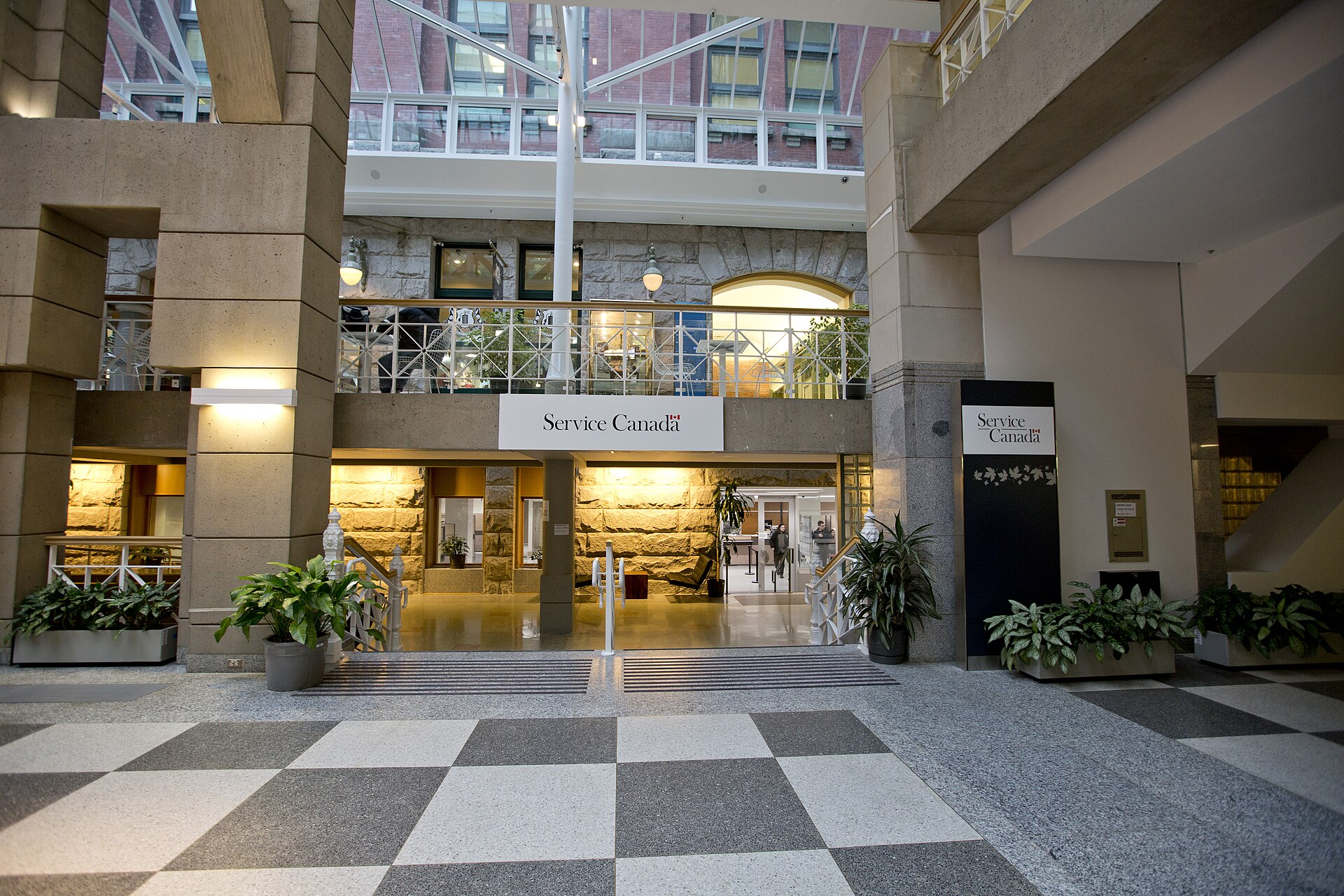
File photo: the Service Canada office at the Sinclair Centre in Vancouver. Photo by GoToVan, Wikimedia Commons, CC BY 2.0.
Follow Canada News Media
Get the day's top Canadian stories and our two daily 60-second news videos wherever you scroll.
X Threads Facebook Instagram LinkedIn TikTok YouTube Pinterest Reddit Substack Flipboard Newsletter RSS