



National Defence has recorded 92 contracts bought through supply arrangements since April 2025, worth $195.2 million, as justified by “exclusive rights”, a reason meant for purchases where only one supplier holds the rights to provide what the government needs. Half of those same records also say the purchase was competitive.
The figures come from the federal government’s public register of contracts over $10,000, which Canada News Media downloaded and analyzed. A supply arrangement is a standing list of pre-qualified suppliers that departments can buy from, usually by inviting several of them to bid. In the register, each contract carries a “limited tendering reason” code, and code 71 is defined in the Treasury Board’s data dictionary as “exclusive rights”. National Defence used it on 92 of its 2,466 supply-arrangement contracts dated from April 1, 2025, to Sept. 24, 2026. Those 92 rows are 3.7 per cent of the department’s supply-arrangement contracts by count but 25.1 per cent of their combined original value.
The rest of the government almost never does this. Across every other department and agency in the register, we found 12 supply-arrangement contracts in the same period with code 71: 10 at the Office of the Superintendent of Financial Institutions, worth $2.34 million, and two at Transport Canada, worth $630,000. National Defence itself coded 2,298 of its other supply-arrangement purchases, worth $533.3 million, with code 00, meaning no limited-tendering reason, including 208 that its own comments describe as sole-sourced.
The 92 records split down the middle. Forty-six, worth $76.0 million, carry the comment “This contract was sole sourced. This is a contract against a Supply Arrangement.” The other 46, worth $119.2 million, say “This contract was competitively sourced” and are marked with the register’s competitive solicitation code, yet still carry the exclusive-rights reason. The largest single entry is a $49.85-million computer equipment contract with Telecom Computer Inc. dated Feb. 12, 2026, recorded as competitive. The next two are recorded as sole-sourced: $39.62 million with PureLogic IT Solutions Inc. on Feb. 6, 2026, and $19.91 million with Stoneworks Technologies Inc. on Jan. 28, 2026. All three are described as computer equipment for the production and operations environment, a category that covers servers, storage, printers and related parts. Twenty-one of the 92 contracts are in that category, and together they account for $166.0 million.
Timing is the other pattern. Fifty-one of the contracts, worth $174.6 million, are dated between Jan. 1 and March 31, 2026, the last three months of the federal fiscal year.
There is a possible technical explanation in the register’s own rules. The Treasury Board’s validation rules say that when a contract is recorded as competitive or non-competitive and a trade agreement applies, the limited-tendering field cannot be left at 00. Forty-seven of the 92 Defence records list one or more trade agreements, which would force some code other than 00 into that field. The other 45 list no trade agreement, so that rule does not explain them. None of the department’s 2,137 supply-arrangement records marked competitive (traditional) or non-competitive with code 00 lists a trade agreement.
National Defence was asked about the records on Nov. 11 and again, with updated figures, on Nov. 16. The department replied on Nov. 19. Suzanne Lalande of its media relations office said the contracts “represent multiple distinct requirements and procurement actions” and that “it is not possible to provide a single explanation that applies to all 42 contracts”, the number cited in the first request, “as procurement decisions would need to be assessed on a contract-by-contract basis.”
“Code 71 is not a default data-entry convention at National Defence,” she wrote. “The code is intentionally selected by the procurement team responsible for entering the data. Each procurement team would need to attest to why code 71 was selected for a particular requirement.” She said whether the purchases were competed or sole-sourced “cannot be addressed generally, as each requirement and procurement strategy would need to be assessed on a case-by-case basis,” and that the department “corrects proactive disclosure entries when procurement teams advise that the original information is inaccurate and provide the appropriate updated information.”
The department did not answer the first question it was asked: what exclusive right applies to servers, storage and printers bought from a list of suppliers set up so that several firms can compete. It also did not say why most of the contracts fell in the final quarter of the fiscal year, or who approved the sole-source basis for the largest ones.
What the records do not show matters as much as what they do. A code in a public register is not proof of how a contract was awarded, and nothing in these records shows that any purchase was improper, that any supplier was favoured or that the government overpaid. The entries may reflect how individual procurement teams fill in the form rather than how the buying was done. But the register is the main public record Canadians have of how federal money is spent, and on these 92 contracts it gives two answers at once: the purchase was competitive, and it could only go to one supplier. National Defence says each team chose the code on purpose and that entries are fixed when teams report errors. Earlier this week we reported that National Defence holds most of the register’s rows flagged as omitted from an earlier disclosure, and the department also drove a jump in Ottawa’s non-competitive contracts.
How we checked: We downloaded the full Proactive Disclosure of Contracts dataset from open.canada.ca on Nov. 16, 2026 (1,336,184 rows, covering reporting periods up to the second quarter of 2026-27) and loaded it into a database. We selected contracts dated April 1, 2025, or later whose English comments mention a supply arrangement, then grouped them by owner organization, limited-tendering reason code, solicitation procedure code and the trade agreement field. Code definitions and validation rules are from the data dictionary published with the dataset. Dollar figures are original contract values as reported, not amended totals; each of the 92 Defence records has a distinct procurement number. An earlier download from October, used for our questions to National Defence, held 84 such contracts worth $186.4 million (42 recorded as sole-sourced and 42 as competitive); the quarterly update since then added eight. Results can change if departments edit the file after our download.
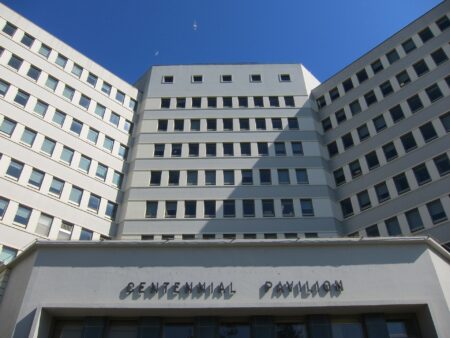
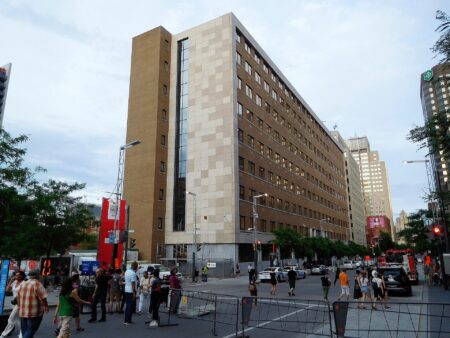
File photo: the Major-General George R. Pearkes Building, National Defence Headquarters, Ottawa. Photo by Ken Lund, CC BY-SA 2.0, via Wikimedia Commons.
Follow Canada News Media
Get the day's top Canadian stories and our two daily 60-second news videos wherever you scroll.
X Threads Facebook Instagram LinkedIn TikTok YouTube Pinterest Reddit Substack Flipboard Newsletter RSS