

British regular troops stormed a Patriote camp at Saint-Charles, Que., on Nov. 25, 1837, defeating the rebels two days after they had won at nearby Saint-Denis and breaking the first phase of the Lower Canada Rebellion on the Richelieu River.
The Canadian Encyclopedia, in an entry by historian Jean-Paul Bernard, says the camp was commanded by Thomas Storrow Brown and held by about 100 men. Wikipedia’s account puts the number at 200 to 250, with only about 50 rifles among them. The sources do not agree on the size of the force, and neither figure can be treated as settled.
The attack was one half of a two-pronged British advance. A column under Col. Charles Gore had already been beaten at Saint-Denis on Nov. 23, a defeat that Canada News Media recounted earlier this week. The second column, under Lt.-Col. George Wetherall, set out from Saint-Hilaire on the morning of Nov. 25, according to Wikipedia. The Canadian Encyclopedia gives his command as about 350 men. Wikipedia lists 406 infantry, 20 militia cavalry and two cannon.
The Patriotes had taken over the brick manor of seigneur Pierre-Dominique Debartzch and built earthen and log breastworks about 250 metres to the south, Wikipedia said. Brown also felled trees and broke bridges on the road to slow the advance. The manor and the breastworks, however, did not cover each other, a weakness that Wetherall’s gunners were able to exploit.
Wikipedia said the British artillery opened with grapeshot and canister, and that Brown was unhorsed and left for Saint-Denis. Patriote skirmishers under Henri-Alphonse Gauvin, Bonaventure Viger and Rodolphe Desrivières kept up fire from the road and the woods, and Wetherall’s horse was shot from under him.
After about two hours of fighting, three companies of the Royal Regiment charged with bayonets over the felled trees and into the camp. The Canadian Encyclopedia describes the fight as “violent and unequal,” and says both the barricades and the manor were taken.
Casualty figures depend on the source. The Canadian Encyclopedia says only that there were several casualties, especially among the Patriotes. Wikipedia gives British losses of three dead and 18 wounded, and Patriote losses of at least 56 dead, with more wounded and captured. Because the Wikipedia figures are not tied to a named primary account in the material reviewed here, they are best read as an estimate.
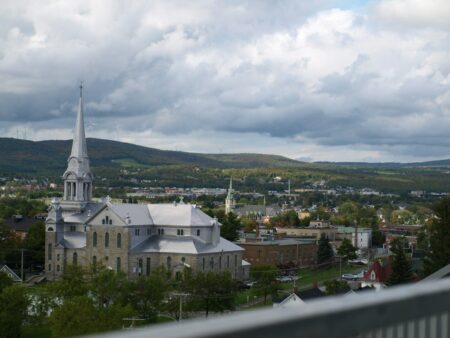
The aftermath was swift. Wikipedia said Wetherall had the camp’s buildings burned, sparing the Debartzch manor, and held 25 prisoners in the Saint-Charles church. His column left on Nov. 27 and reached Montreal on Nov. 30 with 30 prisoners. The Canadian Encyclopedia notes a skirmish on Nov. 28 at Pointe-Olivier, in Saint-Mathias, while Wikipedia places a clash that day at the Chambly ferry. Between them, the sources agree that the army regained control of the Richelieu region.
Wolfred Nelson, the Patriote leader at Saint-Denis, had offered Brown 300 men and two cannon the day before the battle, according to Wikipedia, and Brown declined. After the defeat, Nelson relieved Brown of command. A force of about 1,000 Patriotes gathered at Saint-Mathias melted away, and the uprising ended with a second defeat at Saint-Eustache in December 1837, Wikipedia said.
The Battle of Saint-Charles was one of the key engagements of the 1837 rebellion in Lower Canada, which continued into the following month.
If you find reporting like this useful, consider supporting Canada News Media, an independently owned Canadian newsroom.
Sources: The Canadian Encyclopedia (Battle of St-Charles); Wikipedia (Battle of Saint-Charles); Canadian Press Today in History.
Follow Canada News Media
Get the day's top Canadian stories and our two daily 60-second news videos wherever you scroll.
X Threads Facebook Instagram LinkedIn TikTok YouTube Pinterest Reddit Substack Flipboard Newsletter RSS