


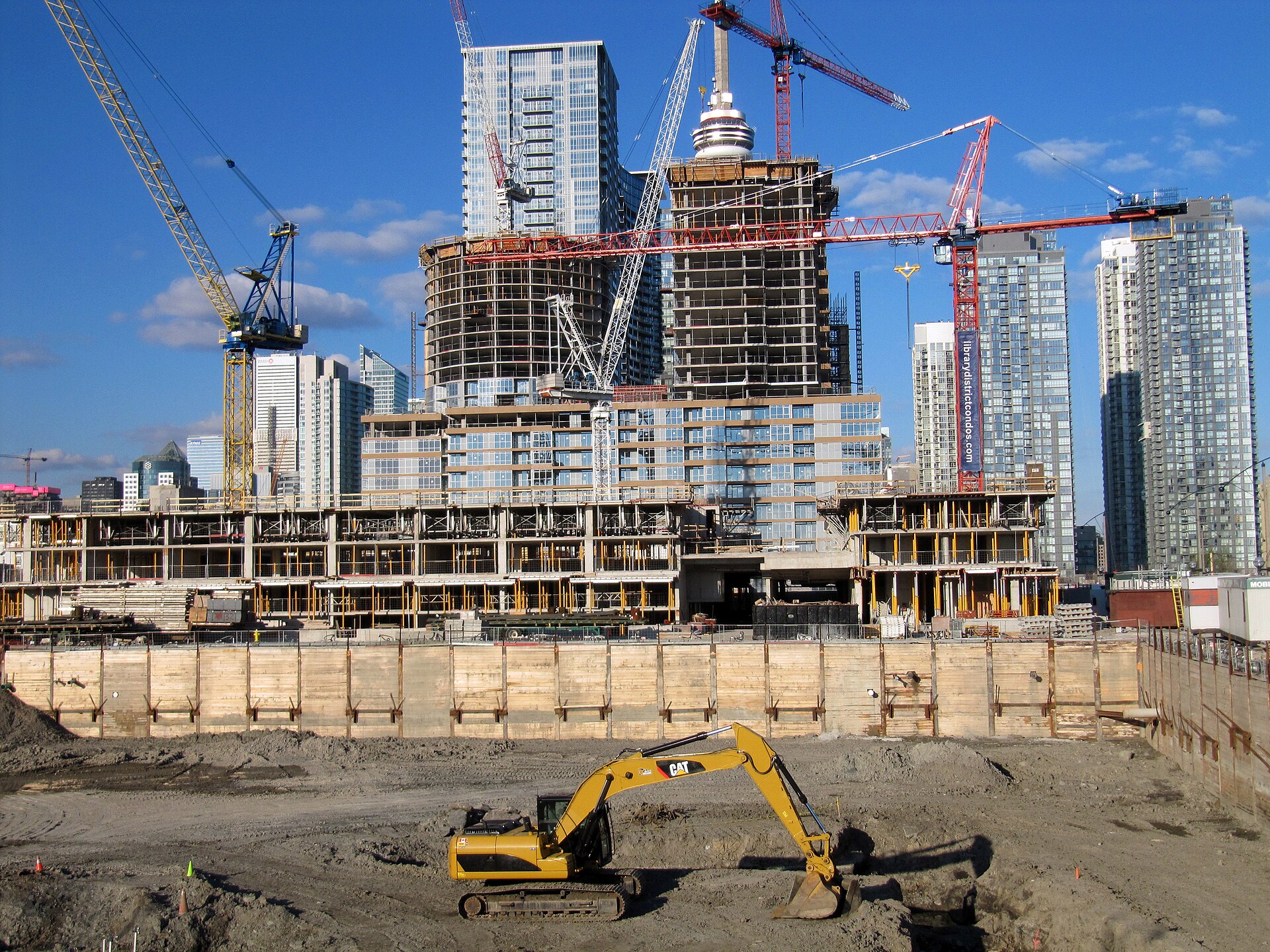
Residential building construction costs in Canada rose 0.8 per cent in the third quarter and non-residential costs rose 1.2 per cent, Statistics Canada said Thursday, as retaliatory tariffs on steel and other materials kept pushing up what contractors charge.
Home-building costs followed a 0.6 per cent increase in the second quarter, while commercial, institutional and industrial costs followed a 1.4 per cent increase, the agency said in its building construction price indexes for the third quarter of 2026. Year over year, residential costs in the 15 cities it tracks were up 2.7 per cent and non-residential costs were up 4.3 per cent.
Costs rose in every city measured, but the pace varied widely. Québec posted the biggest quarterly jump in home-building costs at 2.3 per cent, followed by Regina at 1.8 per cent. Moncton (0.6 per cent), Toronto (0.4 per cent) and Vancouver (0.2 per cent) were the slowest. By our calculation from Statistics Canada’s figures, the increase in Québec was more than 11 times the increase in Vancouver.
For commercial and industrial buildings, Québec and Regina were tied at 2.4 per cent, with Montréal next at 2.0 per cent. Ottawa and Halifax were lowest at 0.7 per cent. Non-residential costs grew 0.4 percentage points faster than residential costs nationally.
Metal products led the increases. In home building, metal fabrications rose 2.4 per cent, structural steel framing 2.0 per cent and earthwork 2.0 per cent, while fire suppression and plumbing rose only 0.3 per cent each and masonry was unchanged. In commercial building, structural steel framing climbed 3.3 per cent, conveying equipment 3.1 per cent and metal fabrications 2.1 per cent.
Statistics Canada said builders cited higher material, fuel, transportation and labour costs. Builders on the east coast and in the Prairie provinces also reported capacity pressures and higher wages for skilled labour and subcontractors.
Trade uncertainty continued to weigh on the industry after additional Canadian retaliatory tariffs on U.S. products took effect Sept. 8, 2026, the agency said. Those tariffs range from 15 per cent to 50 per cent, including 50 per cent on certain steel and aluminum products.
The agency also noted that it extended the revision period for the index by one quarter to capture late data. As a result, the first-quarter non-residential index was revised up by 0.2 per cent, while the residential index was unchanged.
The index measures changes in the prices contractors charge to build new buildings in St. John’s, Halifax, Moncton, Québec, Montréal, Ottawa-Gatineau, Toronto and other cities, and does not measure land or financing costs. The data are in Statistics Canada’s release.
The figures land as builders face other pressure on housing supply. Canada Mortgage and Housing Corp. recently warned of under-building when housing starts rose 3 per cent in September. Tariffs are also hitting provincial budgets, as the Ontario deficit grew to $16.9 billion, and the federal government has been pressing steelmakers in a dispute over Stelco compliance.
If you find reporting like this useful, consider supporting Canada News Media, an independent Canadian newsroom with no corporate parent.
Follow Canada News Media
Get the day's top Canadian stories and our two daily 60-second news videos wherever you scroll.
X Threads Facebook Instagram LinkedIn TikTok YouTube Pinterest Reddit Substack Flipboard Newsletter RSS