


The annual pace of housing starts in Canada rose three per cent in September, but Canada Mortgage and Housing Corp. warned that the country is not building enough during a stretch of softening housing markets.
CMHC said Oct. 16 that the seasonally adjusted annual rate (SAAR) of housing starts came in at 248,896 units in September, up from 242,223 in August. The six-month trend was virtually flat, edging up 0.6 per cent to 250,411 units, according to the agency’s release and Canadian Press reporting.
The monthly gain masks a weaker picture in actual construction. CMHC said actual starts in centres with a population of 10,000 or more fell 11 per cent year over year, to 19,984 units in September from 22,375 in September 2025, a drop of 2,391 units. For January to September, actual starts in those centres totalled 170,964 units, down four per cent from the same period in 2025.

“A key risk for Canada now is not building enough during this period of softening housing markets across the country,” Aled ab Iorwerth, CMHC’s deputy chief economist, said in the release, citing the agency’s latest Housing Supply Report. He said that of Canada’s four most populous provinces, only Quebec has seen modest gains in housing starts for 2026, and that each of the seven major centres covered in the report is behind 2025’s pace for new home construction.
“Canada still faces a long-term housing supply gap and unless housing construction levels increase, improvements in housing affordability since 2023 will be difficult to sustain,” ab Iorwerth said.
Big three cities diverge
Among Canada’s three biggest census metropolitan areas, the six-month trend in Montreal dropped eight per cent on lower multi-unit starts, CMHC said. Vancouver rose six per cent on higher multi-unit starts, while Toronto was flat, as single-detached and multi-unit trends offset each other.

CMHC’s trend table shows the split more clearly. The six-month trend SAAR in Calgary rose seven per cent to 24,882 units, Edmonton rose five per cent to 20,771, Winnipeg rose five per cent to 7,782, and Quebec City rose 13 per cent to 11,042. Ottawa-Gatineau fell four per cent to 14,074. In Toronto the trend slipped one per cent to 24,837, in Vancouver it reached 25,948, and in Montreal it fell to 28,015 from 30,447.
Adding those eight metro figures, as our own calculation from CMHC’s published table, gives a combined trend of 157,351 units in September versus 154,941 in August, an increase of about 1.6 per cent. That is roughly 63 per cent of the national six-month trend. Five of the eight metros rose and three fell, so the national flatness reflects sharp regional offsets rather than uniform stability.
Provincially, CMHC’s six-month trend for British Columbia rose 10 per cent to 41,959 units and Alberta rose five per cent to 50,008. Ontario slipped two per cent to 58,120, while Quebec fell 11 per cent to 54,138.
Pipeline holds steady
CMHC reported 371,617 units under construction in centres of 50,000 or more, flat from the previous month. Units with approved permits that have not yet started stood at 143,929, up 1.1 per cent, while completions were 17,398, down 0.9 per cent. The rural SAAR was estimated at 18,094 units.
By type, the national six-month trend for single-detached starts rose one per cent to 46,684 units, while all other types, which include apartments, rose to 203,728 units, essentially unchanged.
The numbers matter for affordability. A strong monthly SAAR can reverse quickly because it is volatile, which is why CMHC leans on the six-month trend, and that trend has barely moved. Meanwhile the year-to-date decline in actual starts suggests builders are still cautious. CMHC will release October data on Nov. 17.
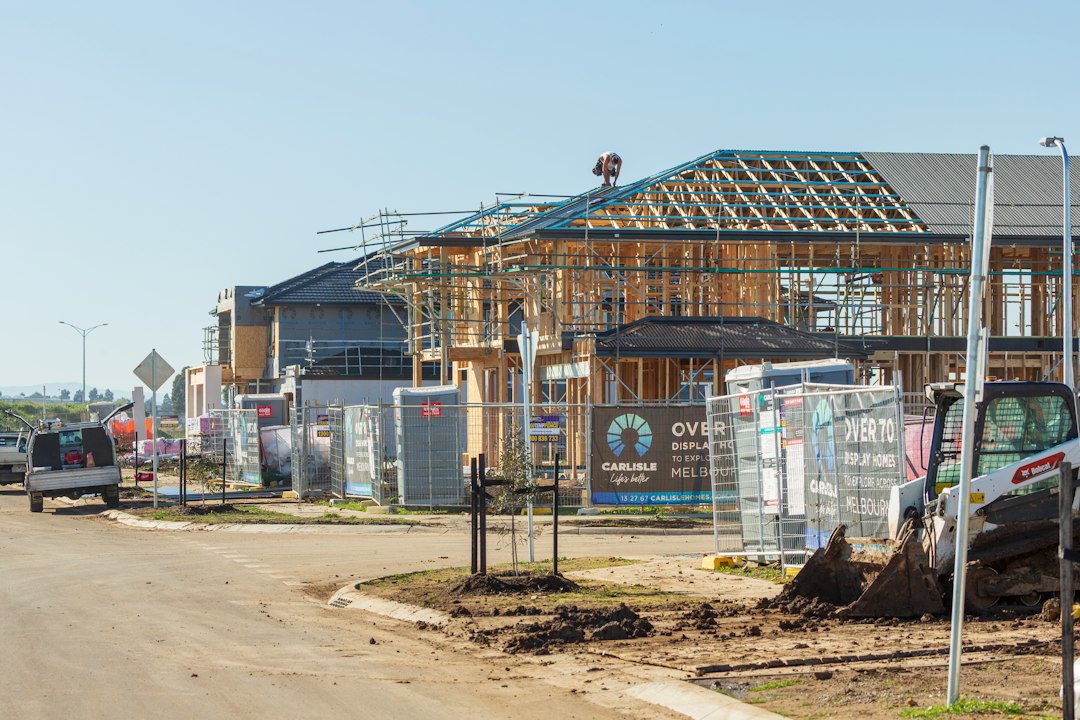
Photos are illustrative stock photography from Unsplash and do not show projects discussed in this article.
Sources: CMHC, Housing starts and construction data for September 2026; The Canadian Press via CP24.
Follow Canada News Media
Get the day's top Canadian stories and our two daily 60-second news videos wherever you scroll.
X Threads Facebook Instagram LinkedIn TikTok YouTube Pinterest Reddit Substack Flipboard Newsletter RSS