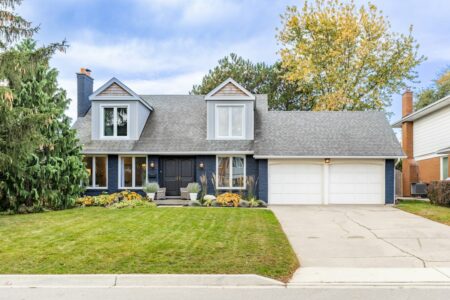



A typical home in the Fraser Valley cost $860,000 in October, about $208,600 or 19.5 per cent less than in Metro Vancouver, where the benchmark price was $1,068,600, according to figures from the two regional real estate boards.
The prices are MLS Home Price Index benchmarks published by Greater Vancouver REALTORS (GVR) and the Fraser Valley Real Estate Board (FVREB), as reported by Canadian Mortgage Professional for Metro Vancouver and for the Fraser Valley. Daily Hive’s coverage of the same data matches the composite and detached figures. The dollar and percentage gaps below are our own arithmetic on those published benchmarks.
| Home type | Metro Vancouver (GVR) | Fraser Valley (FVREB) | Gap | Fraser Valley discount |
|---|---|---|---|---|
| All types | $1,068,600 | $860,000 | $208,600 | 19.5% |
| Detached | $1,775,200 | $1,293,800 | $481,400 | 27.1% |
| Townhouse | $1,006,500 | $742,300 | $264,200 | 26.3% |
| Apartment | $673,400 | $460,800 | $212,600 | 31.6% |
The discount is deepest for apartments, where a Fraser Valley unit was nearly a third cheaper, and largest in dollars for detached houses, where the gap was $481,400.
The gap has also grown. Over the year, the Fraser Valley composite benchmark fell 6.4 per cent, against 5.2 per cent in Metro Vancouver. Fraser Valley detached prices dropped 8.5 per cent, compared with 7.0 per cent in Metro Vancouver, and apartments fell 8.1 per cent against 5.9 per cent. Townhouse benchmarks declined 5.5 per cent in both regions. Working back from those reported changes, the composite discount was roughly one percentage point smaller a year ago. That is an estimate, since boards revise past benchmarks.
Sales tell a similar story of two soft markets. GVR reported 2,024 sales in October, down 10.2 per cent from 2,255 a year earlier and 22.5 per cent below the 10-year seasonal average. Active listings stood at 15,688, which is 24 per cent above the long-term benchmark, Canadian Mortgage Professional reported. The FVREB recorded 1,051 sales, up 14 per cent from September but 6 per cent below October 2025, with active inventory down 10 per cent from a year earlier to 9,164 listings.
The sales-to-active-listings ratio was 13.4 per cent in Metro Vancouver and 11 per cent in the Fraser Valley. Downward price pressure typically builds when that ratio holds below 12 per cent over a sustained period, according to the Canadian Mortgage Professional report on the GVR data.
FVREB chief executive Rock Lefebvre said the Fraser Valley’s price slide has changed the affordability picture. “Much of the pandemic-era price growth in the Fraser Valley has been erased,” he said. “That brings affordability to its best level in five years, creating a welcome opportunity for buyers. However, with interest rates recently moving higher and the possibility of further increases, buyers will need to consider how borrowing costs factor into their purchasing decisions.”
The Bank of Canada raised its overnight rate by 25 basis points to 2.5 per cent on Oct. 28, its first increase since July 2023. We calculated what that means for a variable-rate borrower in an earlier story. GVR chief economist Andrew Lis said October “came with a few suspenseful distractions for buyers and sellers alike,” including the rate hike and a snap provincial election. He added that some buyers may step in to use rate holds that are about to expire, but called it “a difficult quandary for buyers who’ve watched prices edge lower throughout the year, only to see those affordability gains eroded by higher borrowing costs.”
The comparison has limits. The two boards cover different territory: GVR includes Vancouver, Burnaby, Richmond, the North Shore and Tri-Cities, while the FVREB covers Surrey, Langley, Abbotsford, Mission, White Rock and North Delta. A benchmark is the board’s estimate of a typical home in each category, not an average sale price, and a typical home in one region is not the same size or age as in the other. The figures compare market tiers, not identical houses.
Nationally, sales edged up 0.3 per cent in October but remained 10.6 per cent below last year, CREA said. The Lower Mainland numbers suggest buyers there are still waiting on price and borrowing costs to line up.
Follow Canada News Media
Get the day's top Canadian stories and our two daily 60-second news videos wherever you scroll.
X Threads Facebook Instagram LinkedIn TikTok YouTube Pinterest Reddit Substack Flipboard Newsletter RSS