


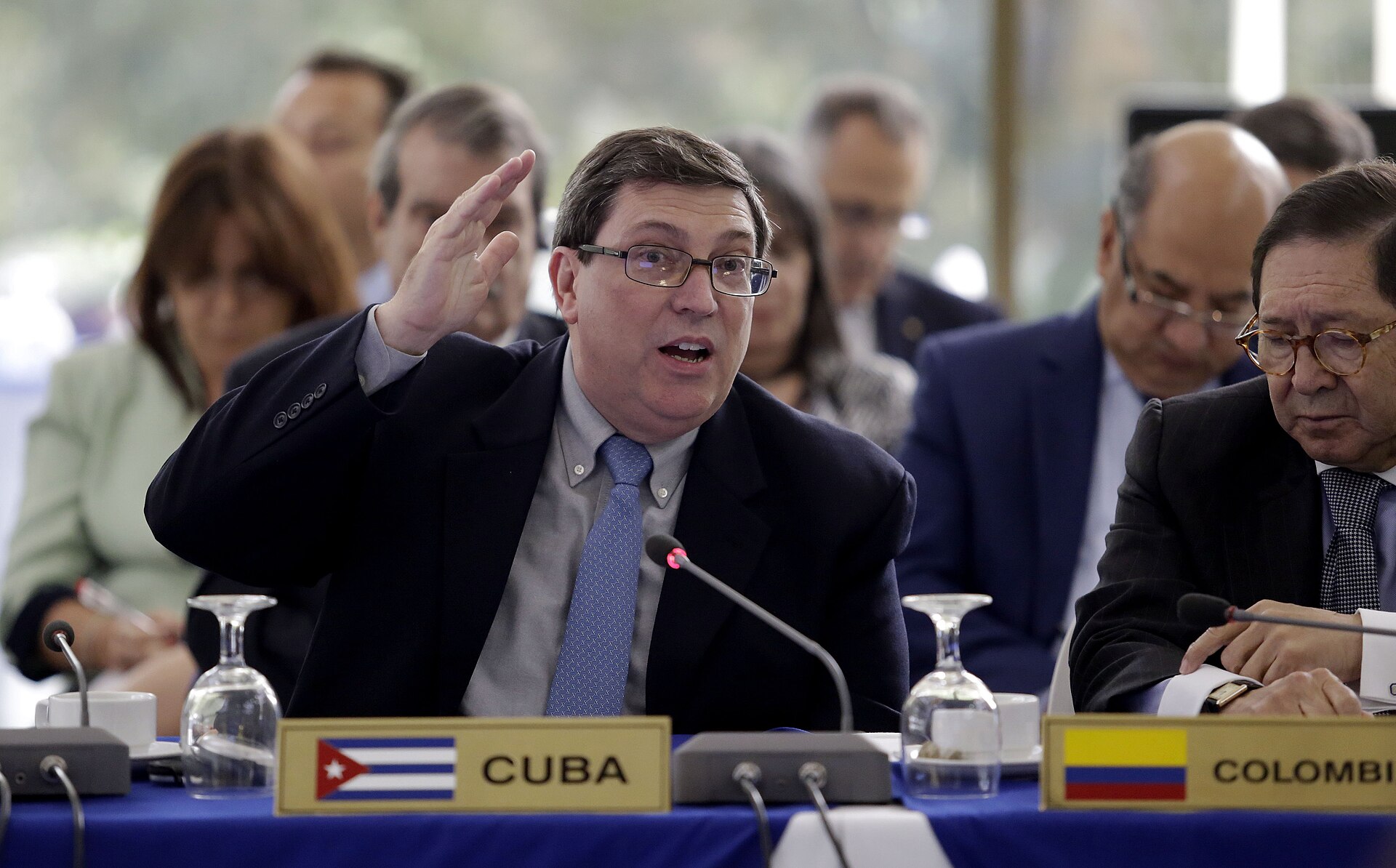
Cuban Foreign Minister Bruno Rodríguez said Oct. 21 that the United States is threatening countries with visa denials and sanctions if they back Cuba in the annual UN General Assembly vote on the U.S. embargo, which officials expect on Oct. 27 or 28.
The vote matters to Canadians because Canada is Cuba’s second-biggest direct investor and its citizens are among the island’s most frequent visitors, yet Ottawa abstained on a related Cuba vote at the UN as recently as July.
Rodríguez told a news conference in Havana that the U.S. State Department is applying “unprecedented pressure” to get members to change their votes, at times personally through the secretary of state, Reuters reported. He listed visa denials, trade and economic sanctions, punitive tariffs and suspended cooperation programs among the alleged threats. He also accused Washington of backing opposition forces and threatening to interfere in elections. The State Department did not immediately respond to Reuters’ request for comment.
U.S. Ambassador to the UN Mike Waltz urged countries earlier this week to vote against the resolution, calling it “an excuse to justify oppression, to justify the misery of the Cuban people,” Reuters reported. Democracy Now! also reported Cuba’s accusations on Oct. 23.
The resolution is non-binding and has passed by wide margins every year since 1992. Only the U.S. Congress can lift the embargo, which Washington imposed more than 60 years ago and which the Trump administration has tightened this year with a fuel blockade and sanctions on Cuban officials and state entities, Reuters said.
Last year’s tally shows how the mood has shifted. On Oct. 29, 2025, the assembly voted 165 to seven with 12 abstentions, UN News reported. The United States, Israel, Argentina, Hungary, Paraguay, North Macedonia and Ukraine voted no. The 2024 vote was 187 to two, with the U.S. and Israel opposed and Moldova abstaining.
Canada voted in favour in 2025. On July 7, however, Canada was one of 30 countries that abstained on an urgent proposal to hold a special UN debate on the embargo, which passed 136 to nine, according to a statement from the Americas Policy Group and Common Frontiers, two Canadian advocacy groups that criticized the abstention. Canada News Media found no public explanation from Global Affairs Canada.
Canada’s own government describes the stakes. Its Canada-Cuba relations page says Canada is Cuba’s second-biggest direct investor, mainly in mining, power, and oil and gas, and that more than one million Canadians travelled to Cuba each year before the pandemic, making it the third most popular overseas destination for Canadians after the United States and Mexico. The page also says Canada has measures in place to protect Canadian investors doing legitimate business in Cuba, which rest on the Foreign Extraterritorial Measures Act of 1985.
Cuba’s fuel shortage is already felt on the island, as Canada News Media reported in Cuba pushes solar as U.S. oil blockade deepens blackouts. For the longer history of Ottawa’s place in the dispute, see our On This Day report on Kennedy’s 1962 Cuba speech.
The General Assembly will vote Oct. 27 or 28, according to officials cited by Reuters. Canada’s vote, and whether Ottawa explains it, will be the clearest signal of how it weighs its trade and tourism ties against pressure from Washington. This is a developing story and Canada News Media will update it when the result is in.
Via Reuters, with background from UN News, Democracy Now! and Global Affairs Canada.
If you find reporting like this useful, consider supporting Canada News Media, an independent Canadian newsroom with no corporate parent.
Follow Canada News Media
Get the day's top Canadian stories and our two daily 60-second news videos wherever you scroll.
X Threads Facebook Instagram LinkedIn TikTok YouTube Pinterest Reddit Substack Flipboard Newsletter RSS