


The number of people held in Ontario jail units locked down for at least 17 hours a day, for a combined total of more than 30 days in a year, has nearly tripled in three years, according to a Canada News Media analysis of the province’s own correctional data.
In 2025-26, 9,794 people spent more than 30 days in what the Ministry of the Solicitor General calls restrictive confinement, up from 3,383 in 2022-23. Over the same period, the total number of people in provincial custody rose 38 per cent, to 46,234 from 33,571. The long-stay group grew far faster than the jail population: it made up 16 per cent of everyone in restrictive confinement in 2022-23 and 36 per cent in 2025-26.
The figures come from the Jahn Settlement: Data on Inmates in Ontario files, which the ministry publishes each year under the settlement of a human rights case brought by Christina Jahn, a woman held in segregation at the Ottawa-Carleton Detention Centre. The latest release, posted Oct. 30, 2026, covers April 1, 2025, to March 31, 2026.
The ministry defines restrictive confinement as anything more restrictive than general population but less restrictive than segregation, and counts any day a person spends in a unit regularly scheduled to be locked down for 17 hours or more. Segregation is defined separately as 22 hours or more without meaningful social contact. Unscheduled lockdowns are not counted in either measure.
While restrictive confinement grew, segregation shrank. The number of people placed in segregation fell to 9,587 in 2025-26 from 12,647 in 2022-23, a drop of 24 per cent. The number in restrictive confinement rose 32 per cent over the same years, to 27,495 from 20,781. The ministry’s data counts each person once per year in each category, and a person can appear in both.
The clearest shift is among women. The number of women in restrictive confinement more than doubled, to 3,510 in 2025-26 from 1,511 in 2022-23, while the number of women in custody rose 56 per cent, to 6,822. Just over half of all women in provincial custody, 51.5 per cent, spent time in restrictive confinement last year, compared with 34.6 per cent three years earlier. For men, the share fell to 60.9 per cent from 66.0 per cent.
At the Vanier Centre for Women in Milton, a provincial jail for women, the data records no women in restrictive confinement in 2022-23 and one in 2023-24. That rose to 407 in 2024-25 and 953 in 2025-26. Over the same years, the number of women whose most recent segregation placement was at Vanier fell to 495 from 1,371. The data does not say why the pattern changed.
People flagged with mental health concerns make up a growing number of those confined. The number of people with a mental health alert on file who spent time in restrictive confinement rose to 7,578 in 2025-26 from 5,502 in 2022-23. Among people with a serious mental illness alert, it rose to 2,227 from 943. Among people with a suicide watch alert, which the ministry uses for people at high risk of suicide or self-harm, it rose to 2,850 from 1,013, while the number of people in custody with that alert rose to 4,633 from 3,750.
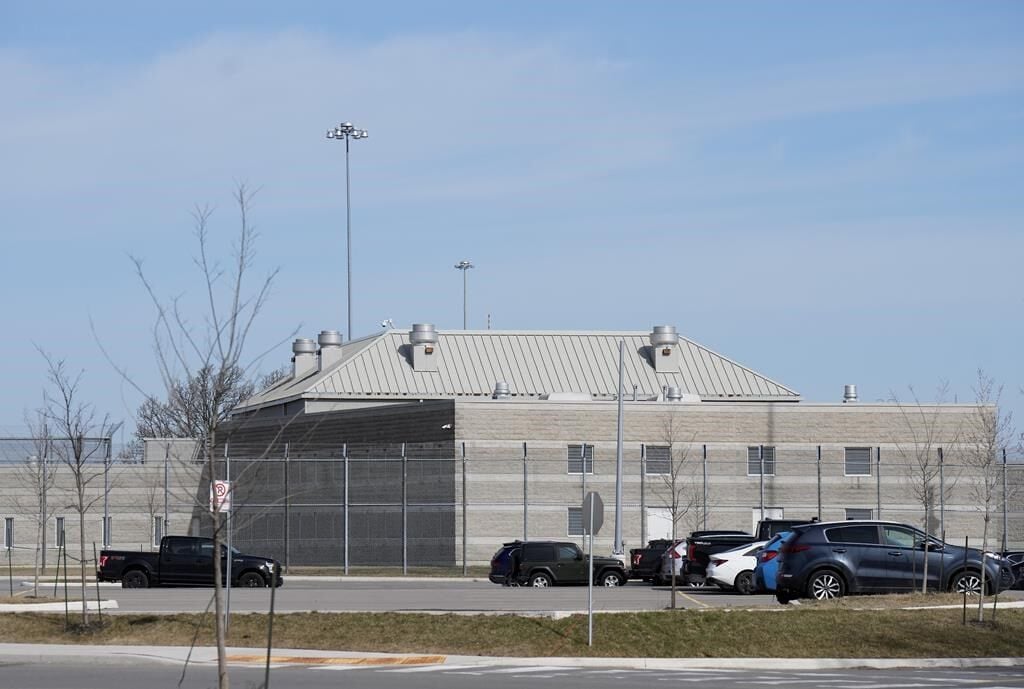
The Maplehurst Correctional Complex in Milton had the most people in restrictive confinement in 2025-26, 5,485, followed by the Toronto South Detention Centre with 5,142 and the Ottawa-Carleton Detention Centre with 2,575. Institution counts are by each person’s most recent placement.
The records have limits. The ministry says that, because of data collection limitations, it cannot track the number of times or the number of consecutive days a person spends in restrictive confinement, so the more-than-30-days figure is a yearly total and may be made up of several shorter stretches. The data does not record why a unit was on a 17-hour schedule, and the published files do not explain the rise. Canada News Media reported on Nov. 23 that use-of-force incidents in Ontario jails rose 22 per cent, using the same ministry’s data.
For families and lawyers of people held in Ontario jails, the figures show that time spent locked in a cell for most of the day is now counted separately from segregation and is rising. The ministry publishes the data by institution, region, gender, race, age, religion and mental health alert, and its contact for questions about the release is [email protected].
How we checked: We downloaded the ministry’s Jahn Settlement files on Nov. 24, 2026: total individuals (c01), individuals by institution (c02), alerts and hold flags (c07) and individuals by aggregate length of time (c11), with the data dictionary and the October 2026 data update note, which says the release changed variable names but not the measures. Fiscal years are labelled in the files by the year they end. We added the female and male rows for each year and checked that the institution file and the duration file add up to the same yearly totals as the summary file, which they do for every year: 20,781, 19,641, 25,045 and 27,495 people in restrictive confinement, and 12,647, 10,881, 9,608 and 9,587 in segregation. The more-than-30-days figures are the “Greater than 30 days” rows of the duration file. Percentages are our own calculations from the ministry’s counts. Definitions are taken from the data dictionary and the ministry’s 2026 restrictive confinement report.
Follow Canada News Media
Get the day's top Canadian stories and our two daily 60-second news videos wherever you scroll.
X Threads Facebook Instagram LinkedIn TikTok YouTube Pinterest Reddit Substack Flipboard Newsletter RSS