

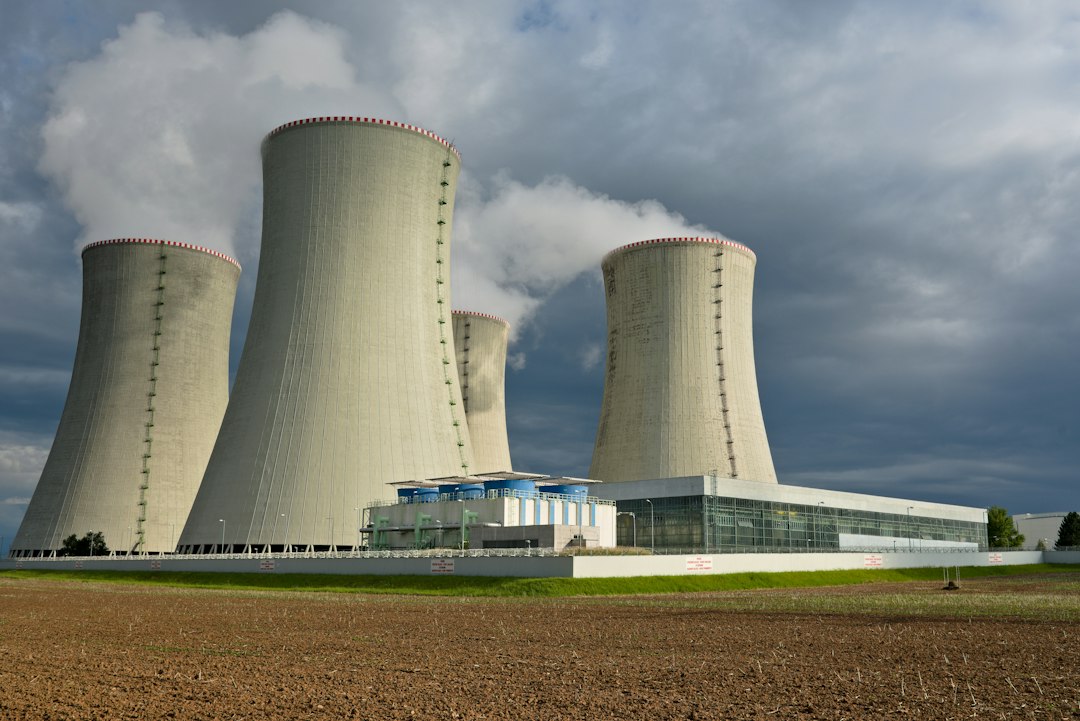
Saskatchewan plans to build two large nuclear reactors in the province’s northwest, with the first online by 2042, but the government is not yet saying what the project will cost or who will pay for it.
Premier Scott Moe unveiled the plan, called Delivering Energy Security Through Nuclear Power, on Tuesday at the University of Saskatchewan. It sets an initial target of 2,600 megawatts of nuclear generation by 2050, according to Global News. Moe said that is enough to power the equivalent of 2.6 million homes. The two large reactors would supply more than 2,000 megawatts, likely along the North Saskatchewan River, while at least 600 megawatts would come from small modular reactors (SMRs) near Estevan, where the Rafferty site has been picked for further study.
“We are charting a path forward for one of the largest energy economic development opportunities in our province’s history,” Moe said, according to The Canadian Press.
The missing piece is the price tag. Moe told reporters it is premature to estimate costs, though he acknowledged a single large reactor would cost more than $5 billion, CP24 reported. No site has been chosen and no reactor technology has been selected.
Canada’s only live comparison suggests $5 billion is a floor, not a ceiling. Ontario Power Generation’s Darlington project, four GE Vernova Hitachi BWRX-300 SMRs totalling about 1,200 megawatts, carries a projected cost of $20.9 billion, according to World Nuclear News. The first unit alone is budgeted at $7.7 billion, including shared infrastructure. Saskatchewan is proposing roughly double Darlington’s capacity.
The Crown utility that would carry the project is already stretched. SaskPower reported $11.5 billion in total debt as of March 2026, and its debt ratio rose to 78.9 per cent, according to CP24. It would have posted a $301-million deficit without a $187-million provincial affordability grant.
Crown Investments Minister Jeremy Harrison said there is “a very real path for private sector financing to be a part of the conversation,” and the province says it is open to Indigenous equity partnerships. Harrison also described discussions with Ottawa, Alberta and the Northwest Territories as “very good,” according to Global News.
For readers in their 20s and 30s, the timeline matters as much as the cost. A reactor that comes online in 2042 would be paid off over decades, meaning the people who cover it through their power bills are largely today’s young workers and renters, not the politicians announcing it. The Saskatchewan NDP has previously raised alarms about rates, citing a leaked SaskPower briefing note that projected average electricity costs 95 per cent higher by 2040, CTV News reported.
Nuclear is also meant to replace coal. Saskatchewan has said it will extend the life of all its coal-fired plants despite federal clean electricity rules, CBC News reported, and the province rejects the legitimacy of those regulations. That makes the reactors the province’s long-term answer to both Ottawa and its own emissions, but only if they are actually built.
The plan also builds on earlier work. SaskPower selected the BWRX-300 design for its SMR program in June 2022, according to World Nuclear News, with a decision on whether to proceed with nuclear expected in 2029.
The northwest siting raises questions for First Nations and Métis communities along the North Saskatchewan River. The province says SaskPower will evaluate locations “while having meaningful engagement with local communities and Indigenous peoples,” according to CKOM, and the Saskatchewan First Nations Natural Resource Centre of Excellence said it will work to ensure First Nations are meaningfully involved. The government has not named which nations would be consulted, or whether equity stakes would come with a real say over water use and waste.
Industry welcomed the plan. Cameco chief executive Tim Gitzel said the company was pleased the province recognized nuclear’s role, and AtkinsRéalis also issued a statement of support.
The questions voters should keep asking are simple: what will it cost, who carries the debt, and which communities get a real say before a site is chosen.
If you find reporting like this useful, consider supporting Canada News Media, an independent Canadian newsroom with no corporate parent.
Via Global News, with additional reporting from The Canadian Press, CP24, CKOM, CTV News, CBC News and World Nuclear News.
Follow Canada News Media
Get the day's top Canadian stories and our two daily 60-second news videos wherever you scroll.
X Threads Facebook Instagram LinkedIn TikTok YouTube Pinterest Reddit Substack Flipboard Newsletter RSS