


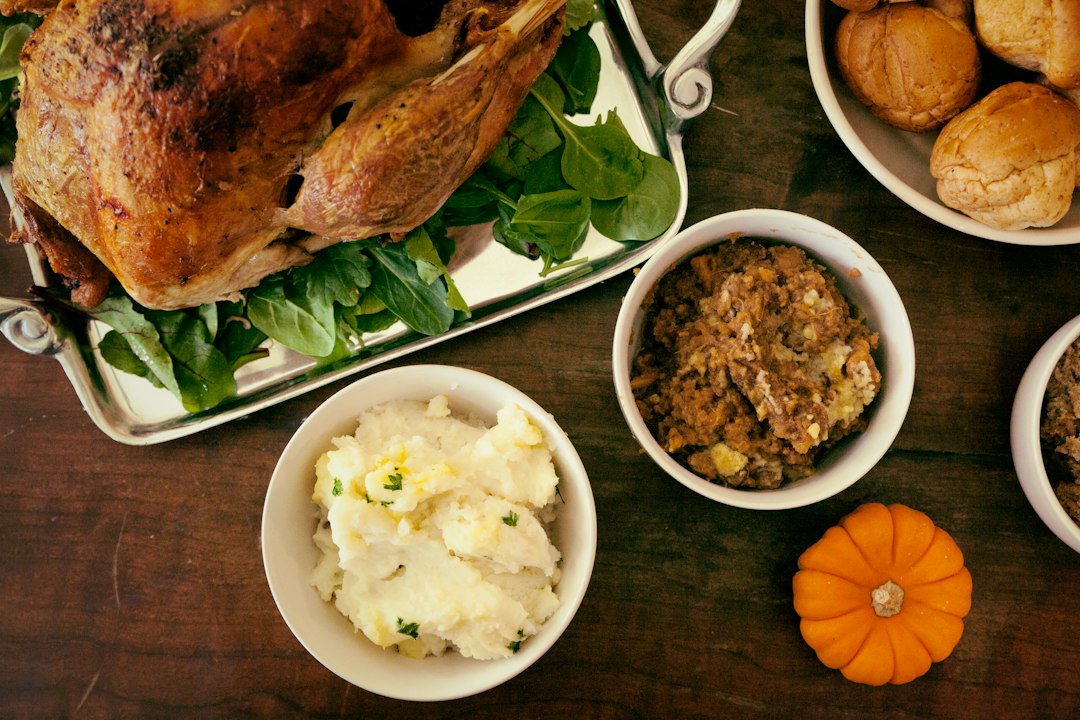
Thanksgiving falls on Monday, Oct. 12 this year, and for many Canadian households that means a turkey is already sitting in the freezer. Health Canada’s food safety advice for the holiday meal is not complicated, but a few of its steps start days before anyone sets the table, and a couple of long-standing kitchen habits run directly against it.
Here is how the federal guidance works, step by step, and the reasoning behind each piece.
Start thawing sooner than you think
Health Canada says the safest way to thaw poultry is in the refrigerator, and it gives a simple rule of thumb: allow 24 hours for every 2.5 kilograms (five pounds) of bird. That means a 7.5-kilogram turkey, a common size for a family dinner, needs about three full days in the fridge. If you plan to eat on the Sunday or Monday of the long weekend, the bird should be moved from the freezer to the fridge by midweek.
The department advises against thawing a turkey on the counter at room temperature. As the outside of the bird warms, it can sit in what Health Canada calls the “danger zone,” between 4 C and 60 C (40 F and 140 F), where bacteria grow quickly, even while the centre is still frozen.
If you run short on time, the cold-water method is the backup. Keep the turkey in its original wrapping, submerge it in cold water, and change the water every 30 minutes until it is thawed. Health Canada also notes that if you defrost poultry in a microwave, it should be cooked right away, because microwaves thaw unevenly and can leave some parts warm.
Don’t rinse the bird
Many cooks grew up rinsing a raw turkey in the sink before roasting it. Health Canada recommends against it. Rinsing does not make raw poultry safer, the department says, because bacteria on the meat can spread wherever the water splashes, including onto counters, dishes and nearby food.
Raw poultry can carry bacteria such as Salmonella and Campylobacter, which Health Canada identifies as leading causes of bacterial food poisoning in Canada. Those bacteria are killed by proper cooking, which is why the guidance focuses on temperature rather than washing.
What does help is keeping raw poultry away from everything else. Health Canada recommends washing your hands with soap and warm water for at least 20 seconds before and after handling raw poultry, using separate cutting boards, plates and utensils for raw meat, and cleaning surfaces afterward. Its poultry safety page suggests a homemade sanitizer of five millilitres of bleach in 750 millilitres of water, and recommends paper towels over sponges, which can hold on to bacteria.
Think twice about stuffing inside the turkey
Stuffing is where holiday food safety gets tricky. Health Canada points out that stuffing is moist and slow to heat up and cool down, which makes it an ideal place for bacteria to grow. When it is packed inside a raw bird, it also absorbs juices from the meat.
The department’s preferred approach is to cook stuffing separately, in its own dish in the oven or on the stovetop. If your family tradition calls for stuffing the bird, Health Canada says to stuff it loosely, just before it goes into the oven, and to remove all of the stuffing right after cooking. Either way, the stuffing itself should reach an internal temperature of at least 74 C (165 F).
Use a thermometer, not a timer
The single most useful tool for a holiday dinner, according to Health Canada, is a digital food thermometer, which gives a more accurate reading than other types. Roasting charts and cooking times only give an estimate, because ovens and birds vary, so the internal temperature is what tells you the turkey is safe to eat.
Health Canada’s safe internal cooking temperatures are:
- Whole poultry, such as a whole turkey: 82 C (180 F)
- Poultry pieces, such as breasts, legs, thighs and wings: 74 C (165 F)
- Ground poultry: 74 C (165 F)
- Stuffing, whether cooked alone or in the bird: 74 C (165 F)
- Leftovers: 74 C (165 F)
To check, insert the thermometer into the thickest part of the meat, all the way to the middle, without touching bone, which can give a false reading. Clean the thermometer in warm, soapy water between uses so it does not carry bacteria from raw meat into cooked food.
The two-hour rule for the table
Holiday meals tend to linger. Health Canada’s advice is to throw out perishable food that has sat at room temperature for more than two hours, and to refrigerate or freeze leftovers within that window.
Cooling leftovers quickly is part of the job. The department recommends storing them in shallow containers, left uncovered or loosely wrapped until they stop steaming, so they chill faster in the fridge. Store turkey meat separately from stuffing and gravy, and keep your refrigerator at 4 C (40 F) or colder.
Refrigerated leftovers should be eaten within two to three days, according to Health Canada’s leftovers guidance, or frozen right away for later. Labelling containers with the date makes that easier to track once the long weekend is over.
When it is time to reheat, solid leftovers such as turkey and potatoes should reach at least 74 C (165 F). Gravy, soups and sauces should be brought to a full, rolling boil and stirred while they heat. Health Canada’s summary rule is blunt: “When in doubt, throw it out.” Contaminated food does not necessarily look, smell or taste any different.
Who needs extra care
Food poisoning can make anyone sick, but Health Canada notes that some people are at higher risk of serious illness, including young children, older adults, pregnant people and anyone with a weakened immune system. If your Thanksgiving table includes grandparents, a newborn or a relative going through medical treatment, the thermometer and the two-hour rule matter even more.
None of these steps require special equipment beyond a thermometer and a bit of planning. The most common mistake is simply leaving the turkey in the freezer too long, so if you are hosting this year, check the weight on the label tonight and count backward.
This article is based on official guidance from Health Canada and is provided for general public information. It’s not a substitute for medical advice, if you have questions about how this applies to you, talk to your doctor or pharmacist.
If you find reporting like this useful, consider supporting Canada News Media, an independent Canadian newsroom with no corporate parent.
Sources: Health Canada, Poultry safety; Health Canada, Holiday food safety; Health Canada, Safe internal cooking temperatures; Health Canada, Food safety tips for leftovers.
Follow Canada News Media
Get the day's top Canadian stories and our two daily 60-second news videos wherever you scroll.
X Threads Facebook Instagram LinkedIn TikTok YouTube Pinterest Reddit Substack Flipboard Newsletter RSS