



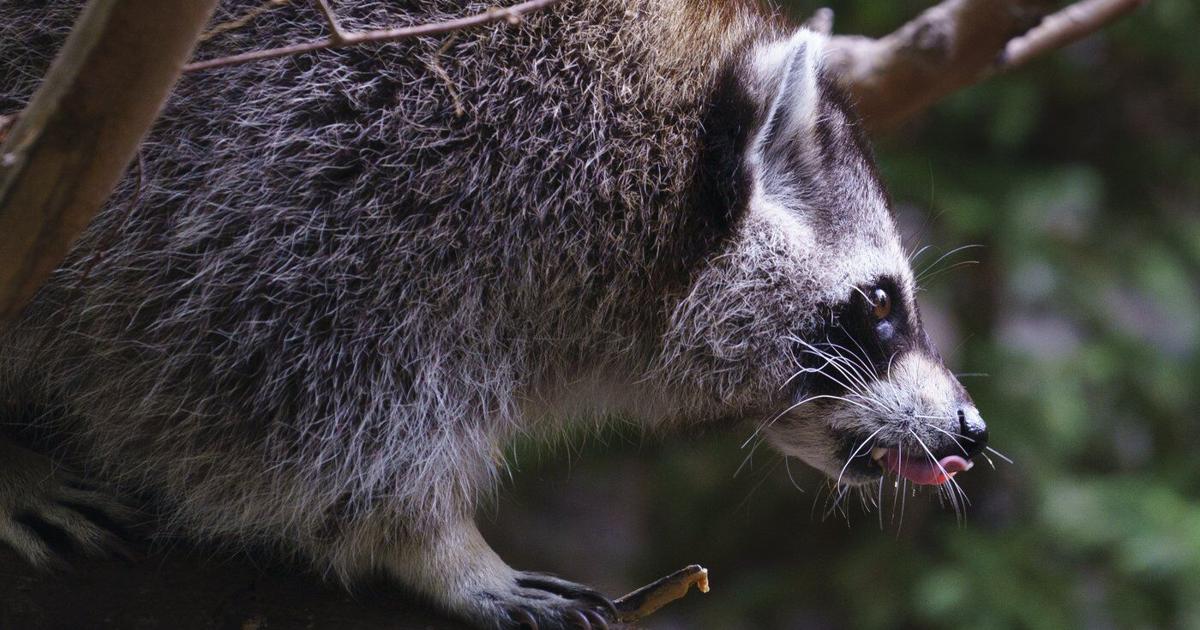
A third cat has tested positive for raccoon rabies in Quebec this year, and the province has now confirmed 313 cases of the disease in 2026, The Canadian Press reported Thursday.
The latest infected cat was detected on Sept. 25 in Saint-Denis-sur-Richelieu, in the Montérégie region. The owner and a veterinarian were exposed and received treatment, the province said. Quebec’s agriculture department posts its surveillance results and control operations on its raccoon rabies surveillance page, last updated Oct. 22.
Officials had previously reported two cases in cats this year, including what was the province’s first rabid cat case.
The jump in cases is steep. Provincial data show one case of raccoon rabies in 2024 and 93 in 2025, before this year’s total of 313, according to The Canadian Press.
The province said the disease returned in December 2024 with a case in Saint-Armand, the first since 2015. A second outbreak was found in Stanstead in August 2025, and a third emerged in June 2026 near Saint-Anicet in western Montérégie. Since March, cases have spread across Montérégie, threatening urban areas on Montreal’s South Shore and the island of Montreal, the province said.
To slow the spread, provincial crews are running a “trap-vaccinate-release” operation in Brossard, Longueuil, Sainte-Catherine, Saint-Constant and Saint-Lambert from Oct. 13 to 23. Raccoons and skunks caught in cages are vaccinated, marked with an ear tag and non-toxic paint, and released on site. Vaccine baits were also spread by hand and dropped by air in Estrie, Montérégie and Centre-du-Québec in August and September.
Michael Libman, a professor in the division of infectious diseases at McGill University, told The Canadian Press that three infected cats is unusual. He said it raises the question of whether people are slipping in their awareness that pets should be vaccinated.
“The thing about rabies is if you get prompt treatment, the illness is almost 100 per cent preventable. On the other hand, if you don’t get treatment and you start to get sick, rabies is pretty much 100 per cent fatal,” Libman said.
Anyone bitten by an animal that may not be vaccinated should get treatment right away, he said. Children are overrepresented among people who receive rabies treatment because they are more likely to approach animals.
The Quebec agriculture department said the Université de Montréal’s faculty of veterinary medicine is running pet vaccination clinics in several regions, where cats and dogs can be vaccinated for $15 until late November. The department advised owners to supervise pets outdoors and to see a veterinarian about any unexplained wound, even if the animal’s rabies shots are up to date.
The province has also banned moving some wild animals, including raccoons, skunks, foxes and coyotes, in municipalities around known cases. The province asks people in the enhanced surveillance zone in Montérégie, Estrie and Centre-du-Québec to report wild animals that appear sick or act strangely.
Via The Canadian Press.
If you find reporting like this useful, consider supporting Canada News Media, an independent Canadian newsroom with no corporate parent.
Follow Canada News Media
Get the day's top Canadian stories and our two daily 60-second news videos wherever you scroll.
X Threads Facebook Instagram LinkedIn TikTok YouTube Pinterest Reddit Substack Flipboard Newsletter RSS