
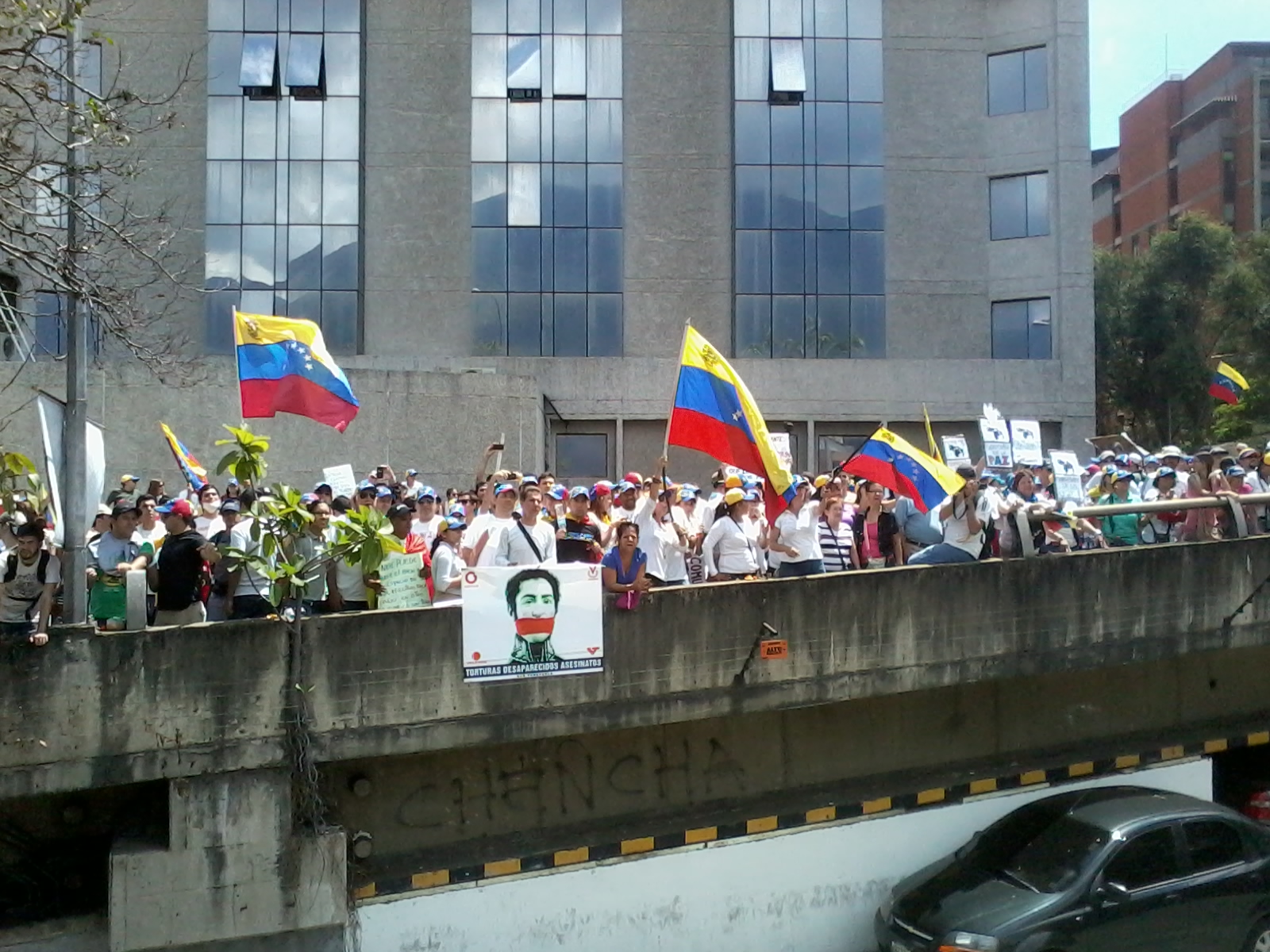
Thousands of Venezuelans marched in Caracas and at least four other cities on Thursday, Oct. 22, 2026, to demand presidential elections, in the first nationwide opposition protest in nearly two years, Reuters reported.
The march matters because Venezuela has had no elected government since U.S. forces captured President Nicolas Maduro in January, and no date has been set for a presidential or legislative vote. The rights group Foro Penal says more than 320 political prisoners remain jailed, Reuters reported. The government denies holding any.
Protesters gathered in Caracas, Valencia, Maracay, San Cristobal and Maracaibo, according to the Reuters report published by The Jerusalem Post. The protest was organized by Vente Venezuela, the movement of opposition leader Maria Corina Machado. Demonstrators also called for the release of prisoners they describe as political.
“We want presidential elections now,” Maria Debora Marin, 57, who runs a clothing store in Valencia, said, adding that the opposition was not going to wait until 2028, according to Reuters. Leosmary Hernandez, 18, a cosmetology student in Maracay, said: “Seeing this makes me happy because I know change is possible.” Rayeska Puesme, 18, a recent graduate in Caracas, said: “The United States removed one big problem, which was Maduro, but the rest are still there.”
Security forces had a notably thin presence at the protest sites, and in many smaller cities demonstrators dispersed before dark, Reuters reported. The ruling Socialist Party called its own march from Plaza Venezuela in Caracas, where the opposition had planned to gather, to a spot near the presidential palace to mark Breast Cancer Awareness Month. Interior Minister Diosdado Cabello was shown on state television attending that march, and the opposition moved its rally to a nearby location.
Acting President Delcy Rodriguez, Maduro’s former deputy, said on the same day that she met opposition representative Dinorah Figuera at the presidential palace that “there are still very, very small groups that resist and believe that trying to set the country ablaze and block streets is the way for Venezuela to move forward,” according to an El Pais report cited by TIME. That quote is a translation from Spanish.
Rodriguez told the United Nations General Assembly in September that elections will be held but did not give a date, according to MercoPress. Machado, a Nobel Peace Prize winner who has been outside Venezuela for nearly a year, says a vote must be held by July 2027, Reuters reported. Her movement is not part of the U.S.-backed talks between a faction of the opposition and the interim government, which began in August and have held three rounds without an agreement on an election, TIME reported. Those talks aim to remake the Supreme Court and the electoral council before any vote.
The State Department welcomed the third round of talks and said the process was building toward credible elections, Reuters reported. Spokesman Tommy Pigott urged the immediate release of all political prisoners. President Donald Trump told TIME in late September that holding an election now is “too soon.”
Public pressure is growing. The Venezuelan Observatory of Social Conflict recorded 1,101 protests in September, about 37 a day, though most were small, TIME reported. In an AtlasIntel survey for Bloomberg News, cited by TIME, Machado had 52 per cent support against 19 per cent for Rodriguez. Canada News Media has not reviewed the survey’s sample or margin of error.
For Canadians, the picture is one of distance and uncertainty. Canada has no embassy open in Caracas; the Government of Canada’s travel advisory, last updated Oct. 13, 2026, tells Canadians to avoid all travel to Venezuela, its highest risk level, and says consular help is provided remotely from the embassy in Bogota, Colombia. Foreign Affairs Minister Anita Anand said on Jan. 3 that Canada has “refused to recognize any legitimacy of the Maduro regime” and “stands by the people of Venezuela and their desire to live in a peaceful and democratic society,” in a Global Affairs Canada statement.
Venezuelan Canadians also have a stake. The Canadian Magazine of Immigration reports that the 2021 census counted about 27,320 Venezuela-born people in Canada.
What happens next depends on the talks and on Machado’s return. The opposition leader has been asked by U.S. officials to delay her trip home, according to Reuters, and no new round of talks or election date has been announced. The same weekend, Latin America’s attention turns to Brazil, where voters choose a president in a runoff on Sunday, as our earlier report on the Brazil runoff explains.
Via Reuters, TIME and MercoPress.
If you find reporting like this useful, consider supporting Canada News Media, an independent Canadian newsroom with no corporate parent.
Follow Canada News Media
Get the day's top Canadian stories and our two daily 60-second news videos wherever you scroll.
X Threads Facebook Instagram LinkedIn TikTok YouTube Pinterest Reddit Substack Flipboard Newsletter RSS