

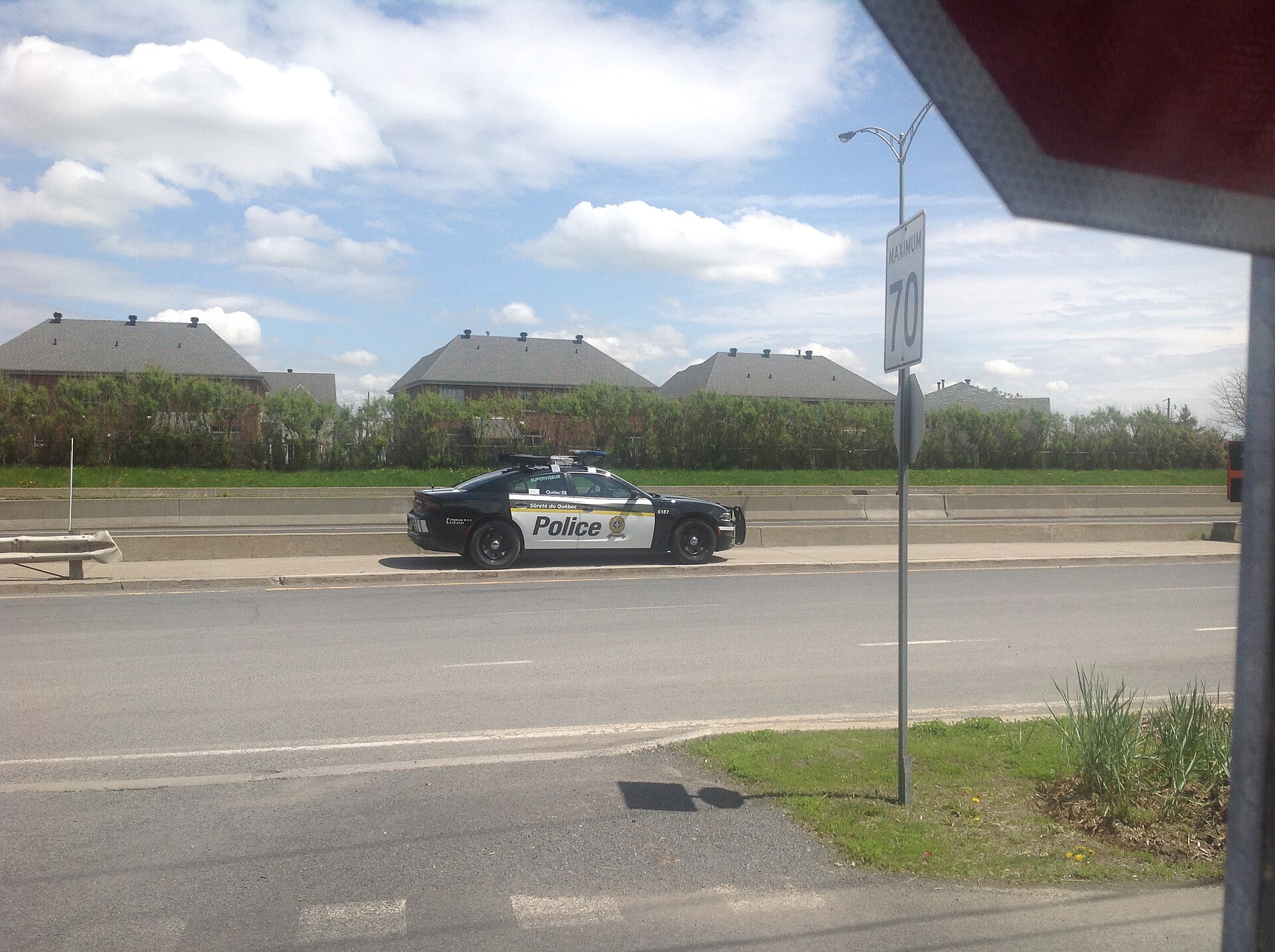
Quebec’s police ethics tribunal found that two Sûreté du Québec officers discriminated against a Black driver because of his race during a 2020 traffic stop, and the officers now face unpaid suspensions of 35 and 20 working days, CTV News reported Oct. 15.
The Tribunal administratif de déontologie policière ruled in a June 5, 2026, decision, published on its website, that Leslie Blot received differential treatment because of his race or colour when a sergeant and a constable from the SQ’s organized crime unit stopped him on Dec. 4, 2020, in Mascouche, Que. The tribunal called the case a manifest example of discrimination.
According to the decision, the officers stopped Blot’s Cadillac on the service road of Autoroute 640 under a Highway Safety Code provision that allows stops without a specific reason. Blot had committed no violation and was returning from his mother’s grave, the tribunal wrote.
The sergeant ordered Blot to open his backpack, saying it held pills. The bag contained a candle, holy water in a bottle shaped like the Virgin Mary and incense, the decision says. The tribunal found the search unjustified and abusive.
The decision found both officers guilty of a charge under article 5 of Quebec’s police code of ethics for acts based on race or colour. The sergeant was also found guilty of abuse of authority for the search and of disrespect toward Blot.
The tribunal rejected the officers’ explanations for the stop, including a claim that they could not see the driver’s race, and noted inaccuracies in their report. It took judicial notice that racial profiling of Black people exists in Quebec, relying on the Superior Court’s reasoning in the Luamba case.
It dismissed charges tied to the seizure and towing of the vehicle, even though the police ethics commissioner had asked to withdraw them. The car was towed because it lacked winter tires, and Blot later paid a ticket after pleading guilty.
CTV News, citing the sanctions, reported that the sergeant received 35 working days without pay and the constable 20 working days. Both must complete 19 hours of training on racial profiling. The decision posted to the tribunal’s site does not itself set out the penalties, and Canada News Media has not independently reviewed a separate sanction ruling.
The Association provinciale des policiers du Québec, which represents provincial police officers, declined to comment, CTV News reported. The SQ’s response was not included in published coverage of the sanctions. Canada News Media has not been able to obtain it, and will update this report if the force or the officers respond or if the decision is challenged.
Blot told CTV News that one officer called him a “drama queen” and the “national victim of the century” after he accused them of racial profiling. He said he is pulled over about twice a month, and that “racial profiling is something that should not exist and we’re going to fight for a change.”
Fo Niemi, executive director of the Centre for Research-Action on Race Relations, which has supported complainants in such cases, told CTV News the ruling may be “just a drop in the bucket,” but that each case adds up. “Only filing complaints can bring about change,” he said.
It is not Blot’s first case. In 2017, he was handcuffed and ticketed while blowing up balloons for his children in a parked car, and Quebec’s human rights commission ruled in his favour, CTV News reported.
The stops at the centre of the case sit within a wider legal fight over police powers in the province. Quebec suspended random traffic stops in 2025 after its high court refused to extend a ruling striking them down, and the Superior Court has since authorized a class action over stops made without reason.
Data from elsewhere in the country points the same way. Canada News Media has reported that Toronto police charged Black people at 3.9 times the white rate. The history of how Black Canadians fought discrimination through the courts and the press is traced in our look at Carrie Best’s Clarion and the Viola Desmond case.
The officers are not named here because the sanction ruling was not reviewed directly and its status is unclear. Sources: Tribunal administratif de déontologie policière decision C-2023-5437-1 and C-2023-5438-1 (June 5, 2026); CTV News (Laurence Brisson Dubreuil), Oct. 15, 2026; Noovo Info, Oct. 15, 2026.
If you find reporting like this useful, consider supporting Canada News Media, an independent Canadian newsroom with no corporate parent.
Follow Canada News Media
Get the day's top Canadian stories and our two daily 60-second news videos wherever you scroll.
X Threads Facebook Instagram LinkedIn TikTok YouTube Pinterest Reddit Substack Flipboard Newsletter RSS