

Recent developments:
- Kingston, Frontenac and Lennox & Addington Public Health imposes a mandatory 10-day isolation period for anyone in close contact with a confirmed COVID-19 case.
- Health officials warning people who attended a concert in Belleville, Ont., may have been exposed to COVID-19.
- Kiddytown, a decades-old kids’ clothing shop, is shutting down for good.
- Staff member at an Ottawa long-term care home has tested positive for COVID-19.
- Ottawa Public Health confirms evidence of community transmission of the omicron variant.
- Ottawa reported 124 new cases of COVID-19 on Saturday, the highest single-day total in more than seven months.
What’s the latest?
The Kingston, Frontenac and Lennox & Addington (KFL&A) Public Health Unit has imposed a mandatory 10-day isolation period, regardless of vaccination status, for anyone who has come into close contact with a confirmed COVID-19 case and has not been contacted by the public health unit.
Health officials in Hastings Prince Edward say anyone who attended a concert at the Empire Threatre on Dec. 2 between 7 and 11 p.m. may have been exposed to COVID-19 after a person tested positive for the illness.
They say it’s just a matter of time before the omicron variant is identified in the region and are asking people to avoid social gatherings, get tested for COVID-19 if they have any symptoms and get vaccinated.
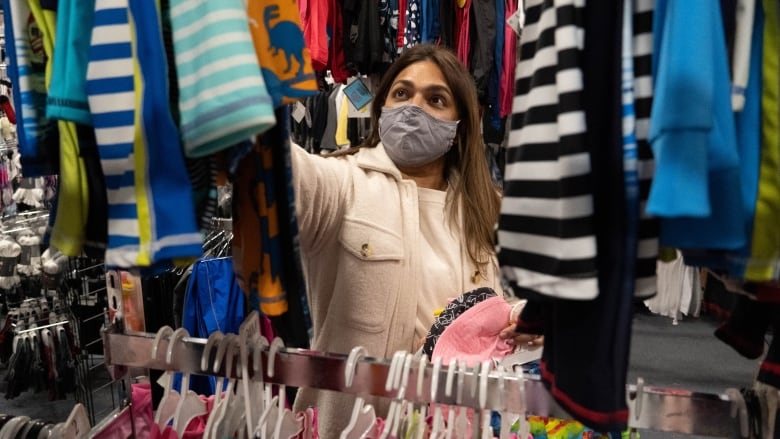
Early next year, after more than 70 years in business, the longtime Ottawa children’s clothing and furniture store, Kiddytown, will shut down for good — in part because of the challenges caused by the COVID-19 pandemic.

The City of Ottawa says a staff member at the Garry J. Armstrong long-term care home has tested positive for COVID-19. The facility is working with Ottawa Public Health to ensure testing and other precautions are in place, Donna Gray, general manager of the city’s community and social services wrote in a memo Saturday evening.
Ottawa Public Health (OPH) is reminding people to continue to wear masks and limit close contacts after it has confirmed evidence of community spread of the omicron variant. As of Saturday, the health unit only had five confirmed cases of the variant listed.
Wear a mask, maintain physical distance from others, limit close contacts, wash your hands, stay home when sick, and if you are experiencing symptoms, isolate + do not delay testing. Oh, and just a reminder: vaccines work. <a href=”https://twitter.com/hashtag/SteadyAsSheGoes?src=hash&ref_src=twsrc%5Etfw”>#SteadyAsSheGoes</a>, Ottawa. (2/2)
—@OttawaHealth
It also reported 124 more COVID-19 cases on Saturday, the second day in a row the city has reported more than 100 cases.
How many cases are there?
As of Saturday, Ottawa has had 32,737 confirmed cases of COVID-19.
There are 611 known active cases, while 31,508 cases are considered resolved and 618 people have died from the illness.
Public health officials have reported more than 62,100 COVID-19 cases across eastern Ontario and western Quebec, including more than 59,100 cases now resolved. Elsewhere in eastern Ontario, 238 people with COVID-19 have died. In western Quebec, the death toll is 223.
Akwesasne has had more than 1,200 residents test positive for COVID-19 and has reported 14 deaths between its northern and southern sections.
Tyendinaga Mohawk Territory has had 48 cases and one death. Kitigan Zibi Anishinabeg has had 44 cases, one death and is in the midst of an active outbreak. Pikwàkanagàn hasn’t had any cases.
What are the rules?
Eastern Ontario:
The province’s vaccine passport is required for people age 12 and up in many public places. It won’t be required for younger kids. People can prove their vaccine status with a paper document, a PDF file or a QR code.
There are no capacity restrictions for most places that require proof of vaccination, nor for outdoor organized events.
Private gathering limits are 25 people inside and 100 people outside.
The reopening plan is paused as officials monitor some rising trends.
Health officials say people should recommit to the fundamentals of getting vaccinated, testing and staying home when sick and limiting social contacts.
Local officials can change rules — for example, Renfrew County has done that for isolation, the Kingston and Belleville areas for school symptoms and the Kingston area for indoor gatherings and businesses.
Kingston’s medical officer of health and Akwesasne’s council are both asking residents to avoid in-person gatherings.
Western Quebec
Ten people are allowed to gather inside homes and 20 people outdoors — which increases to 50 if playing sports. The indoor gathering limit goes up to 20 people on Dec. 23.
There are no capacity limits for Quebec venues with assigned seats and restaurants.
A vaccine passport is in place for most people age 13 and up in many public spaces. It won’t apply to younger kids. People can use an app or show paper proof.
Other groups in the region are also coming out with their own COVID-19 vaccine policies, including for staff and visitors.
What can I do?
Prevention
COVID-19 primarily spreads through droplets that can hang in the air. People can be contagious without symptoms, even after getting a vaccine.
This means it is important to take precautions such as staying home while sick — and getting help with costs if needed — keeping hands and surfaces clean and considering distancing from anyone you don’t live with.
Masks, preferably medical or surgical ones, are mandatory in indoor public settings in Ontario and Quebec and recommended in crowded outdoor areas.

When and how long to self-isolate can vary in Quebec and Ontario and by vaccination status.
If someone you know has informed you that you are close-contact of a confirmed COVID-19 case, please self-isolate for 10 days and get tested as soon as possible. Do not wait for public health to contact you. <a href=”https://t.co/zhuJLnqwbh”>pic.twitter.com/zhuJLnqwbh</a>
—@KFLAPH
Health Canada recommends older adults and people with underlying medical conditions get help with errands and have supplies in case they need to isolate.
Scientists are working to find out how easily the new omicron coronavirus variant spreads, its severity and the performance of vaccines against it.
Travel
Travellers more than 12 years and four months old must now be fully vaccinated to board a plane, train or marine vessel in Canada.
The U.S. requires everyone crossing a land, air or water border to be fully vaccinated. People flying there will need proof of a negative COVID test within a day of departure.
Canadian citizens and permanent residents no longer need proof of a test when returning from trips to the U.S. under 72 hours.
The hope is that other countries will accept provincial or territorial proof of vaccination.
People have to be fully vaccinated and pre-approved to enter Canada. Because of the omicron variant, air travellers from every country except the United States have to take a COVID-19 test upon arrival and isolate until they get results.
There are further travel restrictions from a number of African countries because of omicron.
Vaccines
Vaccines curb the spread of all variants of COVID-19 and go a long way toward avoiding deaths and hospitalizations, without offering total protection.
Four COVID-19 vaccines have been deemed safe and approved in Canada, with some age restrictions.
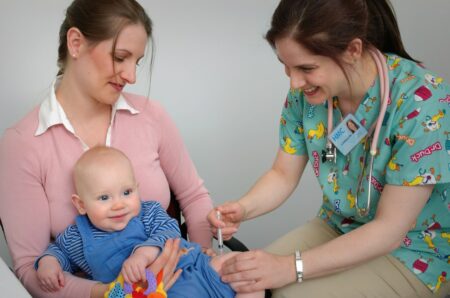
Health Canada has approved Pfizer-BioNTech’s vaccine for children as young as five. Doses for kids age five to 11 will be given at least eight weeks apart in both local provinces.

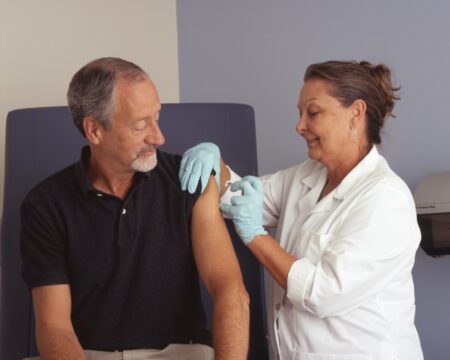
Ontario’s next third shot expansion comes Monday morning for people in their 50s and 60s; Quebec expanded it in early December and plans to lower its age in January.
There have been more than 3.8 million COVID-19 first, second and third vaccine doses administered in the wider Ottawa-Gatineau region, which has about 2.3 million residents.
Eastern Ontario
People born in 2016 and earlier can look for provincial appointments online or over the phone at 1-833-943-3900.
Local health units have some flexibility, so check their websites for details. Many offer child-only clinics and doses on short notice as campaigns look to fill gaps in vaccine coverage and cover expanded eligibility.
Pharmacies and some family doctors offer vaccines through their own booking systems.
Western Quebec
Anyone who is five and older can get an appointment or visit a permanent or mobile walk-in clinic.
Clinics for children are in schools and kids will need written consent from a parent to be vaccinated there.
Siblings can be booked together in a single time slot and parents can check a box to signal if their child is nervous.
Symptoms and testing
COVID-19 can range from a cold-like illness to a severe lung infection, with common symptoms including fever, a cough, headache, vomiting and loss of taste or smell.
“Long-haul” symptoms can last for months.
If you have severe symptoms, call 911.
Mental health can also be affected by the pandemic, and resources are available to help.
In eastern Ontario:
Ontario says to get tested by making an appointment at a clinic if you fit certain criteria. Check with your health unit for clinic locations and hours.
Select pharmacies test people with symptoms, along with certain people without symptoms.
Our School & Childcare phone-line is open this weekend from 8:30am to 4:30pm. If you have children in school or childcare and have questions about screening or symptoms – call us: 1-866-236-0123. <a href=”https://t.co/d4yDUjSwxB”>pic.twitter.com/d4yDUjSwxB</a>
—@LGLHealthUnit
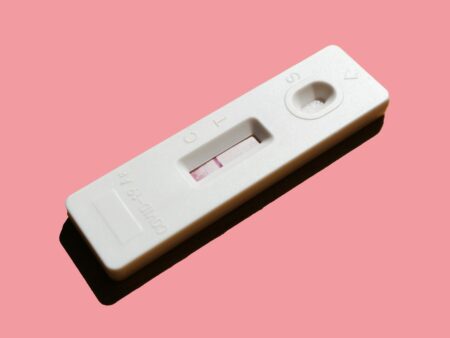
Rapid and take-home tests are available in some places, including pharmacies and some child-care settings when risk is high. A positive test will trigger a follow-up.
Travellers who need a test have local options to pay for one.
In western Quebec:
Tests are strongly recommended for people with symptoms and their contacts.
People can make an appointment or see if they’re near a walk-in option online. They can also call 1-877-644-4545 with questions during hours the line is running.
Gargle tests are offered in some places instead of a swab.
Rapid COVID-19 tests are available in all Quebec daycares, preschools and elementary schools. Next week school-age kids in the region will be getting rapid tests kits they can take at home.
First Nations, Inuit and Métis:
First Nations, Inuit and Métis people, or someone travelling to work in a remote Indigenous community, are eligible for a test in Ontario.
Akwesasne has COVID-19 test and vaccine clinics, with information online or at 613-575-2341.
People in Kitigan Zibi Anishinabeg can call the health centre at 819-449-5593 for a test or vaccine; email is another option for vaccine booking.
Tests are available in Pikwàkanagàn by calling 613-625-1175 and vaccines (including third doses) at 613-625-2259 extension 225 or by email.
Anyone in Tyendinaga who’s interested in a test can call 613-967-3603 and should watch the website for dedicated vaccine clinics.
Inuit in Ottawa can call the Akausivik Inuit Family Health Team at 613-740-0999 for service, including testing and vaccines, in Inuktitut or English on weekdays.