
The head of Canada’s main airline industry group said any federal plan to bring private investors into the country’s four largest airports must keep a lid on costs for travellers, as aviation leaders gathered in Ottawa on Oct. 8, 2026.
Jeff Morrison, president and CEO of the National Airlines Council of Canada, said more details are needed before the group takes a firm position on the plan, but that affordability is key, The Canadian Press reported. Travellers already pay an airport improvement fee of $40 plus tax on most departures from Toronto Pearson, according to the airport’s fee schedule, and that charge is built into the price of every ticket.
Morrison spoke as the council and the International Air Transport Association hosted Aviation Day Canada at the National Arts Centre, a forum the council said would cover affordability, passenger rights and airport privatization and draw more than 300 airline, airport and government officials.
Prime Minister Mark Carney announced on Sept. 15 at the Canada Investment Summit in Toronto that Ottawa wants private operators to run Toronto Pearson, Montréal-Trudeau, Calgary and Vancouver international airports under long-term concessions, CTV News reported. The federal government would keep ownership of the land and assets, and Transport Canada would keep regulation and oversight.
Carney said the operators would manage the airports “for a period of decades” and that Ottawa intends to keep an ownership position in the concessions through its new Canada Strong Fund, according to The Canadian Press. He said the government would reinvest the “tens of billions of dollars” it raises in infrastructure, including regional air links and local transit.
The airline council set out its conditions the same day. “New investment in our airports is a welcome development when it leads to more affordable air travel for Canadians,” Morrison said in a Sept. 15 statement.
The first of the council’s five principles said alternative ownership models “must not impose new costs within the air travel system and seek to reduce the cost of travel.” It called for independent economic regulation of airport charges and for the rent airports pay Ottawa to be eliminated or transparently reinvested. The council also asked that concession revenue go back into airport infrastructure such as biometrics, border technology and security screening, and that current service standards be kept or improved.
For travellers, the question is who sets the fees. Under the current model, the large airports are run by not-for-profit airport authorities that lease federal land and pay for their operations largely through charges on passengers and airlines. Transport Canada’s March 7, 2025, policy statement said 22 of the 26 airports in the National Airports System are run by such authorities.
Those fees have been climbing. The Calgary Airport Authority raised its airport improvement fee for most departing passengers to $40 from $35 on Jan. 1, 2026, saying in a notice to travellers that it relies on passenger fees rather than government funding. Airlines generally pass the landing and terminal charges they pay to airports on to passengers through fares.
Ottawa has pointed to Australia, which handed its airports to private investors between 1997 and 2003. The Canadian Press reported that the move brought billions of dollars in capital investment, faster baggage handling and check-in and more lounges, but that Australia’s competition watchdog found the four biggest airports raised the fees they charge airlines by 81 per cent in the decade leading up to 2015.
Other groups have been sharper. Nick Careen, senior vice-president of operations at IATA, told Travelweek the association opposes the plan “because it is primarily done to extract cash.” Monette Pasher, president of the Canadian Airports Council, said any new investment model must preserve affordability, connectivity and reinvestment, Travelweek reported.
The Canadian Labour Congress has warned of “higher fees, higher fares, lower labour costs and staffing,” Secretary-Treasurer Lily Chang said, according to The Canadian Press. The congress estimated in a report that private owners would need 15 to 20 per cent more revenue than the airports generate today.
Politically, the plan has split the opposition. NDP Leader Avi Lewis called privatizing airports a mistake, while Conservative Leader Pierre Poilievre said his priority is lowering the cost of air travel and that he wants to see details, warning against “sweetheart deals” for insiders, CTV News and The Canadian Press reported.
Carney said consultations on the plan would begin in the coming weeks, and no timeline for a final deal has been released. Karen Hennessey, a partner at Gowling WLG in Ottawa, told The Canadian Press the change will likely require new legislation. Our earlier report on how the current airport model works has more background.
The airline council will also have new leadership as the talks unfold. Morrison is retiring, and the council announced on Oct. 6 that Maguessa Morel-Laforce will take over as president and CEO on Dec. 1, 2026.
If you find reporting like this useful, consider supporting Canada News Media, an independent Canadian newsroom with no corporate parent.
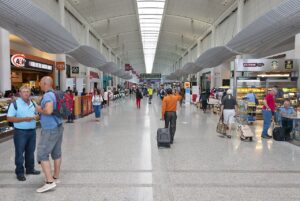
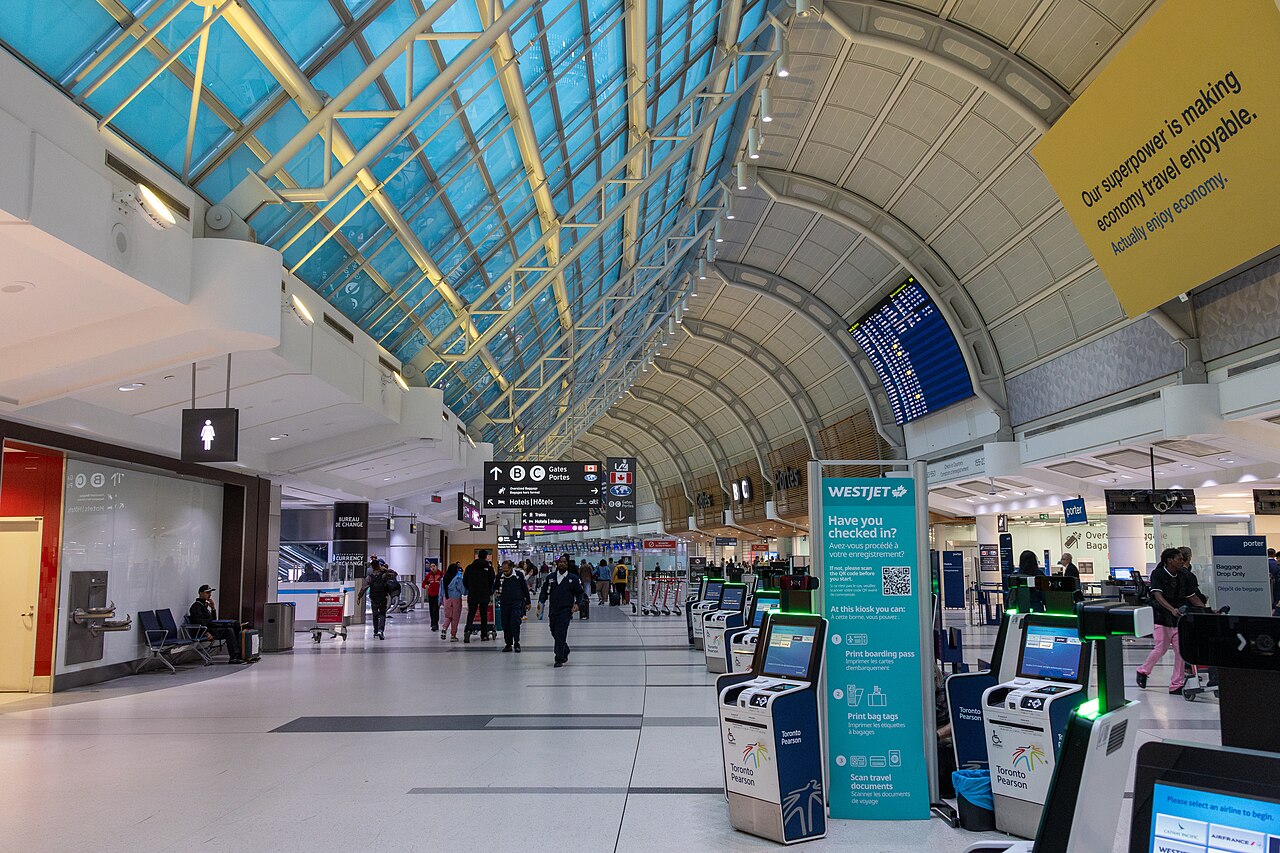
Via The Canadian Press, CTV News and Travelweek. Photo: Interior of Terminal 3 at Toronto Pearson International Airport, April 30, 2026. File photo by Dillan Payne, Wikimedia Commons, CC BY-SA 4.0.