


The federal government’s major economic bill, C-39, passed second reading in the House of Commons 296-26 on Oct. 8, 2026, with the Conservatives voting alongside the Liberals to send it to committee for study.
The Parliament of Canada’s LEGISinfo record lists the result as Vote 178, with 296 yeas, 26 nays and 10 MPs paired. The bill, formally An Act respecting certain measures to strengthen the economy and known by its short title as the Building Canada Strong Act, now goes to the Legislative Committee on Bill C-39.
The Bloc Québécois, the NDP and the Green Party voted against it, the National Post reported. Liberal MP Patrick Weiler, who had raised concerns about the bill, voted with his caucus.
Government House Leader Steven MacKinnon, who is also transport minister, introduced the bill on Sept. 21. It has three parts. The first changes how major projects are reviewed, amending the Impact Assessment Act, the Building Canada Act, the Fisheries Act, the Species at Risk Act and other laws to coordinate assessments, set decision timelines and coordinate consultations with Indigenous groups.
The second part deals with supply chains, including trade corridors, port governance, transportation security clearances and a new Enabling Digital Trade Act for electronic trade documents. The third amends the Canada Labour Code, covering collective bargaining, first contracts and the enforcement of settlements.
The labour section drew the most fire. It sets new rules for when the federal labour minister can use section 107 of the Canada Labour Code, the power the Liberals have used to end strikes and lockouts at ports, railways and airlines. The bill adds a special mediator and a national interest test before the minister steps in, the National Post reported.
The government says those changes add guardrails and transparency. Unions say they leave too much to a cabinet minister’s judgment and threaten the right to strike. Candace Rennick, national secretary-treasurer of the Canadian Union of Public Employees, said CUPE’s national executive board will back locals that defy back-to-work limits, according to the Post.
Conservative Leader Pierre Poilievre said his party supported the bill at second reading but will propose amendments in committee to protect workers. He did not say what those amendments would be.
Green Leader Elizabeth May warned that the bill, like Bill C-5 before it, gives ministers broad discretion and lets the government override existing laws. Weiler said that because the powers would be permanent, Parliament should require clear and transparent processes.
Bill C-5, passed in 2025, created the Building Canada Act, which lets Ottawa designate projects in the national interest for faster approvals. C-39 extends the government’s promise of a single review completed within one year to major projects more broadly.
Second reading approves a bill in principle only. C-39 must still clear committee study, report stage and third reading in the Commons, then all three readings in the Senate, before it can become law. LEGISinfo showed no committee activity on the bill as of Oct. 9.
With the Conservatives backing it, the Liberals have the votes to move the bill forward. How much it changes in committee, particularly the section 107 rules, will decide whether labour’s opposition grows or fades.
Via the National Post.
If you find reporting like this useful, consider supporting Canada News Media, an independent Canadian newsroom with no corporate parent.
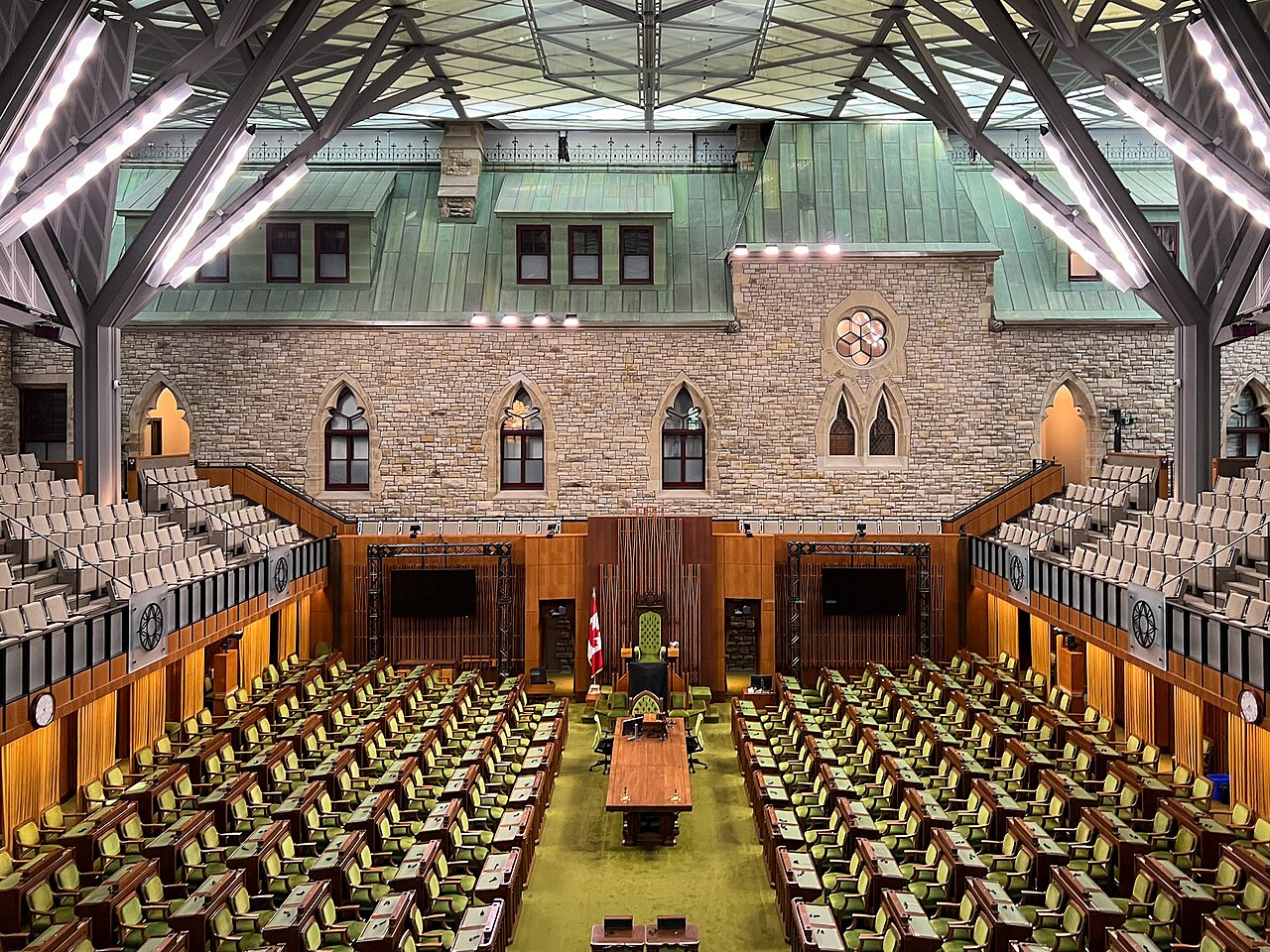
Sources: LEGISinfo, Parliament of Canada and the National Post. Photo: the House of Commons chamber in Ottawa’s West Block, by Hutima, Wikimedia Commons, CC BY-SA 4.0.