
The European Union on Oct. 13 opened two more negotiating clusters, covering the internal market and competitiveness, with both Ukraine and Moldova at accession conferences in Luxembourg, bringing each country to four of six clusters opened.
The step ends a stall of about three months. Hungary had blocked the clusters four times, most recently on Sept. 8, before lifting its objection after Ukraine’s parliament, the Verkhovna Rada, passed a minority-rights law on Oct. 12, the Kyiv Post reported.
Ireland’s minister of state for European affairs, Thomas Byrne, said on X on Oct. 12 that “all EU member states have agreed to: open clusters 2 and 3 for Ukraine and Moldova,” according to the Kyiv Post. Ireland holds the rotating presidency of the Council of the EU, the body that represents member governments. Byrne also called Oct. 13 another “Super Tuesday” for the three candidate countries, the outlet reported.
The law gives schools where minority languages are used special status. The Kyiv Post cited parliamentary estimates that about 149 schools, roughly 1.2 per cent, could qualify, and said the provision does not apply to Russian. Hungarian Prime Minister Peter Magyar wrote on Facebook that the amendments would make it “fundamentally easier for Hungarian children in Ukraine’s Transcarpathia region to use their native language,” the Kyiv Post reported.
The Kyiv Independent described clusters 2 and 3 as the two largest of the six by number of policy files. Clusters are groups of negotiating chapters, the policy areas a candidate must align with EU law. The first cluster, on the rule of law, opened on June 15 and the cluster on external relations on July 14, according to the Kyiv Post.
Two clusters remain: cluster 4, on the green agenda and sustainable connectivity, and cluster 5, on resources, agriculture and cohesion. EU Enlargement Commissioner Marta Kos said they should open “as soon as possible,” and the aim is a green light by December, New Union Post reported. Kos also said the Commission wants to see when the interim benchmark assessment report can be closed, calling it a precondition for the final stage.
Agriculture is the likely sticking point. The Commission proposed on Oct. 6 that Ukraine’s farm sector receive special treatment during accession, the Kyiv Independent reported. Ukrainian Agriculture Minister Taras Vysotskyi rejected limits on farm subsidies after accession, saying Kyiv “cannot accept permanent restrictions,” the Kyiv Post reported. Kos told the Kyiv Independent that “we will put down the solutions for both sides” once Ukraine is far enough along to consider what the accession treaty will contain.
Civil society groups cautioned that the work is far from done. Andrii Borovyk, executive director of Transparency International Ukraine, said “many of the reforms outlined in the roadmap are still ahead,” according to The New Voice of Ukraine, which reported that the group says the process is still behind the timeline set in June.
Moldova’s accession is tied to Ukraine’s under what EU officials call the package approach, and New Union Post reported there is currently no political will in the Council to separate them. Moldovan Deputy Prime Minister Cristina Gherasimov said she wants readiness for membership by 2030 to become a shared objective. Ukrainian Deputy Prime Minister Vsevolod Chentsov said his priority is meeting the cluster 1 benchmarks and winning a positive assessment.
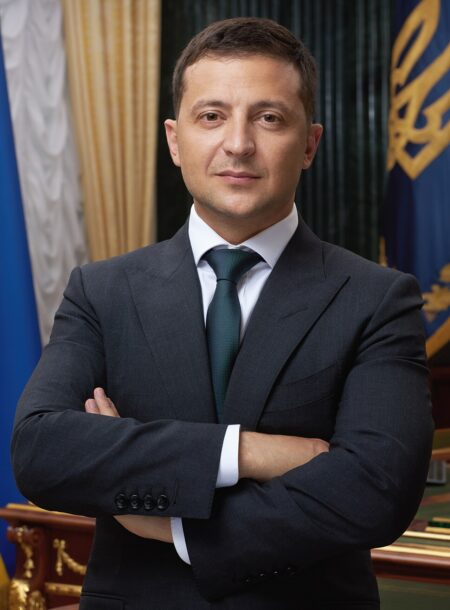
For Canada, the decision matters mainly through its large Ukrainian community. Statistics Canada’s 2021 census counted more than one million people who reported Ukrainian ancestry. Prime Minister Mark Carney told President Volodymyr Zelenskyy on Oct. 11 that Canada will keep and, if needed, strengthen its sanctions on Russia, according to his office, as we reported. We found no Canadian government statement on the cluster decision.
What happens next: EU leaders meet in Brussels on Oct. 15 and 16 for a summit where Ukraine and enlargement are on the agenda, as we reported. New Union Post reported that the Commission’s 2026 Enlargement Package, due at the end of October, is expected to include accession roadmaps with indicative timelines for Ukraine, Moldova, Albania and Montenegro. Earlier, we covered how Hungary eased its veto on the condition that Kyiv pass the law.
If you find reporting like this useful, consider supporting Canada News Media, an independent Canadian newsroom with no corporate parent.
The Council of the EU’s own press release on the conferences could not be opened for this report, so details are as reported by the outlets named above. Via the Kyiv Independent, Kyiv Post, The New Voice of Ukraine and New Union Post.
Follow Canada News Media
Get the day's top Canadian stories and our two daily 60-second news videos wherever you scroll.
X Threads Facebook Instagram LinkedIn TikTok YouTube Pinterest Reddit Substack Flipboard Newsletter RSS