
The World Health Organization said Oct. 13, 2026, that weekly suspected cholera cases in Yemen have roughly tripled in three weeks, as renewed fighting pushes displaced families into crowded camps with little safe water.
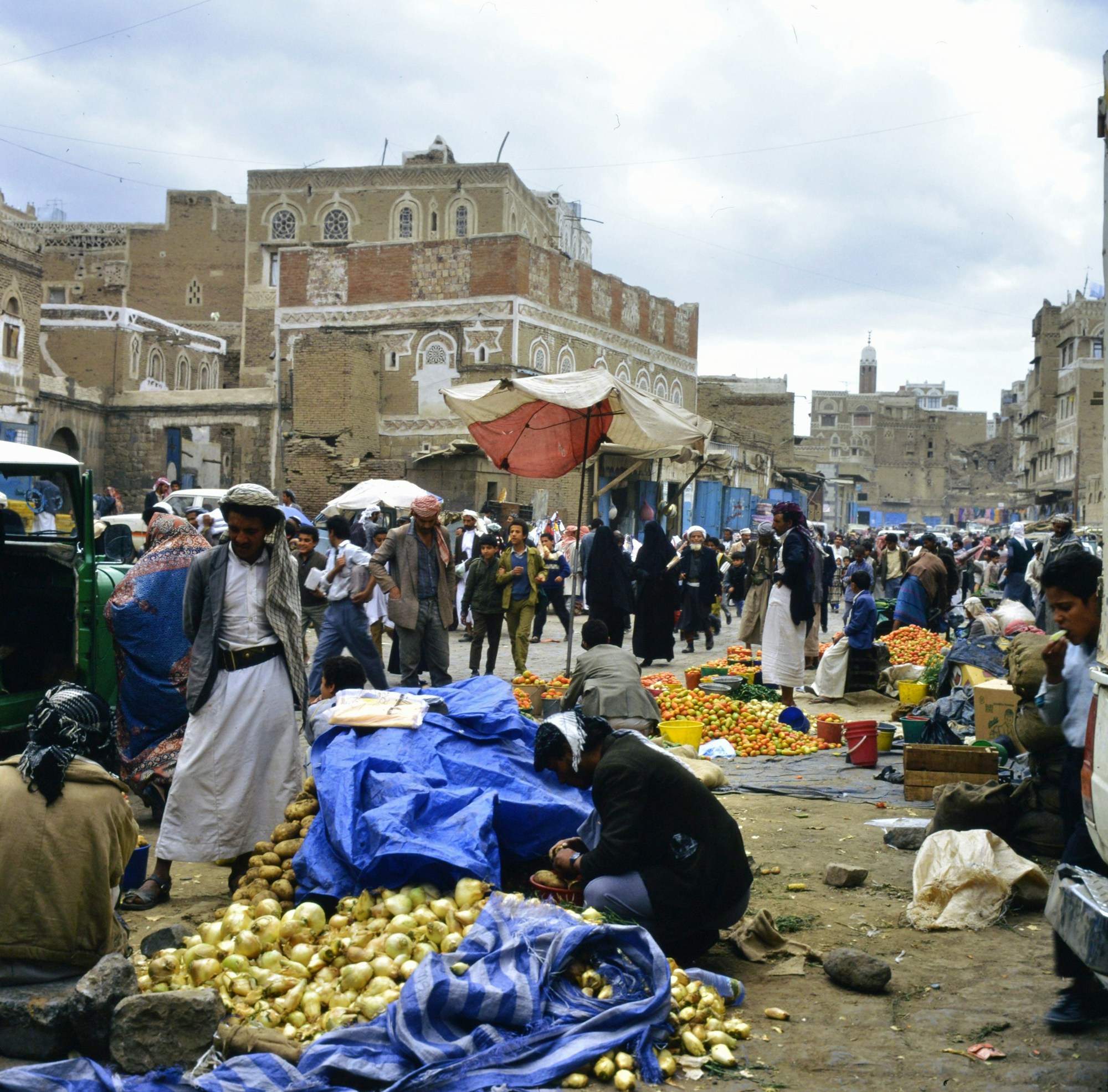
Pictured: a market in Sanaa, Yemen. File photo, not from the outbreak or the events described. Photo: Thomas Foertsch/Unsplash.
Yemen has recorded 8,034 suspected cholera cases and 27 deaths so far this year, the WHO said, and about a quarter of those cases were reported in the past four weeks. Weekly suspected cases climbed from 217 in the week of Sept. 6 to 12 to 647 in the week of Sept. 27 to Oct. 3, according to the figures reported by Al Jazeera and The New Arab.
Annette Heinzelmann, the WHO’s emergency director for the region, said the people most at risk are those who have already lost their homes. “Families fleeing conflict are now facing another threat from diseases that can be prevented and treated,” she said, according to both outlets. She said outbreaks could spread rapidly among vulnerable communities without urgent funding and access to safe water, vaccination and health services.
The WHO said five southwestern governorates that host many displaced people (Abyan, Lahij, al-Dhalea, Taiz and Aden) account for 92 per cent of reported cases, according to Al Jazeera. The disease has also reached remote displacement camps in Hadramout in the east, which are hard for medical teams to reach, the outlet reported.
Al Jazeera, citing the WHO, reported that the renewed fighting between the Houthis and Yemen’s internationally recognized government has pushed more than 200,000 people to flee their homes. The New Arab reported that the International Organization for Migration put the number at more than 217,000 as of Monday. The two figures come from different agencies and were not reconciled in either report.
The WHO said it has secured US$3.78 million of the US$31 million it needs for a 90-day emergency response in Yemen. The money would pay for disease surveillance in displacement sites, rapid response teams, cholera treatment and infection prevention in health facilities, the outlets reported. The WHO also warned that the same conditions expose people to measles and other preventable diseases, according to The New Arab.
Cholera is an acute intestinal infection spread through contaminated food and water. It causes severe diarrhoea and vomiting and can kill within hours if untreated, but oral rehydration and, in severe cases, antibiotics are effective. Al Jazeera noted that Yemen suffered a major outbreak in 2017 that infected hundreds of thousands of people and killed at least 2,000.
For Canadians, the Government of Canada’s travel advisory for Yemen, last updated Oct. 7, 2026, tells Canadians to avoid all travel to the country, including the island of Socotra, and says those already there should leave if it is safe to do so. The advisory notes that cholera is a risk in parts of the country and that health care is inadequate throughout. It says Canada has no office in Yemen and that its ability to provide consular assistance there is extremely limited. The nearest Canadian embassy is in Riyadh, Saudi Arabia. Our earlier reports covered Canada’s warning about Riyadh airport and the Saudi-led coalition’s strikes on Houthi targets.
What happens next depends largely on funding and access. The WHO has not said when it expects the 90-day response to be fully funded. We have not independently verified the case counts, and we did not read the WHO’s own statement, which was not reachable at the time of writing. Figures here are as reported by Al Jazeera and The New Arab.
Via Al Jazeera (with AFP) and The New Arab.
If you find reporting like this useful, consider supporting Canada News Media, an independent Canadian newsroom with no corporate parent.
Follow Canada News Media
Get the day's top Canadian stories and our two daily 60-second news videos wherever you scroll.