
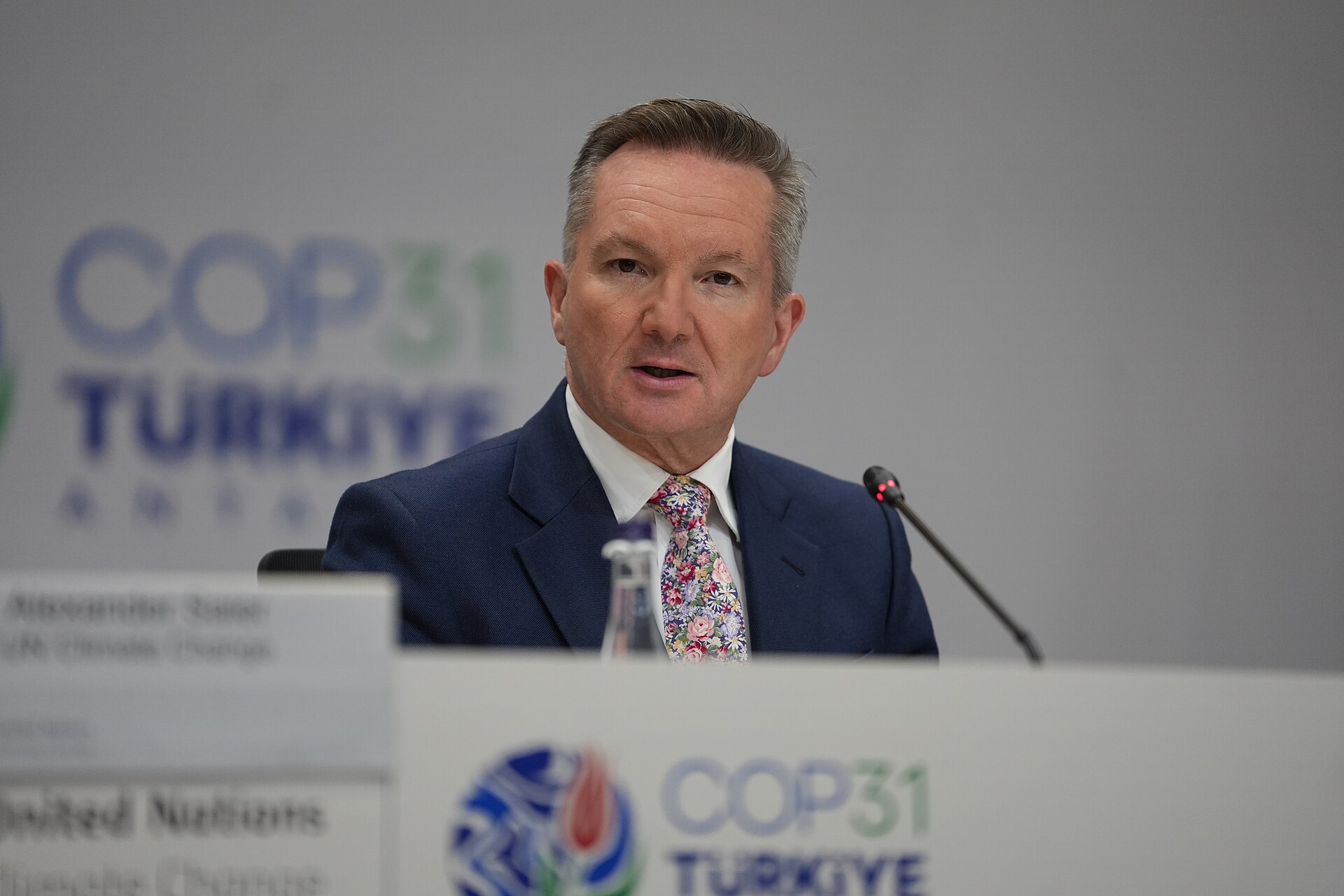
ANTALYA, Turkey: The United Nations climate summit known as COP31 ended Sunday without an adopted agreement after the European Union and other delegations rejected a final draft that did not mention fossil fuels.
Turkey’s COP31 president, Murat Kurum, told the closing plenary that “there is no consensus on this document” and that the decisions had not been adopted, according to Al Jazeera, citing Reuters and The Associated Press. Talks scheduled to finish Friday ran two extra days.
Al Jazeera reported that the last time UN climate talks ended without a deal adopted by all countries was in Copenhagen in 2009.
The draft, put forward by the co-presidents from Turkey and Australia, would have acknowledged for the first time that global warming is on course to exceed the 1.5 C threshold countries had sought to protect, and called for faster development of carbon-removal technologies. It did not name the fossil fuels that scientists say drive warming, and referred instead to an earlier COP decision to transition away from oil, gas and coal.
Ireland’s climate and energy minister, Darragh O’Brien, whose country holds the rotating EU presidency, said the bloc “objects” to the pact because it “does not meet the moment.” Several other countries also formally objected, saying the text weakened previous commitments, UN News reported.
UN Secretary-General Antonio Guterres called the outcome a “deeply disappointing” setback. “There may be no consensus in the negotiating room. There is no ambiguity in the science,” he said in a statement, adding that the world is on course to exceed the 1.5 C limit.
Canada went into the final days with a message about money and methane rather than fossil fuel language. In a Nov. 16 news release, Environment and Climate Change Canada said Environment Minister Julie Dabrusin announced $116 million in new funding toward Canada’s $13-billion international climate finance goal, launched a methane innovation initiative and took on a leadership role on oceans. Canada’s national statement at the conference, issued Nov. 18, said the country stands by the Paris Agreement.
That position has been contested at home. Former environment ministers Catherine McKenna and Steven Guilbeault said Canada’s claim to be meeting its Paris commitments is untrue, as we reported on Nov. 14. Dabrusin’s office responded that the government “stands by the Paris Agreement” and is committed to net-zero emissions by 2050. Canada, along with other absent leaders, was also named a “fossil of the day” at COP31.
Canada has since signalled domestic moves of its own. Quebec pledged a road map to phase out fossil fuels, as we reported on Nov. 20, while Ottawa’s decision to halt a planned coal export ban was described by officials as a political call. Canada also pledged up to $560 million to a tropical forest fund earlier in the summit.
No Canadian government reaction to the collapse of the final text was available when this story was published. Collapse of the summit’s political decision does not cancel existing obligations under earlier UN climate agreements, including the Paris Agreement. Financial support for developing countries hit hardest by climate change was also among the issues that held up the talks.
This story will be updated if Canada responds.
If you find reporting like this useful, consider supporting Canada News Media, an independently owned Canadian newsroom.
Follow Canada News Media
Get the day's top Canadian stories and our two daily 60-second news videos wherever you scroll.
X Threads Facebook Instagram LinkedIn TikTok YouTube Pinterest Reddit Substack Flipboard Newsletter RSS