

The simplest way to prepare your vehicle for a winter breakdown is to keep a stocked emergency kit in the trunk. Transport Canada recommends that drivers carry one, and you can buy a ready-made kit or build your own from items you may already have at home.
Winter driving in much of Canada means sudden snow, ice and long stretches between towns. A dead battery, a slide into a ditch or a road closure can leave you waiting in the cold for a tow truck, sometimes for hours. A kit will not prevent a breakdown, but it can make the wait safer and more bearable.
The checklist below follows the winter driving emergency kit guidance published by Transport Canada. Gather the items over a weekend, pack them in a sturdy bag or bin, and do it before the first major storm of the season.
Step 1: Pack a first aid kit
Start with a first aid kit that includes bandages and basic supplies for minor injuries. Check what is inside, replace anything used or past its date, and keep it where you can reach it quickly.
Step 2: Add de-icing supplies and fluids
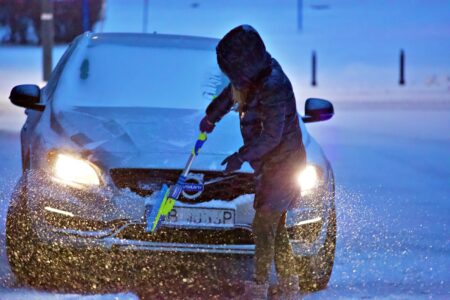
Transport Canada lists windshield wiper fluid, an ice scraper and fuel line antifreeze. Keep a spare jug of washer fluid rated for cold temperatures. Our guide to prepping wipers and washer fluid for winter explains how to choose and top up fluid, and our tips on defrosting a windshield fast cover the scraper.
Step 3: Include booster cables
Cold weather is hard on batteries, so booster cables belong in every winter kit. If you have never used them, read how to jump-start a car in cold weather before you need to, and check your owner’s manual for any manufacturer warnings.
Step 4: Carry gear to get unstuck
Transport Canada recommends kitty litter, traction mats and a shovel in case you get stuck in the snow. The litter and mats give your tires something to grip, and the shovel clears snow from around the wheels. A compact folding shovel fits easily in most trunks.
Step 5: Make sure you can see and be seen
Pack a flashlight so you can see, along with road flares and a reflective vest so other drivers can see you. Put fresh batteries in the flashlight, and consider carrying spares.
Step 6: Bring a way to stay warm
The guidance suggests matches and a survival candle, which lets you warm your hands without draining the car’s battery or gas tank. Follow the candle manufacturer’s instructions for safe use, and never leave any flame unattended.
Add extra clothing and a blanket. Transport Canada says a lightweight, heat-reflective blanket is best. Include warm socks, mitts and a hat, since you may need to step outside in the cold.
Step 7: Store food and water
An emergency food pack should include water and non-perishables such as canned fruit and granola bars. Transport Canada also reminds drivers to pack a can opener and utensils if any of the food needs them. Swap out the food and water every year or so, and note the dates on the packaging.
Step 8: Keep a charged phone
A charged cell phone is a good idea for emergencies, Transport Canada says, though you should never pick it up while driving. Consider a car charger or a small power bank so a long wait does not leave you without a way to call for help.
Step 9: Store the kit in the trunk and check it each season
Transport Canada says to keep the kit in the trunk. Make a habit of checking it each fall: test the flashlight, replace expired items and confirm the shovel and cables are still there. If you drive an SUV or hatchback, secure the kit so it cannot slide around or hit anyone in a sudden stop.
Winter tires also matter. Rules differ by province, and our guide to winter tire laws by province explains what is required where you drive. For household preparedness, see our list for building a winter power outage kit.
A kit is only part of winter readiness. Check road conditions and forecasts before a long trip, tell someone your route and keep your fuel tank well above empty. With the kit in the trunk, a bad day on the road is easier to handle.
If you find reporting like this useful, consider supporting Canada News Media, an independent Canadian newsroom with no corporate parent.
Source: Transport Canada, Winter Driving Emergency Kit (tc.canada.ca/en/winter-driving-emergency-kit).
Follow Canada News Media
Get the day's top Canadian stories and our two daily 60-second news videos wherever you scroll.
X Threads Facebook Instagram LinkedIn TikTok YouTube Pinterest Reddit Substack Flipboard Newsletter RSS