


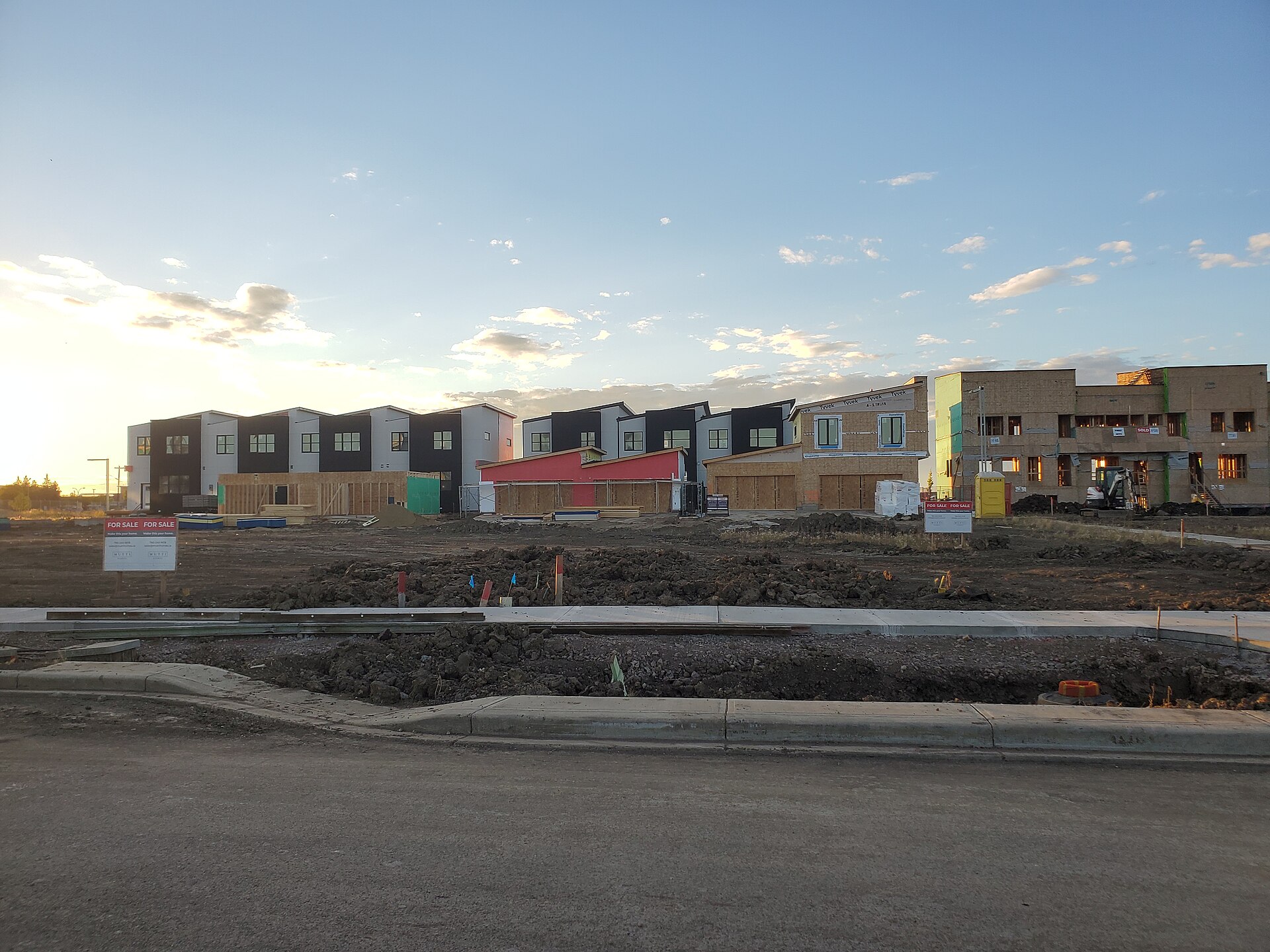
Investment in new residential building construction in the Edmonton area fell 26.8 per cent in the third quarter of 2026 compared with a year earlier, the steepest decline among Canada’s 10 largest metropolitan areas, according to a Canada News Media analysis of Statistics Canada data released Nov. 19.
Residential investment in the Edmonton census metropolitan area totalled $1.60 billion in July, August and September, down from $2.19 billion in the same three months of 2025. That is $587 million less spent on homes, townhouses and apartments in one quarter. Across Canada, residential building investment rose 7.8 per cent over the same period to $55.3 billion.
Alberta as a whole fell 11.5 per cent, from $6.53 billion to $5.78 billion, which means Edmonton accounted for most of the province’s drop. Calgary bucked the trend, with residential investment up 1.4 per cent to $2.77 billion.
Two other mid-sized centres also fell sharply. Hamilton was down 25.3 per cent and Halifax down 23.2 per cent. Montreal, by contrast, rose 39.7 per cent, Winnipeg 29.3 per cent, Toronto 2.4 per cent and Vancouver 1.7 per cent.
The drop was confined to housing. Non-residential building investment in the Edmonton area, which covers offices, factories, shops and institutions, rose 15.5 per cent to $1.05 billion, and total building investment of all kinds in the region fell 14.4 per cent to $2.65 billion.
Statistics Canada’s monthly release, published the same day, found national investment in building construction edged down 0.2 per cent in September to $23.4 billion, with the single-family component leading the decline in residential work. The agency’s release does not break the numbers down by Edmonton.
The figures measure the value of building work put in place, not permits issued or homes started, so they can lag changes in the pipeline. Canada Mortgage and Housing Corporation reported earlier this month that national housing starts slipped 2 per cent in October. Edmonton has also been in a dispute with the province over zoning, after Alberta ordered the city to reverse its infill rules, and has proposed a 25 per cent tax break for industrial builds. Earlier today we reported that Edmonton commercial rents rose 6.8 per cent, the fastest of 13 big markets.
The data do not explain why Edmonton fell. Statistics Canada does not give a cause, and we have not asked the City of Edmonton or builders for comment.
How we calculated: We downloaded Statistics Canada Table 34-10-0293-01, investment in building construction by census metropolitan area, and used the unadjusted, current-dollar series for all types of work and the total residential structure type. We summed July, August and September for 2025 and 2026 and calculated the percentage change. Edmonton was $2,187,145,087 in 2025 and $1,600,277,176 in 2026. Canada was $51,285,152,690 and $55,303,362,181. The 10 largest metro areas are Toronto, Montreal, Vancouver, Calgary, Edmonton, Ottawa-Gatineau, Winnipeg, Quebec City, Hamilton and Kitchener-Cambridge-Waterloo; Ottawa-Gatineau, reported by Statistics Canada in Ontario and Quebec parts, rose when combined. These are unadjusted figures calculated by us, not official Statistics Canada percentages. The agency’s own Nov. 19 release covers the national picture.
If you find reporting like this useful, consider supporting Canada News Media, an independently owned Canadian newsroom.
Follow Canada News Media
Get the day's top Canadian stories and our two daily 60-second news videos wherever you scroll.
X Threads Facebook Instagram LinkedIn TikTok YouTube Pinterest Reddit Substack Flipboard Newsletter RSS